Showing posts with label Palestinian. Show all posts

Sunday, January 15, 2017

What exactly is a "Palestinian Citizen"? - by Yisrael Medad

...So, to be "Palestinian" is not only a fiction but a racist status. And liberal/progressives support this.

Yisrael Medad..
My Right Word..
15 January '17..
Link: http://myrightword.blogspot.co.il/2017/01/what-is-palestinian-citizen.html


I spotted this and it piqued my curiosity:


In the past, we would have read "Israeli Arabs demonstrate...".

They are not "Arabs" but "Palestinians".

Their nationality, even if born in Israel, is not Israeli.

If you check here, you'll learn that

There has never been a sovereign Palestinian authority to explicitly define who is a Palestinian, but the term evolved from a geographic description of citizenship to a description of geographic citizenship with an Arab ethnicity.

But if you go back a few lines there, you'll have to wade through some gobbledygook:

Palestinian people have a history that is often linked to the history of the Arab Nation, which is linked to the rise of Islam. When Islam was started by Muhammad in Mecca in AD 610, Christianity was the major religion of Palestine. Soon after the rise of Islam, Palestine was conquered and brought into the rapidly expanding Islamic empire...After toppling the Mamluk state in 1517, the Ottoman Turks took control of most of the Arab world. Palestine existed within the Ottoman Empire as two districts, also referred to as Sanjaks. The legal origin of citizenship in the Middle East was born of the Ottoman Citizenship Law of 19 January 1869...

So, there's a fictitious nationality based on a fictitious people in a fictitious country.

Thursday, December 23, 2010

A Better Economy for Palestinians, But Worse Enmity for Israel

Improved living conditions aren't shifting political attitudes.

Dennis Mitzner
pajamasmedia.com
23 December '10

In the past few years, the annual economic growth rate in the West Bank has been 7 per cent. The wages have recently risen 24 per cent and the level of tourism is increasing. The well-executed economic policies of the Palestinian Authority have produced impressive results.

However, when looking at the past decade, two elements of the Palestinian attitude toward Israel remain constant: the unwillingness to reconcile and the insistence on supporting terrorism to reach political goals. It is revealing that improved economic conditions and strong economic growth in the West Bank have not resulted in significant improvement in political attitudes toward Israel. According to a recent survey commissioned by the Israel Project, two-thirds of the people living in Gaza and West Bank believe that Palestinians must work to get back all of Palestine for a future Palestinian state. The millions of dollars in foreign aid, pumped into the economy, have done nothing to significantly change the Palestinian view of Israel.

This November, Palestinian President Mahmoud Abbas’ ruling Fatah party held its Fifth Revolutionary Council in Ramallah. Setting the tone for the proceedings were speeches proclaiming admiration for Amin al-Hindi, the mastermind behind the 1972 Munich Olympics massacre of 11 Israeli athletes. Getting down to business, the Fatah council rejected the recognition of Israel as a Jewish state.

Such unwillingness to reconcile seems odd, considering the substantial improvement of the standard of living in the West Bank. Could it be that when the idea of an independent Palestinian state became attainable, but not yet concrete, radical attitudes increased?

(Read full "A Better Economy for Palestinians, But Worse Enmity for Israel")

If you enjoy "Love of the Land", please be a subscriber. Just put your email address in the "Subscribe" box on the upper right-hand corner of the page.
.

Sunday, February 7, 2010

Hillary Tilts Talks Even Further Against Israel


Jonathan Tobin
Contentions/Commentary
05 February '10

The New York Times noted today a curious use of wording by Secretary of State Hillary Clinton to describe the United States approach to prospective peace talks between Israel and the Palestinians. Answering a question in a news conference about the possibility of more peace talks, Clinton stated explicitly what the basis of negotiations should be: “Of course, we believe that the 1967 borders, with swaps, should be the focus of the negotiations over borders.”

As the Times reported, this is not a new concept. This notion was at the heart of previous Israeli offers made first by Ehud Barak and then by Ehud Olmert. But what the Times fails to point out is that the Palestinians have always rejected every possible swap, insisting that every inch of the land illegally occupied by Jordan (in the West Bank and Jerusalem) and Egypt (in Gaza) should be part of a Palestinian state. But as the Times does correctly note:

Mrs. Clinton’s mention of them went farther than the Obama administration’s standard script on the Middle East: that the positions of Israel and the Palestinians can be reconciled. Analysts said it could augur a new American emphasis, after a frustrating year in which President Obama failed to jump-start the peace process by pressuring Israel to halt construction of settlements. In particular, Mrs. Clinton’s reference may appeal to the Palestinians, who have long declared that the 1967 borders should be the basis for negotiations.

So far, the Palestinians have refused to restart talks, despite Israeli Prime Minister Benjamin Netanyahu’s offer of negotiations without preconditions. What they want is for the United States to guarantee more Israeli concessions in advance of any talks that would mandate the Jewish state’s surrender of all of this territory, including Jerusalem, without giving up anything in exchange.

(Read full post)
.

Monday, October 26, 2009

The Humanitarian Crisis in Gaza

Melanie Phillips
The Spectator
26 October 09


Those who still think Gaza is starving under the tyrannical Israeli blockade (sic) will not be interested to read this by Taghreed el Khodary in the New York Times, under the headline
Goods Flood Gaza’s Tunnels, Turning Border Area Into a Shopping Mecca

RAFAH, Gaza — Dusty sacks filled with cans of Coca-Cola were being loaded onto trucks by young boys, headed for supermarkets in Gaza City. Thousands of motorcycles were lined up on display in a nearby stadium, ranging in price from $2,000 to $10,000.

At Nijma market, refrigerators, flat-screen televisions, microwaves, air-conditioners, generators and ovens filled the tents, all at inflated prices, having been spirited into this town on the border with Egypt through tunnels under the sand. Some Gazans have even purchased cars smuggled in parts into the isolated Palestinian enclave.

The tunnels emerged as an essential lifeline for Gaza two years ago, when Israel imposed a political and economic embargo after Hamas took over the area. Israel did its best to obliterate them during its three-week military offensive in Gaza last winter, saying they were being used for smuggling weapons and explosives.

But the builders set to work immediately after that, and with little hope of the border crossings with Israel opening anytime soon — and rich profits to be harvested — there are more tunnels now than ever, and Rafah has turned into a shopping mecca where the tunnel owners are kings.

‘If the siege were to be lifted,’ said Osama, 22, a tunnel owner, ‘I would end up in intensive care.’

And if he did, we all know who would be blamed.

Osama started out as a day laborer, digging tunnels from the age of 16. He graduated to running drugs and TNT through the tunnels into Gaza. Though he is a supporter of Fatah, the secular rival of Hamas, he says he supplied both parties. He was young but intimidating enough. He says he used to eat in restaurants in Gaza City and leave without paying. ‘Now it is different,’ he said. ‘We fear Hamas.’

For the same reason he no longer smuggles drugs or weapons, though the money he made from that illicit trade helped set him up in legitimate business. He says that each of his three tunnels cost about $300,000 to build, and that four friends helped him finance the enterprise.

By night he brings in live animals, motorcycles, potato chips, Coca-Cola and clothing for women and children. But the most lucrative import is fuel, which he pumps through a pipe fixed on the ceiling of a tunnel more than half a mile long and collects in a large tank on the Palestinian side. Like any smart businessman, Osama does most of his pumping after Israel has blocked fuel supplies from its side or has bombed a few competing tunnels, lifting prices in Gaza.

The tunnel owners, Gaza’s nouveau riche, say they make on average more than $1 million a year from each tunnel.

Quick -- call for Amnesty or Christian Aid to investigate these shocking accounts of destitution, malnutrition and extreme poverty in Gaza.

And what else apart from live animals, motorcycles, potato chips, flat-screen televisions, microwaves, air-conditioners, generators and ovens is coming in through those tunnels?

We can all guess.
.

Friday, October 2, 2009

Weekly Commentary: Palestinian demands to free terrorists - the failed litmus test


Dr. Aaron Lerner
IMRA
1 October 09

If a Palestinian gunman was captured tonight as he was murdering an Israeli family what would "moderate" Mahmoud Abbas like Israel to with him?

Transfer him to a Palestinian prison to serve his sentence?

No.

Transfer him to the Palestinian Authority to be tried and punished?

No.

How about banish him from the country?

No.

Then what does "moderate" Abbas demand that Israel do with a Palestinian gunman captured as he was murdering an Israeli family?

Release him.

That's right.

And for a hero's welcome.

This is a fundamental problem.

Because when Palestinian "moderates" want Israel to release all Palestinian terrorists regardless of when they committed their crimes, they are effectively saying that no Palestinian commitment is binding. - including the very anchor commitment of Oslo to abandon violence.

In the heady early days of Oslo when some leading Israeli Leftists argued for the release of terrorists with "blood on their hands", the debate was over murderers serving time for pre-Oslo crimes. Post Oslo crime was just that: crime.

But not in the eyes of the Palestinian "moderates".

For these "moderate" Palestinians, terrorists aren't guilty of murder - at most they are guilty of bad PR for the cause.
.

Tuesday, September 29, 2009

Goldstone Endorses Palestinian Witness Who Claimed Israel Distributed Aphrodisiac Gum

CAMERA/Snapshots
29 September 09


Islam Shahwan.png
Islam Shahwan, of aphrodisiac gum fame

While the Goldstone Report humiliated an Israeli doctor who was a victim of a Palestinian rocket attack, and relegated her testimony to passing mention, it dedicated an entire paragraph (414) to Gaza police spokesman Islam Shahwan. As Israel Matzav observes,

Does the name Islam Shahwan ring a bell with any of you? If not, please recall this article:

Is Israel targeting the Palestinian population in Gaza by distributing libido-increasing chewing gum in the Strip?

A Hamas police spokesman in the Gaza Strip Islam Shahwan claimed Monday that Israeli intelligence operatives are attempting to "destroy" the young generation by distributing such materials in the coastal enclave.

Shahwan said that the police got their hands on gum that increases sexual desire that, according to him, reaches merchants in the Strip by way of the border crossings. According to him, a Palestinian drug dealer admitted that he sold products that increase sex drive. The dealer said that he received the materials from Israeli sources by way of the Karni crossing.

A number of suspects have been arrested.

The affair was exposed when a Palestinian filed a complaint that his daughter chewed the aforementioned gum and experienced the dubious side effects.

Shahwan even claimed that Israeli intelligence operatives encourage dealers in Gaza to distribute the gum for free.

"The Israelis seek to destroy the Palestinians' social infrastructure with these products and to hurt the young generation by distributing drugs and sex stimulants," said Shahwan.

Yes, that's the very same Islam Shahwan. Does he sound like a reliable to witness? To Richard Goldstone he did.

Are there any 'Palestinians' Richard Goldstone didn't believe?

To read about another Palestinian witness who gave more than a dozen versions of his story, but whom nevertheless was deemed reliable by the Goldstone Report, see here.

Wednesday, September 23, 2009

President Obama's Remarks at UN:


U.S.commitment to Israel's security conditioned on accepting what he sees as legitimate Palestinian claims

IMRA
23 September 09

The United States does Israel no favors when we fail to couple an unwavering commitment to its security with an insistence that Israel respect the legitimate claims and rights of the Palestinians.

[Dr. Aaron Lerner - IMRA: Is this a threat to take us back to the toolshed for a thrashing if we don't dance to his tune - or worse?

Here is how this kind of threatening talk boomerangs:

What kind of "risks for peace" can we take if the President of the United States says in a carefully prepared address to the UN that as far as he is concerned if at any time in the future - no matter what concessions and withdrawals we make - if we find ourselves in a dispute with the Palestinians and American thinks the Palestinians have a point then we can kiss America's "unwavering commitment to our security" goodbye.

Set up a patchwork arrangement of sovereignties in Jerusalem after that warning? No thanks boss.

How about pull out of the Golan? Sorry - got to pass on that one too.]

THE WHITE HOUSE
Office of the Press Secretary

______________________________________________________________________
For Immediate Release September 23,
2009

REMARKS BY THE PRESIDENT
TO THE UNITED NATIONS GENERAL ASSEMBLY
United Nations Headquarters
New York, New York

10:10 A.M. EDT
www.whitehouse.gov/the_press_office/Remarks-by-the-President-to-the-United-Nations-General-Assembly/

THE PRESIDENT: Good morning. Mr. President, Mr. Secretary General, fellow delegates, ladies and gentlemen, it is my honor to address you for the first time as the 44th President of the United States. (Applause.)... No longer do we have the luxury of indulging our differences to the exclusion of the work that we must do together.

...Upon taking office, I appointed a Special Envoy for Middle East Peace, and America has worked steadily and aggressively to advance the cause of two states -- Israel and Palestine -- in which peace and security take root, and the rights of both Israelis and Palestinians are respected.
..
We've also re-engaged the United Nations. We have paid our bills. We have joined the Human Rights Council. (Applause.)

... The violent extremists who promote conflict by distorting faith have discredited and isolated themselves. They offer nothing but hatred and destruction. In confronting them, America will forge lasting partnerships to target terrorists, share intelligence, and coordinate law enforcement and protect our people.

...Our efforts to promote peace, however, cannot be limited to defeating violent extremists. For the most powerful weapon in our arsenal is the hope of human beings -- the belief that the future belongs to those who would build and not destroy; the confidence that conflicts can end and a new day can begin.

...I will also continue to seek a just and lasting peace between Israel, Palestine, and the Arab world. (Applause.) We will continue to work on that issue. Yesterday, I had a constructive meeting with Prime Minister Netanyahu and President Abbas. We have made some progress. Palestinians have strengthened their efforts on security. Israelis have facilitated greater freedom of movement for the Palestinians. As a result of these efforts on both sides, the economy in the West Bank has begun to grow. But more progress is needed. We continue to call on Palestinians to end
incitement against Israel, and we continue to emphasize that America does not accept the legitimacy of continued Israeli settlements. (Applause.)

The time has come -- the time has come to re-launch negotiations without preconditions that address the permanent status issues: security for Israelis and Palestinians, borders, refugees, and Jerusalem. And the goal is clear: Two states living side by side in peace and security -- a Jewish state of Israel, with true security for all Israelis; and a viable, independent Palestinian state with contiguous territory that ends the occupation that began in 1967, and realizes the potential of the Palestinian people. (Applause.)

As we pursue this goal, we will also pursue peace between Israel and Lebanon, Israel and Syria, and a broader peace between Israel and its many neighbors. In pursuit of that goal, we will develop regional initiatives with multilateral participation, alongside bilateral negotiations.

Now, I am not naïve. I know this will be difficult. But all of us -- not just the Israelis and the Palestinians, but all of us -- must decide whether we are seriousabout peace, or whether we will only lend it lip service. To break the old patterns, to break the cycle of insecurity and despair, all of us must say publicly what we would acknowledge in private. The United States does Israel no favors when we fail to couple an unwavering commitment to its security with an insistence that Israel respect the legitimate claims and rights of the Palestinians. (Applause.) And -- and nations within this body do the Palestinians no favors when they choose vitriolic attacks against Israel over constructive willingness to recognize Israel's
legitimacy and its right to exist in peace and security. (Applause.)

We must remember that the greatest price of this conflict is not paid by us. It's not paid by politicians. It's paid by the Israeli girl in Sderot who closes her eyes in fear that a rocket will take her life in the middle of the night. It's paid for by the Palestinian boy in Gaza who has no clean water and no country to call his own. These are all God's children. And after all the politics and all the posturing, this is about the right of every human being to live with dignity and security. That is a lesson embedded in the three great faiths that call one small slice of Earth the Holy Land. And that is why, even though there will be setbacks and false starts and tough days, I will not waver in my pursuit of peace. (Applause.)
.

Tuesday, September 22, 2009

Israel and the Trouble With International Law


Many restrictions on the use of force against aggressors make no moral sense.


Paul H. Robinson
Wall St. Journal
22 September 09

Last week the United Nations issued a report painting the Israelis as major violators of international law in the three-week Gaza war that began in December 2008. While many find the conclusion a bit unsettling or even bizarre, the report's conclusion may be largely correct.

This says more about international law, however, than it does about the propriety of Israel's conduct. The rules of international law governing the use of force by victims of aggression are embarrassingly unjust and would never be tolerated by any domestic criminal law system. They give the advantage to unlawful aggressors and thereby undermine international justice, security and stability.

Article 51 of the U.N. Charter forbids all use of force except that for "self-defense if an armed attack occurs." Thus the United Kingdom's 1946 removal of sea mines that struck ships in the Strait of Corfu was held to be an illegal use of force by the International Court of Justice, even though Albania had refused to remove its mines from this much used international waterway. Israel's raid on Uganda's Entebbe Airport in 1976—to rescue the victims of an airplane hijacking by Palestinian terrorists—was also illegal under Article 51.

Domestic criminal law restricts the use of defensive force in large part because the law prefers that police be called, when possible, to do the defending. Force is authorized primarily to keep defenders safe until law enforcement officers arrive. Since there are no international police to call, the rules of international law should allow broader use of force by victims of aggression. But the rules are actually narrower.

Imagine that a local drug gang plans to rob your store and kill your security guards. There are no police, so the gang openly prepares its attack in the parking lot across the street, waiting only for the cover of darkness to increase its tactical advantage. If its intentions are clear, must you wait until the time the gang picks as being most advantageous to it?

American criminal law does not require that you wait. It allows force if it is "immediately necessary" (as stated in the American Law Institute's Model Penal Code, on which all states model their own codes), even if the attack is not yet imminent. Yet international law does require that you wait. Thus, in the 1967 Six Day War, Israel's use of force against Egypt, Syria and Jordan—neighbors that were preparing an attack to destroy it—was illegal under the U.N. Charter's Article 51, which forbids any use of force until the attack actually "occurs."

Now imagine that your next-door neighbor allows his house to be used by thugs who regularly attack your family. In the absence of a police force able or willing to intervene, it would be quite odd to forbid you to use force against the thugs in their sanctuary or against the sanctuary-giving neighbor.

Yet that is what international law does. From 1979-1981 the Sandinista government of Nicaragua unlawfully supplied arms and safe haven to insurgents seeking to overthrow the government of El Salvador. Yet El Salvador had no right under international law to use any force to end Nicaragua's violations of its sovereignty. The U.S. removal of the Taliban from Afghanistan in 2001 was similarly illegal under the U.N. Charter (although it earned broad international support).

An aggressor pressing a series of attacks is protected by international law in between attacks, and it can take comfort that the law allows force only against its raiders, not their support elements. In 1987, beginning with a missile strike on a Kuwaiti tanker, the Iranians launched attacks on shipping that were staged from their offshore oil platforms in the Persian Gulf. While it was difficult to catch the raiding parties in the act (note the current difficulty in defending shipping against the Somali pirates), the oil platforms used to stage the attacks could be and were attacked by the U.S. Yet these strikes were held illegal by the International Court of Justice.

Social science has increasingly shown that law's ability to gain compliance is in large measure a product of its credibility and legitimacy with its public. A law seen as unjust promotes resistance, undermines compliance, and loses its power to harness the powerful forces of social influence, stigmatization and condemnation.

Because international law has no enforcement mechanism, it is almost wholly dependent upon moral authority to gain compliance. Yet the reputation international law will increasingly earn from its rules on the use of defensive force is one of moral deafness.

True, it will not always be the best course for a victim of unlawful aggression to use force to defend or deter. Sometimes the smart course is no response or a merely symbolic one. But every state ought to have the lawful choice to do what is necessary to protect itself from aggression.

Rational people must share the dream of a world at peace. Thus the U.N. Charter's severe restrictions on use of force might be understandable—if only one could stop all use of force by creating a rule against it. Since that's not possible, the U.N. rule is dangerously naive. By creating what amount to "aggressors' rights," the restrictions on self-defense undermine justice and promote unlawful aggression. This erodes the moral authority of international law and makes less likely a future in which nations will turn to it, rather than to force.

Mr. Robinson, a professor of law at the University of Pennsylvania, is the co-author of "Law Without Justice: Why Criminal Law Does Not Give People What They Deserve" (Oxford, 2006).

Friday, September 18, 2009

Civil Fights: How to perpetuate the conflict in one easy move


Evelyn Gordon
JPost
18 September 09

As of this writing, Palestinian Authority Chairman Mahmoud Abbas is still refusing to meet Prime Minister Binyamin Netanyahu. And given recent media reports about the Obama administration's planned peace initiative, one can understand why: If they are true, he has no reason to bother negotiating with Netanyahu. All he has to do is sit and wait, and in two years, the international community will give him everything he wants on a silver platter.

The plan in question was first broached publicly by the European Union's foreign policy czar, Javier Solana, at a speech in London in July. The international community should set a deadline for negotiations, Solana said, and if no agreement is reached by this deadline, the world should immediately recognize a Palestinian state, admit it to the UN and announce its own solution to all outstanding issues (borders, refugees, Jerusalem, security arrangements), along with a binding timetable for implementation.

Washington never publicly endorsed this idea. But this week, it was reported that Solana floated his trial balloon with backing from "the highest levels of the US administration," and that the US indeed plans to adopt it - with some twists that make it even worse.

Specifically, Washington will announce a two-year deadline for talks that will focus mainly on borders. If no agreement is reached by then, the US and EU - and presumably the rest of the world, too - will recognize a Palestinian state with borders "based on" the June 4, 1967 lines.

IN OTHER words, Abbas will receive international recognition of the borders he has consistently demanded, the 1967 lines - and by implication, also east Jerusalem, which was not Israeli pre-1967. The announcement will say the parties "may" alter the border via territorial exchanges, but that is up to them: The world will not insist.

And in exchange, he will have to concede absolutely nothing - not the settlement blocs, not Jewish neighborhoods of east Jerusalem, not the Western Wall, not security arrangements, not the "right of return," not recognition of Israel as a Jewish state. Some of these will be awarded him outright; others, like the refugees and recognition, will be left to future negotiations. But he would obviously have no incentive to compromise in these future negotiations, since the only thing Israel has to trade is land, and the international community will already have awarded him every inch of that.

In contrast, even an EU diktat would have mandated Palestinian concessions on some issues, like the "right of return." Moreover, Solana's original plan stipulated that implementation of the international diktat would constitute a definitive, internationally recognized end to all Palestinian claims. This version does nothing of the sort, since it leaves major issues like the refugees up in the air.

Thus from Abbas's perspective, this is a dream come true: He receives international recognition of a state in his preferred borders without having to make any concessions in exchange. Even Hamas could this embrace this deal. They could simply pocket their gains and move on to their next demands.

But if merely doing nothing for two years would produce such a bonanza, why would any sane Palestinian leader bother negotiating? Granted, the fact that this plan was reported in the media does not mean it is true. First, journalists' sources always have their own agendas, and the European sources behind this report could easily have presented an idea that is merely being considered as settled policy - either with Washington's consent, as a trial balloon, or without such consent, in an effort to pressure the US to adopt it. Second, even if Obama does favor this plan, wiser heads within his administration might yet prevail.

NEVERTHELESS, THERE are reasons to fear it might be true. First, Washington has not denied it. Second, it accords with Obama's known desire to create a Palestinian state within two years, thus assuring him of one foreign policy success in what otherwise looks likely to be an unbroken string of failures. Third, it would appease his left-wing base, which is currently furious at him over issues ranging from the "surge" in Afghanistan to his apparent willingness to make concessions to moderates on health care reform. Fourth, it would please the EU and the Muslim world, and Obama has made better relations with both a major goal of his foreign policy.

Finally, he has even found a way to avoid alienating his big-ticket Jewish donors: The media reports market the plan as being based, inter alia, on ideas presented by Israel's very own president, Shimon Peres. What Jewish donor could possibly object to that? That Peres's proposal actually called for a Palestinian state in temporary borders - which, until a deal was finalized, would comprise only part of the West Bank and would exclude east Jerusalem - is a mere bagatelle.

Indeed, the plan has only one drawback: Far from bringing peace, it would perpetuate the conflict for all eternity. If 16 years of deadly terror combined with refusing to budge an inch on any of their demands could produce such stellar results, why would any Palestinian want to abandon these successful tactics?

Thus they will continue the terror, and Israel will continue its counterterrorism operations. They will continue refusing to make concessions on the settlement blocs, Jerusalem and the refugees, and Israel will continue refusing to evacuate tens of thousands of settlers with no quid pro quo. They will continue teaching their children that the Jewish state has no right to exist, and Israeli attitudes toward the Palestinians and the "peace process" will continue to harden.

It would require massive self-centeredness, and massive short-sightedness, to sacrifice any chance of lasting peace for the sake of a momentary foreign policy "achievement." But that is exactly what this plan would do.
.

Wednesday, September 16, 2009

One Cheer for Obama's Foreign Policy


by Daniel Pipes
danielpipes.org
September 16, 2009

The Obama administration has established an alarmingly naïve and dangerous record on Arab-Israeli issues, leading me to worry about spectacular policy failures ahead. But it has initiated one innovative and positive policy deserving high praise.

Instead of Israel making yet more unilateral concessions to the Palestinians, in late May Israeli prime minister Binyamin Netanyahu called to "bring Arab states into the circle of peace." U.S. special envoyGeorge Mitchell and Israeli Defense Minister Ehud Barak picked up on this and developed plans to integrate those Arab states into the diplomatic process. In mid-July, U.S. Secretary of State Hillary Clinton asserted that "Arab states have a responsibility … to take steps to improve relations with Israel, and to prepare their publics to embrace peace and accept Israel's place in the region."

A month later, Barack Obama declared his hope that "we are going to see not just movement from the Israelis, but also from the Palestinians around issues of incitement and security, from Arab states that show their willingness to engage Israel." According to Foreign Policy blogger Laura Rozen – later confirmed by the White House – Obama "sent letters to at least seven Arab and Gulf states seeking confidence-building measures [CBMs] toward Israel." (Those states include Bahrain, Egypt, Jordan, Morocco, Saudi Arabia, and the United Arab Emirates.)

In one such letter, sent on July 7 to King Mohammed VI of Morocco, Obama expressed his hope that Arab states will take steps to end Israel's "isolation" in the Middle East and that "Morocco will be a leader in bridging gaps between Israel and the Arab world." Examples of CBMs include Arab states opening trade office in Israel, allowing Israeli planes to traverse its airspace, issuing tourist visas to Israelis, and Arab officials meeting with Israeli leaders.

This appeal found a mixed Arab reception. On the positive side, Bahrain's crown prince, Salman bin Hamad al-Khalifa, suggested that "All sides need to take simultaneous, good-faith action if peace is to have a chance" and Jordanian foreign minister Nasser Judeh committed his government "to creating the right atmosphere" and supporting the U.S. "vision." An unnamed Arab diplomat offered that "In return for a symbolic compromise on the settlements, some Arab states will be willing to pay with some symbolic gestures."

Diplomatic smiles waned when Saudi king Abdullah "launched a tirade" at Barack Obama.

In contrast, King Abdullah of Saudi Arabia rejected Obama's appeal for CBMs vis-à-vis Israel during a presidential visit in early June. Rozenreports that the Saudi monarch "launched a tirade during Obama's long meeting in Riyadh." It went so badly that Saudi officials "later apologized to the U.S. president for the king's behavior." Likewise, Egypt's foreign minister Ahmed Aboul Gheit asked rhetorically, "Is normalization possible as long as the building in settlements continues? The answer is no, of course." Arab League chief Amr Moussa deemed it "impossible to speak of normalization when Israel rejects any significant measure."

Negative responses notwithstanding, the involvement of the Arab states that can offer benefits to Israel should limit the harm inflicted by do-gooding diplomatic "peace processors."

Almost two decades ago, in a Wall Street Journal article of June 1990, I called for including the states. I noted there a remarkable symmetry in which "Palestinians want from Israel what Israel wants from the Arab states—recognition and legitimacy. Thus, Palestinians seek concessions from Israel and Israel seeks concessions from the Arab states."

I suggested yoking together the parallel frustrations that "Israel cannot get what it wants from the Arab states, and the Palestinians cannot get what they want from Israel." The U.S. government should, I proposed, "link concessions to Israel by the Arab states with Israeli concessions to the Palestinians." That is, when the Arab states give Israel something it wants, Israelis should then—and only then—be expected to give something in turn to the Palestinians."

As an example, I proposed that when the Saudis end their economic boycott of Israel, Israelis in return increase Palestinian access to underground water on the West Bank. This balanced approach, I suggested, "places the burden of the initiative squarely on the Arab states—where it should be."

After the long, sterile, and counterproductive detour of exclusively Israeli-Palestinian negotiations, it is gratifying to see an attempt finally to bring the Arab states into the negotiations. I still maintain that thePalestinians need be defeated before negotiations can usefully take place, but involving the Arab states improves the balance and reduces the potential for damage.
.

Tuesday, September 15, 2009

Exposing the 'weapon of the weak'


Richard Landes
JPost Opinion
12 September 09

Targeting the mainstream media (MSM) of the "strong" side is a fundamental tactic for any "weak" group conducting an asymmetrical war. Unable to win on the battlefield, insurgents and terrorists seek to convince their foes' civilian population that the wars their leaders have undertaken are unwinnable, even immoral. They need the other side's public to stop their own armies. The strategy worked in Vietnam; it almost worked in Iraq; it's in play in both Afghanistan and Israel and, in a different sense, all over the West.

Indeed, forces of Muslim militancy have had extraordinary success over the past decade. Anyone in the optimistic 1990s who had predicted that anti-Semitism would return with a vengeance, that Muslims would publicly express their desire to destroy or subjugate Europe, that parts of Europe would be Islamic by mid-century, that a riotous Muslim "street" in European cities would render Ramadan a tinderbox, would have been ridiculed.

SO HOW could things have turned around so dramatically?

The answer is complex, but one aspect has received little attention: These are the victories of a cognitive war waged in the theater of our own media. My own research, which began as a medievalist investigating "the first blood libel of the 21st century" - the Muhammad al-Dura affair - has led me to conclusions I never anticipated: that Palestinian cameramen regularly film fake scenes of injury and ambulance evacuations (Pallywood), and that Western journalists regularly edit these fakes into bites they run as news.

But there's an even more dangerous element to the story. Not only do the media broadcast as "true" Palestinian narratives designed to arouse hatred, they also disguise the effects, and even the sources, of these narratives. When the footage of Dura, running constantly on French TV, unleashed attacks on Jews in France, the French MSM reported nothing for years. If Muslims hated Jews, it was quand même understandable.

As for Palestinian hate-mongering, it's a case of the less said the better. Reporting on a sermon broadcast on PA TV calling for Muslims to butcher Jews wherever they find them, William Orme of The New York Times, in an article on the role of incitement in the intifada, quoted only the opening: "Labor, Likud, they're all Jews, they're all the same..." To this day, the genocidal incitement of Palestinian TV is unknown to the Western public.

The relationship between Palestinian and Western journalism recently hit a new low/high with a Swedish article by Donald Bostrom, in which, without evidence, and against medical possibility, he accused the IDF of harvesting Palestinian organs. The refusal of the Swedish government to condemn this blood libel lest it infringe on "freedom of the press" is facetious. It did not hesitate to pressure the Swedish media not to publish the Muhammad cartoons.

The Swedish response to Israel and its appeasement of Muslim sensibilities points to a key problem: intimidation. Publishing lies about the Israelis will, at worst, get you pained protests; publishing anything that offends the Palestinians (or in Europe, the Muslims), could get you killed. Asked why British cartoonists pick on Israel but not the Palestinians, the head of the professional society that had just given its annual award to a depiction of Ariel Sharon devouring Palestinian children, said: "Jews don't issue fatwas."

That rare candor aside, most journalists, for fear of losing their audience, cannot admit how much they're intimidated, to what extent they buy access to Palestinian sources by scrupulously following "the journalistic procedures with the Palestinian Authority for work in Palestine." Were they to tell the West what was really going on, at best they'd lose access, at worst, their lives.

So in order not to admit even to themselves that they're misreporting, they become advocates: "I'm for peace, justice and fairness, so I support the underdog Palestinians." "In the Middle East a picture can be worth 1,000 weapons," said Bob Simon. 'So,' reasons many a reporter, 'if the Israelis have the weapons, why not level the playing field by giving the 'weak' the victory in the battle of images?'

NO WONDER so many Middle East journalists take the side of the Palestinians. Only that kind of pack mentality can present the image of Israelis as killers of civilians, when Israel has by far the lowest rate of civilian casualties in the world - a 2:1 ratio of target to civilian vs. a 1:10 ratio for the next best.

It may seem "cost free" to trash Israel and "respect" Palestinian sensibilities in the short run, but the long-term consequences are destructive. Through the MSM's (and the NGOs') laundering of Palestinian propaganda as real news, Westerners have had their minds colonized by the Palestinian narrative: It is our fault they hate us; if we could only make enough concessions, we could fix the problem.

This susceptibility of Western news media to Palestinian disinformation imperils not just Israel (its apparent target), but the entire West. It never occurred to the European journalists, for example, whose use of Dura aroused the rage of their Muslim immigrant population, that they too would be the targets of jihad.

And yet policies based on the idea that if only Israel were nicer then all would go better have failed miserably, despite the good intentions of those who insist on trying them. They are the policies our foes want us to adopt, not because they seek peace, but because they seek the advantage in war - a war in which the Jews are only one target.

The cognitive warriors of jihad want the West to offer up Israel as a sacrifice on the altar of Muslim honor. Westerners like Jimmy Carter and John Mearsheimer think sacrifice will appease, bring peace, end the jihad. For jihad's warriors, nothing could make them happier.

The MSM should be the eyes and ears of civil polities.

The writer is a medieval history professor at Boston University. He blogs at The Augean Stables, and has assembled all the information on Dura at The Second Draft. He is currently writing a book subtitled A Medievalist's Guide to the 21st Century.
.

Friday, September 11, 2009

Obama's Impossible Ambition

The US president's intention to bridge the divide between Israel and Palestine is bound to fail


Benny Morris
The Guardian
11 September 09

President Obama's efforts to revive the Middle East peace process are bound to fail because of the unbridgeable divide separating Israel's and Palestine's political goals. The minor problems are Israeli prime ministerBinyamin Netanyahu's unwillingness to partition Jerusalem and enable the Palestinians to constitute the eastern half of the city as their capital, and his reluctance to freeze the settlement enterprise in the West Bank. The major problem is that the two-headed Palestinian national movement is averse to sharing Palestine with the Jews and endorsing a solution based on two states for two peoples.

Hamas, which won the Palestinian national elections in 2006, says so bluntly. Its charter of 1988 explicitly calls for Israel's destruction and assures the believers that "Islam will destroy Israel". It repeatedly compares Israel to the medieval crusader kingdoms and states that its end will be identical. (This comparison, incidentally, has been a constant in Arab discourse on Zionism. In September 1947, the Arab League's secretary general, Abdul Rahman Azzam, told Zionist emissaries: "Centuries ago, the crusaders established themselves in our midst against our will, and in 200 years we ejected them.")

Fatah too has a constitution, never revised since the 1960s, which advocates Israel's destruction. During the 1990s, Fatah – then the leading component of the Palestinian national movement – agreed in negotiations with Israel to produce a revised Palestinian National Charterthat deleted the clauses calling for Israel's destruction. No such revised charter was ever produced, though these clauses were ostensibly revoked by a gathering of Palestinian notables in Gaza in 1998.

Fatah's head, the president of the Palestine National Authority,Mahmoud Abbas, in effect continues to promote the same rejectionist message. He publicly hails, to propitiate Washington, "the two-state solution", but when pressed declines to endorse it. Yes, one state for Palestinian Arabs and another for whoever lives in Israel, but not a "Jewish state". He seems to be hoping that Israel's 20% Arab minority, with birth rates double those of the Jews, will overtake the Jews demographically; or that Israel will accede to Palestinian demands to allow the return of refugees. There are around five million refugees (nine-tenths are the descendants of the 1948 refugees). Israel has 5.5 million Jewish citizens. A mass repatriation coupled with the incumbent Arabs would turn Israel instantly into an Arab-majority state. Hence Abbas's unwillingness to recognise Israel as a "Jewish state".

The Jewish national movement, Zionism, and the Palestinian Arabs' national movement enjoyed common starting points but, over time, followed radically different trajectories. Both initially sought to establish a state of their own over all Palestine. This was the Zionists' aim from the movement's inception in the early 1880s until the late 1930s. All of Palestine, the ancient land of Israel, rightfully would be theirs.

But the Arab revolt of 1936-39 and the resurgence of antisemitism in Europe persuaded the Zionist leaders that they would have to make do with only part of Palestine. They accepted, in principle, the 1937 Peel commission partition proposal and, a decade later, the UN General Assembly partition resolution; thus, since the 1990s, they have reaffirmed the principle of two states for two peoples.

But from the beginning, the Palestinian national movement saw the struggle as a zero-sum game. As Palestinian notables told the King-Crane commission in 1919, "We will push the Zionists into the sea, or they will send us back into the desert"; there could be no partition.

This was to be the stance of the Palestinian national movement's first major leader, Haj Amin al-Husseini, and of its second, Yasser Arafat. (His only concession to the realities of power was that Israel would have to be destroyed not in one fell swoop but in stages.) And this remains the goal to this day. The rejection of Israel as "a Jewish state" and the unwavering insistence on the refugee "right of return" are the "tells".

Obama will press Netanyahu on settlements and achieve some sort of freeze. But once the negotiations begin, the issue of Jerusalem will loudly surface. And then the refugees. And Israel will insist that Abbas – who does not represent Hamas and perhaps only a minority of Palestinians – accept the Clinton-Barak formulation of an "end to the conflict" and an "end to all claims". And Abbas will demand Israeli acceptance of the "right of return" – the demographic battering ram designed to subvert Israel's Jewish character and existence. And the talks will founder, possibly followed by a new round of violence.

I fear that history is against Obama.
.

Tuesday, September 8, 2009

Egyptian (and Arab) Hypocrisy


Khaled Abu Toameh
Hudson Institute
08 September 09

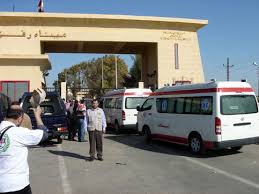
The Egyptian media in particular and the Arab media in general are full of stories about the “siege” that Israel has been imposing on the Gaza Strip since Hamas came to power. Hardly a day passes without an Egyptian or Arab government official condemning Israel for turning the Gaza Strip into a “big prison.” However, none of these officials or media representatives point out the fact that the Gaza Strip, home to some 1.3 million Palestinians, also has a joint border crossing with Egypt. This border crossing, known as the Rafah terminal, has been closed by the Egyptians for most of the time during the past two years. The closure denies Palestinians access not only to Egypt, but to the rest of the world. One can understand why Israel does not want Palestinians from the Gaza Strip to enter its territories. But it is hard to understand why the Egyptians are keeping the border crossing closed, thus sending Palestinians to knock on Israel’s door for help. If the Egyptians do not want Palestinians to enter their country, that is fine. But why not open the terminal so that Palestinians could at least travel to other countries? Why, for instance, are the Egyptians banning many patients from the Gaza Strip from crossing the border to seek medical treatment in Arab and Western hospitals? And why are the Egyptians banning students from ...
.

Settlement Freeze May Be Permanent If Amorphous Requirements Met


Dr. Aaron Lerner
IMRA
08 September 09

So the settlement freeze will be extended if I we get some minor gestures from Arab countries that we have already had in the past and - here is the big requirement for the Palestinians: something is done about incitement.

Why the cynicism about making incitement the litmus test?

Take a look at the article for a hint: "The official said Israel expected that in return for the moratorium there would be an end to incitement against Israel in the PA media and education system - although a way of measuring this still needed to be worked out."

Repeat: "a way of measuring this still needed to be worked out".

Been there. Done that.

When Prime Minister Ariel Sharon wanted to keep his buddy Uri Dan busy so he wouldn't be tempted to share his misgivings over Sharon's policies with the public, he appointed him the "Anti-Incitement Committee". Dan seized the opportunity to meet with Palestinian officials and complain about Palestinian incitement. He got nowhere. Which is no surprise since none of the people before him and none of the Israelis after him got anywhere in what amounted to nothing more than a debating society since it was impossible to come up with a workable measurable definition of incitement.

Consider the following: Which is worse? An inciting item in a Palestinian school book or unfriendly remarks in a pamphlet distributed in some synagogues?

So when the Netanyahu team focuses on what anyone who knows the history of Oslo knows is a profoundly unenforceable requirement you have to wonder:

Either:

#1. They don't remember.
#2. They are fooling themselves.
#3. They are trying to fool us.

Which is worse?
====

'Settlement freeze will last 6 months'
HERB KEINON and TOVAH LAZAROFF , THE JERUSALEM POST Sep. 8, 2009
www.jpost.com/servlet/Satellite?cid=1251804514211&pagename=JPArticle%2FShowFull

A moratorium on new construction in the settlements, expected in the wake of Monday's announcement of 455 newly approved housing units in the West Bank, will last for six months, with an extension dependent on whether the Palestinian Authority and neighboring Arab countries step up to the plate and deliver what is expected of them, a senior political official told The Jerusalem Post on Monday.

The official's comment came a week before Prime Minister Binyamin Netanyahu is scheduled to meet with US Mideast envoy George Mitchell to discuss the US-brokered package that is expected to lead to a renewal of negotiations with the Palestinians.

Netanyahu spoke to the official over the past few days and explained both the sudden approval of the 455 homes and the soon-to-be-announced moratorium.

The new construction plans in the settlements, which were announced on Monday morning, included 149 apartments for Har Gilo, 12 for Alon Shvut, 89 in Ma'aleh Adumim, 84 in Modi'in Illit, 76 in Givat Ze'ev, 25 in Kedar and 20 in Maskiot, as well as a sports park in Ariel and a school in Har Adar.

Mitchell is expected to arrive on Saturday night for two days of high-level meetings in Jerusalem.

At a Ma'aleh Adumim rally on Monday, MK Uri Ariel (National Union) said that the Construction and Housing Ministry had issued an order not to make any more plans for Jewish housing in east Jerusalem.

But political officials said that in addition to the six-month moratorium, Netanyahu would reiterate to Mitchell that Jerusalem will not be included, and that public buildings in the settlements will be approved where necessary to enable normal life to continue.

The official said Israel expected that in return for the moratorium there would be an end to incitement against Israel in the PA media and education system - although a way of measuring this still needed to be worked out - as well as significant normalization steps from the Arab world.

If these steps were not forthcoming, the source intimated, the construction moratorium would end.

Israel, according to the official, expected a number of Arab countries - such as Morocco, Qatar and Oman - to renew their former low-level presences in Israel, as well as allow for educational and cultural exchanges, and for Israeli airline flights over their territory.

The prime minister's plans to please the settlers, the US and the Palestinians, did not mollify anyone.

The Americans and the Palestinians continued to publicly demanded an immediate and total freeze.

"Given the choice between making peace and making settlements, they have chosen to make settlements," chief Palestinian negotiator Saeb Erekat said.

White House spokesman Robert Gibbs responded on Monday by referring to an earlier statement criticizing the Israeli plans and calling for a construction halt.

Right-wing politicians, including Likud MKs, Israel Beiteinu's National Infrastructures Minister Uzi Landau and Knesset speaker Ruby Rivlin criticized Netanyahu's plan to approve new permits and then impose a freeze on any additional ones.

Danny Dayan, the head of the Council of Jewish Communities of Judea, Samaria and the Gaza Strip, accused Netanyahu of trying to pull the wool over everyone's eyes with the new permits - the first ones that Netanyahu has issued since taking office in March.

According to the Prime Minister's Office and Peace Now, no construction permits for Jewish communities in Judea and Samaria have been issued since November 2008.

"It has no real political or practical significance. The negative impact of the freeze that will follow the approval of the 455 units is tenfold greater than the somewhat positive approval of these units," said Dayan.

"By the way, most of them are recycled plans that were already approved by former prime minister [Ehud] Olmert," he said.

"It is quite pathetic that the 2,500 units that this government is going to finish are units that Olmert built. The only thing that is new and attributable to this government is the freeze; that is regrettable," Dayan said.

Hagit Ofran of Peace Now agreed that there was little new in what Defense Minister Ehud Barak had approved.

Still, Peace Now's executive director Yariv Oppenheimer lashed out at the plan. Netanyahu failed in his attempt "to go on a diet," because when it comes to settlement construction, "he is eating a big meal," said Oppenheimer.

All that has happened with the talk of approving new construction permits and then freezing them is that settlers can continue to build apartment units this year at the same pace as last year, he said.

Oppenheimer noted that settlers would be able to finish the 2,500 apartment units now under way in the settlements as well as start 455 additional units.

Out of the approvals, the two which have the most impact, according to Ofran, are in Har Gilo and Maskiot.

Built in 1972, the Har Gilo settlement had only 462 residents in 2007. The approval of 149 new apartment units there more than doubles the size of the settlement, which is an enclave within a populated Palestinian area.

The authorization of 20 new homes in Maskiot marks the first residential building in that area, said Ofran.

Although the site, located in the northern Jordan Valley, was authorized as a settlement in the mid-1980s, no families lived there on a permanent basis until 2008, when eight moved in. Six families lived in new modular homes and another two in structures that belong to the pre-army yeshiva, also housed on that site.

The construction of 20 new homes was the government's backhanded way of creating a new settlement, a move that skirted its international obligations and promises, Ofran said.
.

Monday, September 7, 2009

Tough love for Israel? Imposed Solution? The Ignorant Arrogance of the Advice-Givers


Barry Rubin
The Rubin Report
07 September 09


One remarkable thing about watching the Middle East is how what’s celebrated as brilliant in Europe or America is errant nonsense.

Writing such stuff makes people successful and gives them an audience of millions. It is so ridiculous that one wants to laugh, while so totally acceptable in Washington and European capitals that the laugher would be laughed at.

The article to which I refer is by Jacob Weisberg in the June 22 Newsweek, entitled, “A Friend in Need: Barack gets tough on Bibi.” It is far more terrible because Weisberg is neither leftist nor anti-Israel but has simply imbibed what “everyone says.”

Let me quickly add that while I don’t know Weisberg personally, I’m confident in saying he has no serious training in the Middle East, speaks neither Arabic nor Hebrew, spends little time researching the region, and has no real qualification for making the judgments he does.

Here's the theme: Israelis are so stupid about their country, situation, and region on life-and-death issues which they deal with daily that they must be saved in spite of themselves by people who have no knowledge or experience on any of these things. No other country in the world is so frequently told this kind of thing which I hear all the time from Europeans, too.

Is it so hard to comprehend that our views and behavior are based on years of experience and study? That we know best how to save ourselves and have been doing a far better job of it, against tremendous odds and unhelpful kibbitzers,than many others? That heeding their prescriptions would be disastrous, in fact have already proven so? After all, the tragic history of the last 20 years has largely resulted from listening to the same advice he gives now,

When one tries to explain these things in conversations, however, you can see their eyes go blank and their ears close up.

Weisberg’s article follows this pattern. The United States, he says (and these are main elements in the rhetoric among supporters of the Obama administration and several European governments) must show Israel “tough love,” lean “harder on Jews and the Arabs to get serious about a deal,” and stop “fostering Israeli illusions that there [is] an alternative to trading land for peace.”

All three of these arguments are based on false premises.

Tough love: This derives from the late 1980s and early 1990s when the left side of the Israeli spectrum was pushing the land-for-peace and negotiate with the PLO arguments against their rivals on the right. A little U.S. pressure, they argued, would help get talks going.

A lot has happened since then, however, notably the 1992-2000 Oslo process. This proved to the vast majority of Israelis that the Palestinian leadership (and Syria, too, for that matter) wasn’t ready or interested in peace. Disillusioned, a lot of these people supported Ariel Sharon and the disengagement from the Gaza Strip, the results of which (Hamas takeover, rocket fire) made them even more disenchanted.

That’s why the Labour party—which invented the land-for-peace argument in the first place and made the Oslo agreement and offered a two-state solution in 2000—is now in a coalition government with the Likud party. Prime Minister Benjamin Netanyahu is not a “right-wing” or “hard-line” leader but someone who speaks for the national consensus, a consensus based on education through painful, bloody experience.

Israel also faces a more hostile Europe, an Iran racing toward nuclear weapons, an intransigent and incompetent Palestinian Authority, plus Hamas and Hizballah.

Today the last thing Israelis need or want is pressure to make more concessions to the Palestinians. They’ve already made a lot; these didn’t lead anywhere good. What Israel needs today is not “tough love” but real support.

Push “harder on Jews and the Arabs to get serious about a deal”: The false assumption here is that getting an agreement, any agreement, is a desperate need of the two sides and of the region as a whole.

In fact, Israel is doing very well without any comprehensive peace agreement. The economy is doing fine; morale is high; security improved. Moreover, this concept pays no attention to the idea that a deal can be a bad one, inherently instable and leading to more violence.

It never enters the minds of these people that a “peace” agreement that was broken or had dangerous provisions (giving up strategic territory; east Jerusalem; empowering a radical regime in a next-door Palestinian state; opening the door to foreign Arab or Iranian armies entering; bringing in millions of Palestinian Arabs to Israel) could leave Israel far worse off.

As for the Palestinian leadership, far from being desperate for a deal it is desperate to avoid one on anything other than its own unrealistic terms.

Stop “fostering Israeli illusions that there [is] an alternative to trading land for peace.” This one makes me laugh. Everyone in Israel knows that there can be no comprehensive agreement without trading land for peace. The question is, however, whether any comprehensive agreement on decent terms is possible at this time.

In addition, the question is also which land. Israel has focused on three to five percent of the West Bank that is strategically important and has large concentrations of Israeli population.

Finally, if someone doesn’t understand that the barrier to peace is the Palestinians and not Israel, any advice they give Israel is going to be worthless.

As for those giving advice, here’s what we’ve seen in the last six months from those who want to “save” others by imposing their own vision:

--The idea that stopping construction on Jewish settlements would bring some Arab concession has already proven wrong.

--The idea that engagement with Iran would work has already proven wrong.

--The idea that the United States could successfully engage Syria in a set of mutual compromises has already proven wrong.

--The idea that an Obama charm offensive would bring higher levels of Arab support has already proven wrong. And that's just in six months!

Let’s have a little humility and readiness to listen, please, from those who would play with the lives of other people.
.