Showing posts with label North Korea. Show all posts

Sunday, August 30, 2015

Israel and a clearly not so far below the radar enemy

...Kim Jong Un may be pudgy and puerile, but he is perilous too, and not only to his immediate neighbors. North Korea is unabashedly arming Israel's enemies, selling or transferring nuclear and missile technology to them and providing political and diplomatic support for their assaults against the Jewish state.

Michael Freund..
Pundicity/JPost..
30 August '15..

Although Israel faces numerous threats at home and abroad, one of our most unsung enemies is the one that is perhaps furthest away: Kim Jong Un's dictatorial regime in North Korea.

Nearly 8,000 km separate Jerusalem from Pyongyang, but that hasn't stopped the North Korean government from going out of its way to side with Israel's foes, regularly providing them with military training and support and even selling them nuclear know-how and ballistic missile technology.

Indeed, North Korea is directly linked to just about every menace facing Israel, and it is time for the Jewish state to do something about this threat.

The latest example of Kim's dangerous Middle East meddling was on display this past Saturday in Iran, where the ayatollahs unveiled their new Fateh 313 surface-to-surface missile together with the Simorgh launching platform, which is said to bear a striking resemblance to North Korea's own technology.

The similarity isn't coincidental.

As the US Congressional Research Service (CRS) noted in a report on May 11, "ballistic missile technology cooperation" between Teheran and Pyongyang "is significant and meaningful."

The collaboration between the two rogue regimes also extends to the subterranean sphere, where North Korea has decades of experience in building tunnels and other military facilities beneath the surface aimed at neighboring South Korea.

As the Weekly Standard revealed last year, the North Koreans have not been shy about sharing their tunneling expertise. "Their top customer is the Islamic Republic of Iran," the magazine concluded, citing North Korea expert Bruce Bechtol, who said that Pyongyang has also helped to construct some of the Iranians' underground nuclear weapons installations.

Needless to say, both Hamas and Hezbollah have benefited from North Korea's tunnel tutelage as well.
This became apparent during the Second Lebanon War in 2006, when Hezbollah utilized an extensive system of tunnels in the conflict with Israel, as well as during Operation Protective Edge in Gaza last year, when Hamas sought to do the same.

One year ago, this prompted a US federal judge to hold North Korea and Iran liable for their support of Hezbollah during the war, which he said included assistance "in building a massive network of underground military installations, tunnels, bunkers, depots and storage facilities in southern Lebanon."

North Korea has also served as a mentor for Israel's enemies. As Bechtol points out in his book, Defiant Failed State: the North Korean Threat to International Security, Hezbollah leader Hassan Nasrallah spent several months in North Korea in the late 1980s receiving terrorist training.

And in recent years, a number of North Korean ships have been interdicted and were found to be carrying illicit weapons intended for Hamas and Hezbollah.

The nefarious activities of the Kim regime have also extended to Syria, which has been a prime beneficiary of North Korea's penchant for mischief abroad.

In June 2013, the Syrian Observatory for Human Rights revealed that North Korean military officers were assisting the Assad regime with its attempt to quash various Syrian rebel groups. North Korean soldiers are said to have been providing Assad's troops with logistical support, creating operational plans for them and even supervising Syrian government artillery attacks against the opposition.

And Syria's government has, in the words of the CRS, "received ballistic missiles and related technology from North Korea."

For example, it is widely believed that the Syrian nuclear reactor that was reportedly destroyed by Israel in September 2007 was being built with North Korean assistance.

So in just about every hotspot in the Middle East, North Korea has joined forces with the bad guys, from Hamas in Gaza to Hezbollah in Lebanon to Assad in Damascus and the Ayatollahs in Teheran.

Pyongyang even came to Islamic State's defense last year, denouncing US-led air raids against the group as "state terrorism."

Kim Jong Un may be pudgy and puerile, but he is perilous too, and not only to his immediate neighbors.

North Korea is unabashedly arming Israel's enemies, selling or transferring nuclear and missile technology to them and providing political and diplomatic support for their assaults against the Jewish state.

Clearly, North Korean poses a threat to the Jewish state. By backing Hamas and Hezbollah, Pyongyang has Jewish blood on its hands. And by advancing the Iranian and Syrian nuclear programs, it has contributed to the destabilization of the entire Middle East.

It is therefore essential that Israel take a more forceful public stand against the Kim regime. Jerusalem should continue to bolster relations with South Korea, and put together a comprehensive strategy for countering Pyongyang's troublemaking in the Middle East.

South Korea and Israel share an intriguing number of similarities. Both are heirs to ancient civilizations that have carved out vibrant democracies in difficult neighborhoods while simultaneously building dynamic, modern economies despite a lack of natural resources.

And of course we share a common foe in the form of the North Korean regime, whose bellicosity and unpredictability stretch across the globe.

It is therefore in Israel's interest to further deepen its alliance with Seoul and to cease ignoring the danger from Pyongyang.

For however distant it might seem, Kim Jong Un's irascible regime is clearly out to hurt the Jewish state.

Link: http://www.michaelfreund.org/17784/north-korea-israel


Updates throughout the day at http://calevbenyefuneh.blogspot.com. If you enjoy "Love of the Land", please be a subscriber. Just put your email address in the "Subscribe" box on the upper right-hand corner of the page.Twitter updates at LoveoftheLand as well as our Love of the Land page at Facebook which has additional pieces of interest besides that which is posted on the blog. Also check-out This Ongoing War by Frimet and Arnold Roth. An excellent blog, very important work as well as a big vote to follow our good friend Kay Wilson on Twitter
.

Thursday, May 31, 2012

Darshan-Leitner - North Korea’s forgotten past

Nitsana Darshan-Leitner..
Op-Ed Contributor/JPost..
29 May '12..

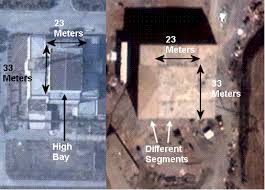
In the aftermath of the Israeli strike on the fledgling Syrian nuclear reactor at Deir ez-Zor on September 6, 2007, North Korea’s involvement in fueling Middle East conflict and warfare was revealed publicly to many around the world for the first time. Indeed, the Syrian reactor had been modeled upon similar reactors in North Korea and it is suspected that Pyongyang assisted in both building and outfitting the Syrian facility.

More recently, shipments of North Korea missiles destined for Iran, Libya, Syria and other outlaw regimes in the region have been intercepted or turned back by the United States. Reports have also surfaced of North Korea assisting Hezbollah to build underground bunker systems in southern Lebanon to safeguard its rocket launchers from Israeli aerial attacks.

While today North Korea is finally acknowledged to be a major player in providing support and resources to the terrorist groups infesting our region, its involvement in aiding those extremist organizations that target the Jewish state had begun many decades earlier.

Wednesday, February 8, 2012

Richman - Lessons from North Korea for Israel and Iran

Rick Richman..
pjmedia.com..
08 February '12..


What does it mean when a U.S. president says he will not "tolerate" a nuclear weapon?

On January 20, President Obama told a New York reception that “we’re not going to tolerate a nuclear weapon in the hands of this Iranian regime.” Four days later, in his State of the Union address, he issued this declaration:

Let there be no doubt: America is determined to prevent Iran from getting a nuclear weapon, and I will take no options off the table to achieve that goal.

The words were as direct as presidential language gets: we will not “tolerate” an Iranian nuclear weapon and will take “no options off the table” — complete with Obama’s trademark preface, “Let there be no doubt.” In his Super Bowl interview on Sunday, Obama reiterated that “no option is off the table.”

But this is not the first time an American president declared he would not “tolerate” a nuclear weapon, insisted on dismantlement of a nuclear weapons program, applied crippling sanctions — and then declined to act after the regime violated an explicit presidential warning.

Saturday, November 27, 2010

The Real Lessons of the Korea Crisis: It Explains How The World Works Today

Barry Rubin
The Rubin Report
27 November '10

What will the United States and the world going to do about an act of aggression by North Korea on South Korea, the deliberate unprovoked firing of mortars at civilians? And what are the lessons of this situation for other world problems?

First, nobody is going to do anything real in response to this attack. Indeed, the South Koreans are lucky that they aren’t being investigated and condemned for something or other.

That last remark, of course, was a sarcastic reference to Israel’s treatment though it also applies to other cases, for example the Russian attack on Georgia; the way the UN backed down in Lebanon to Syria and Hizballah pushing around the UN peacekeeping force; Iran’s covert warfare against American forces in Iraq and Afghanistan; Pakistan openly sponsoring terrorism against India while India is unable to retaliate; and other recent cases.

If countries not only get away with aggression but their victims are blamed if they retaliate or defend themselves, the level of aggression in the world will rise. If aggression is perceived as low-cost and victorious the level of aggression in the world will rise.

(Read full article)

If you enjoy "Love of the Land", please be a subscriber. Just put your email address in the "Subscribe" box on the upper right-hand corner of the page.
.

Friday, November 26, 2010

Rocking Obama's world

Caroline Glick
JewishWorldReview.com
26 November '10

Crises are exploding throughout the world. And the leader of the free world is making things worse.

On the Korean peninsula, North Korea just upended eight years of State Department obfuscation by showing a team of US nuclear scientists its collection of thousands of state of the art centrifuges installed in their Yongbyon nuclear reactor.

And just to top off the show, as Stephen Bosworth, US President Barack Obama's point man on North Korea was busily arguing that this revelation is not a crisis, the North fired an unprovoked artillery barrage at South Korea, demonstrating that actually, it is a crisis. But the Obama administration remains unmoved. On Tuesday Defense Secretary Robert Gates thanked his South Korean counterpart Kim Tae-young for showing "restraint." Thursday, Kim resigned in disgrace for that restraint.

The US has spoken strongly of not allowing North Korea's aggression to go unanswered. But in practice, its only answer is to try to tempt North Korea back to feckless multilateral disarmament talks that will go nowhere because China supports North Korean armament. Contrary to what Obama and his advisors claim, China does not share the US's interest in denuclearizing North Korea.

Consequently, Beijing will not lift a finger to achieve that goal.

(Read full article)

If you enjoy "Love of the Land", please be a subscriber. Just put your email address in the "Subscribe" box on the upper right-hand corner of the page.
.

From North Korea, lessons about Syria

Tony Badran
NOW Lebanon
25 November '10

Commenting on North Korea’s newly revealed uranium enrichment facility, and its subsequent unprovoked shelling of the South Korean island of Yeonpyeong, former US president Jimmy Carter offered the following trite assessment: “No one can completely understand the motivations of the North Koreans.”

As less credulous others have pointed out, Pyongyang’s game is a rather transparent case of “nuclear blackmail.” A proper understanding of this type of chronic extortion could lead to a better grasp of the ways of other rogue regimes, such as Syria, and how best to deal with them.

The US has been involved in an embarrassing failed endeavor to get the North Koreans to denuclearize. The regime in Pyongyang has notoriously played the world for fools and has mastered the art of nuclear blackmail, using talks over its nuclear program as a shakedown racket to extract aid from its interlocutors.

At the same time, not only does Kim Jong-Il renege on his commitments, he also proceeds to sell banned nuclear and ballistic technology to other rogue states, including Iran and Syria. The latter’s secret nuclear reactor, which was destroyed by Israel in September 2007, was built with the North Koreans’ help. Secure in the conviction that he will not face serious retaliation, Kim continues to stick his thumb in the world’s eye.

(Read full story)

If you enjoy "Love of the Land", please be a subscriber. Just put your email address in the "Subscribe" box on the upper right-hand corner of the page.
.

Monday, July 26, 2010

Believe It Or Not: Terrorists Found Guilty, Victims Actually Defended!


Barry Rubin
The Rubin Report
25 July '10

A U.S. court in Puerto Rico has just awarded $378 million to relatives there of people killed in the 1972 terrorist attack on Israel’s airport. I was the chief witness at the trial on the connections between the Japanese Red Army, which carried out the attack, the Popular Front for the Liberation of Palestine (PFLP), and North Korea, the state sponsor. You can read more about the case here and here, as well as the judge's full decision here.

Attacks like this continue to this day, sponsored by Iran, Syria, and other states, as well as groups like Hamas, Hizballah, and even Fatah still. One wonders whether they will have their day in court, too, and be subjected once again to the isolation and contempt that they deserve. The present moment is featuring large amounts of sympathy for the perpetrators, diplomatic engagement, and constantly criticizing their victims.


Even now, the British prime minister is in Washington trying to explain how one of the Libyan murderers of scores of Americans and others in the Lockerbie plane bombing was released on “compassionate” grounds on the claim that he was dying, only to make a “miraculous” recovery on reaching Libya.

(Read full post)

If you enjoy "Love of the Land", please be a subscriber. Just put your email address in the "Subscribe" box on the upper right-hand corner of the page.
.

Sunday, May 30, 2010

Behind the Axis: The North Korean Connection


Jonathan Spyer
GLORIA Center
29 May '10

North Korean spokesmen reacted furiously last week to claims by Foreign Minister Avigdor Lieberman that Pyongyang is supplying weapons technology to Iran and Syria. Representatives of the regime of Kim Jong-Il described Lieberman as an "imbecile." The official Korean Central News Agency in a memorable phrase accused the foreign minister in an official statement of "faking up sheer lies."

The indignant denials notwithstanding, recent studies indicate that the Democratic People's Republic of Korea, as North Korea is officially known, is indeed playing a crucial but little remarked upon role in facilitating the arming of the Iran-led regional axis, including in the area of weapons of mass destruction. The North Korean role is multifaceted, and evidence has emerged of direct links to terror organizations such as Hizbullah and extensive strategic relations with both Iran and Syria.

A recent study by Christina Lin, a former US Department Defense official and specialist on China, looked into North Korea's strategic partnership with Iran. Lin noted that North Korea has been described as the "the most important single leak" in the international anti-proliferation effort in the Middle East.

Iranian-North Korean strategic cooperation dates back to the first days of the Islamic Republic. Its basis is clear. Iran needs access to advanced military technology to underwrite its regional ambitions. Its main suppliers are Russia and China. But both these countries are active members of the international system, and hence are to some degree constrained by international pressures. North Korea, on the other hand, is an isolated country, indifferent to Western attempts to control the access of Middle East radicals to advanced armaments.

North Korean assistance plays a vital role in the Iranian missile program. Its flagship Shihab missile project is a product of the relationship. The Shihab is based on North Korea's Nodong missile series. Iran is reported to have purchased 12 Nodong missile engines from North Korea in 1999, beginning the development of the Shihab-3. The Shihab-3, which has a range of 1,300-1,500 kilometers, places Israel within range.

More recently, Iranian officials were present at the testing of the advanced Taepodong-2 missile in North Korea in July 2006. This missile is the basis for the Iranian development of the Shihab-6, which has not yet been tested. These are intercontinental, nuclear capable ballistic missile systems, thought to have a range of 5,000-6,000 kilometers.

(Read full post)

If you enjoy "Love of the Land", please be a subscriber. Just put your email address in the "Subscribe" box on the upper right-hand corner of the page.
.

Monday, May 3, 2010

Nuclear Terrorism: Threat to the Public or to Credibility?


Jonathan Schachter, Yoel Guzansky,
and Yoram Schweitzer
INSS
Insight No. 178
28 April 28 '10

(Decent article discussing possibilities, but more importantly, where the focus should be at this time. Y.)

During a recent trip to Prague, where he signed a new arms control treaty with Russia, President Barack Obama declared that nuclear terrorism is “the most immediate and extreme threat to global security.” Though the unique destructive power of nuclear arms justifies his concern regarding their spread and potential use, this grave assessment regarding the imminent threat of nuclear terrorism does not appear to stand up to scrutiny, and might even set the stage for weaker international non-proliferation resolve in the future.

Threat comprises both intent and capability. Analysts are nearly unanimous in their evaluation that al-Qaeda has demonstrated the former through its public statements and its efforts to secure both nuclear materials and religious rulings supporting their nefarious use. Documentary evidence of the group’s interest reportedly was found in Afghanistan in the years immediately after 9/11. This is significant, for not only is the intent to cause large numbers of casualties consistent with the philosophy and modus operandi of al-Qaeda and its affiliates, but very few other groups have ever demonstrated any interest in or willingness to acquire nuclear weapons and bear their real and potential associated costs.

Capability is another matter. According to the RAND Corporation’s Brian Jenkins, who first wrote about terrorists “going nuclear” in 1975, “Usama bin Laden certainly wants a nuclear weapon. He’s been trying for the last 15 years to get a nuclear weapon. There’s no doubt that if he had one, he would use it. Al-Qaeda frequently talks about nuclear weapons….But the fact is there is no evidence that al-Qaeda has nuclear weapons or that it has the material or knowledge to make nuclear weapons.”

If al-Qaeda has neither the weapons nor the ability to make them, the concern remains regarding the group’s acquisition of a weapon from a nuclear state, either through cooperation or following regime collapse. Here the question centers mainly on Pakistan, Iran and North Korea. For over 30 years Iran has provided shelter to and trained, equipped, and dispatched terrorists to strike at American and Israeli targets. Is it likely that a nuclear Iran would usher al-Qaeda or Hizbollah into the nuclear club as well?

The evidence suggests not. First, despite reports of al-Qaeda members finding refuge and passing safely through Iran, the tensions and mistrust between Shiite Iran and Sunni al-Qaeda would almost certainly be a deal breaker. Second, and perhaps most importantly, we have seen no evidence that state sponsors of terrorism have ever provided terrorist groups with non-conventional weapons. The US has designated Iran and Syria, for example, as state sponsors of terrorism for more than a quarter of a century, and both states are known to have large stocks of chemical weapons (which they appear to be developing together; according to Janes, in July 2007 an accident at a joint Iranian-Syrian chemical weapons plant in Aleppo led to dozens of deaths). Nevertheless, none of the terrorist groups sponsored by these two states has ever carried out an attack using these weapons, nor is there evidence that they’ve been equipped to do so.

(Read full insight)

If you enjoy "Love of the Land", please be a subscriber. Just put your email address in the "Subscribe" box on the upper right-hand corner of the page.
.

Tuesday, February 16, 2010

How Syria benefits from the axis of proliferation


Tony Badran
NOW Lebanon
16 February '10

Two weeks ago, a report appeared on the Japanese news site Nikkei quoting Western intelligence sources as saying that North Korea was once again providing “sensitive military technology” to Syria. The report got little coverage in the Western media and came shortly before US the under secretary of state for political affairs, William Burns, is scheduled to visit Syria. The purpose of his trip has been described as being about Iran as well as Syria’s ongoing smuggling of weapons to Hezbollah.

A day after the Nikkei report, the US director of national intelligence, Dennis Blair, briefed the Senate Select Committee on Intelligence about his team’s annual threat assessment (pdf). The assessment mentioned North Korea’s cooperation with Syria in building the clandestine nuclear reactor at Al-Kibar that Israel destroyed in September 2007. It also noted that US intelligence “remain[s] alert to the possibility North Korea could again export nuclear technology.”

Indeed, the Nikkei story claimed that North Korea was helping Syria build a production line for maraging steel “that can be used in missile skins, chemical warheads and gas centrifuges, a vital component in the uranium enrichment process.” Maraging steel is an alloy possessing strength and malleability that, among other things, “allow it to be formed into thinner rocket and missile skins that can carry heavier payloads.”

The brazenness of this development was remarkable, even by North Korean and Syrian standards. It showed just how much of a gambler Bashar al-Assad really is and has been since he inherited power in Damascus. Yet the Syrian president has grown accustomed to calculating that he can beat the odds against Syria’s paying a serious political price for his actions. For instance, Syria still has not cooperated with the International Atomic Energy Agency’s inquiry into its Al-Kibar nuclear site. Instead, Assad may be continuing to push his quest for nukes.

(Read full article)

Wednesday, October 28, 2009

Nuclear Tourism: An Average Guy Checks out Syria's Secret Nuclear Facility


Barry Rubin
The Rubin Report
28 October 09

(Excellent find by Barry Rubin)

Here's a fascinating piece of citizen journalism. A well-informed individual decided to explore for himself whether Syria had built a secret nuclear reactor in an isolated location, in cooperation with Iran and North Korea, that was bombed by Israel. At some risk, after a detour from his tourism in Syria, he concluded that this was in fact what had happened. While the author rightly recommends that people shouldn't put themselves and others at risk, it shows how much average people can do nowadays to check up on media coverage and government stances while shaping our understanding of what's happening.
.