Showing posts with label Nobel Prize. Show all posts

Friday, September 4, 2020

Those who actually strive for peace and progress and human rights in the Middle East - by Richard Kemp

We are fortunate that the true leaders of today understand how breathtakingly unimportant are both the Nobel Committee and the EU. For all their self-importance, both groups, sadly, end up shaming themselves and working against peace, prosperity and human rights.

Richard Kemp..
Gatestone Institute..
03 September '20..

This week, we witnessed a symbol of perhaps the greatest step forward in world peace for decades. The first-ever direct passenger flight from Israel to the United Arab Emirates flew down the length of Saudi Arabia's airspace. After Egypt in 1979 and Jordan in 1994, the UAE has become the third Arab state to normalise relations with the State of Israel under the new Abraham Accord.

Next month, the 2020 Nobel Peace Prize winner will be announced in Oslo. Will it go to the architects of the Abraham Accord, a momentous achievement in itself, and also a major development in a regional geopolitical realignment that is not only good for peace and prosperity in the Middle East but in the world? We knew what the answer would be to that question even before it arose. (Those who point out the deadline for 2020 nominations has passed need not expect to see it in 2021 either.)

Mohammed bin Zayed Al Nahyan, Crown Prince of Abu Dhabi, might well have caught the eye of the Nobel selectors, but unfortunately his partners in this enterprise are US President Donald J. Trump and Israeli Prime Minister Benjamin Netanyahu. Both are despised figures for the wokerati in Oslo and the fellow travellers they are desperate to impress. Compared to the perceptions of these leaders among the hard left who dominate all discourse on "peace", their achievements on the world stage are irrelevant.

Their fingerprints on the Abraham Accord ensured it also received a cool reception in much of the US and international media and in the chancelleries of Europe — more closely aligned with the hostile and backward-looking regimes of Iran, Turkey and Qatar than with those who actually strive for peace and progress and human rights in the Middle East; "the men in the arena", to borrow from former US President Theodore Roosevelt.

Yet, the developing relationship between Israel and the UAE is at least as significant as the peace treaty between Israel and Egypt that deservedly led to Nobel Peace Prizes for Menachem Begin and Anwar Sadat. It paves the way for further leaps forward, with potential for similar normalisation between Israel and other countries in the region such as Bahrain, Oman, Sudan, Morocco and even Saudi Arabia. The UAE would not have acted without Saudis' blessing. Although publicly understated, the opinion in Riyadh is clear. Some months ago, in talks with leaders there as part of a delegation from former Canadian Prime Minister Stephen Harper's Friends of Israel Initiative, together with their Executive Director and former Spanish National Security Adviser Rafael Bardaji, I heard firsthand how open the Saudis were to the prospect of embracing Israel in the future.

(Continue to Full Post)

Colonel Richard Kemp is a former British Army Commander. He was also head of the international terrorism team in the U.K. Cabinet Office and is now a writer and speaker on international and military affairs.

If you enjoy "Love of the Land", please be a subscriber. Just put your email address in the "Subscribe" box on the upper right-hand corner of the page.Twitter updates at LoveoftheLand as well as our Love of the Land page at Facebook which has additional pieces of interest besides that which is posted on the blog. Also check-out This Ongoing War by Frimet and Arnold Roth. An excellent blog, very important work.  

Thursday, July 16, 2015

Revisiting the 1937 Nobel Peace Prize

...The Nobel Peace Prize of 1938 was awarded to the Nansen International Office for Refugees, which was needed to assist the victims of both Hitler and the failed policies of hollow diplomacy and moral equivalence of the International Peace Campaign. In 1940 Norway fell to the Nazis. The Peace Prize was not awarded again until 1944, when it went to the International Committee of the Red Cross. Oslo was liberated in 1945 by Allied peacemakers, using guns.

Stefan Sharkansky
Shark Blog
First Posted 18 Oct. '02


If you want to put Jimmy Carter's (Barack Obama's) Nobel Peace Prize in its proper perspective, and to see how little the Nobel committee has learned in the last seventy years, go back to the 1930s and see who was winning the Peace prizes while Hitler was preparing to conquer Europe. The 1937 Nobel Prize went to a British nobleman named Viscount Cecil of Chelwood (Lord Edgar Algernon Robert Gascoyne Cecil), who was president of the International Peace Campaign, and earlier helped found the League of Nations. Even then, The Nobel Committee was still singing the same refrains of disarmament, moral equivalence and aimless diplomacy.

The Committee explained the goals of the International Peace Campaign:


international disarmament and «establishment within the framework of the League of Nations of effective machinery for remedying international conditions which might lead to war»

The Peace Campaign apparently didn't do a lot to stop Hitler or Tojo, but not because the pacifists weren't optimistic enough.Cecil gave his acceptance lecture on June 1, 1938, just a few months after the Anschluss, and showed us why he was the Jimmy Carter of his day, or maybe it's the other way around:

I am still convinced that with a little more courage and foresight, particularly among those who were directing the policy of the so-called Great Powers, we might have achieved a limitation of international armaments, with all the enormously beneficial consequences which that would have given us....And I am perfectly satisfied that the attempt to limit and reduce armaments by international action must be resumed and the sooner the better, if the world is to be saved from a fresh and bloody disaster.

But Hitler was happily on a roll, what conceivable incentive did he have to disarm? Cecil had a momentary glimpse into the abyss of reality:

The Italian invasion of Abyssinia ... was, perhaps, even more indefensible internationally than the invasion of China by Japan, and unhappily it was equally successful. Here, there was no excuse for the peace-loving powers. They had unquestionably the strength and the opportunity to have stopped that defiance of the principles of the supremacy of law in international affairs, and they declined to use them.

But the realism quickly fades and he's back to wishful thinking and a call for unspecific diplomacy


Let us, rather, examine where we now stand and what steps we ought to take in order to strengthen the international system and thrust back again the forces of reaction.

Tuesday, December 13, 2011

(Video) RAP 2011 Quasicrystal Nobel Prize

13 December '11


Some great Israeli artists, inspired by the 2011 Nobel Prize in Chemistry awarded to Dan Shechtman of Technion - Israel Institute of Technology...! A rap song for history.


Uploaded by on Dec 9, 2011

Ridiculed crystal work wins Nobel for Israeli


By Patrick Lannin and Veronica Ek

http://www.reuters.com/article/2011/10/05/nobel-chemistry-idUSL5E7L51U620111005

Oct 5 (Reuters) - An Israeli scientist who suffered years of ridicule and even lost a research post for claiming to have found an entirely new class of solid material was awarded the Nobel Prize for chemistry on Wednesday for his discovery of quasicrystals.

Three decades after Daniel Shechtman looked with an electron microscope at a metal alloy and saw a pattern familiar in Islamic art but then unknown at a molecular level, those non-stick, rust-free, heat-resistant quasicrystals are finding their way into tools from LEDs to engines and frying pans.

Shechtman, 70, from Israel's Technion institute in Haifa, was working in the United States in 1982 when he observed atoms in a crystal he had made form a five-sided pattern that did not repeat itself, defying received wisdom that they must create repetitious patterns, like triangles, squares or hexagons.

"People just laughed at me," Shechtman recalled in an interview this year with Israeli newspaper Haaretz, noting how Linus Pauling, a colossus of science and double Nobel laureate, mounted a frightening "crusade" against him, saying: "There is no such thing as quasicrystals, only quasi-scientists."

After telling Shechtman to go back and read the textbook, the head of his research group asked him to leave for "bringing disgrace" on the team. "I felt rejected," Shachtman remembered.

"His discovery was extremely controversial," said the Nobel Committee at the Royal Swedish Academy of Sciences, which granted him the 10-million crown ($1.5-million) award.

"However, his battle eventually forced scientists to reconsider their conception of the very nature of matter.

Monday, November 16, 2009

Terra Incognita: The (ir)responsibility of the academy


Seth Frantzman
JPost
15 November 09

(Thoughtful with interesting points)

Recent debates surrounding politics at university have usually juxtaposed two different political viewpoints against one another. The Right argues that the academy is overflowing with extreme-leftist professors who work to undermine the existence of the state at home and abroad. The Left argues that its freedom of expression is being threatened by the Right and that its campaigns for "justice" or "human rights" are part of making the state more humane.

The Left believes that if a few of its extremist voices call for boycotts of their own universities then that might be "misplaced," but it is part and parcel of a democratic society. Perhaps both sides are right. The academy is at the forefront of anti-Israel intellectual extremism. It is also a bastion of freedom of expression in a free society.

But what both sides are missing is a third view of the academy, namely one that sees it as enshrining certain values, three of which should be responsibility, decency and maturity. The extreme-leftist antics of some faculty members should not be curtailed by laws or by dismissal from the academy. Instead there should be an inculcation of self-control.

Instead of crying "Nazi" every time the IDF does something an academic disagrees with, one could hold his tongue. Instead of requesting the boycott of one's own university, one could have some restraint. Instead of signing petitions encouraging soldiers to desert their units or calling on European powers to immediately intervene to "save" the Palestinians from a "genocide," one could show some self-control.

It is apparent that the central problem with too many of Israel's academics is that they are unsure of their place in society, they misunderstand their relevance and they are embittered and hysterical in their pronouncements to the point of having a childlike "crying wolf" mentality when discussing the conflict in the Middle East.

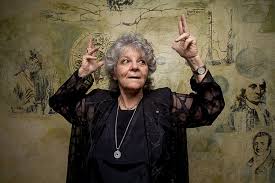
Consider a few examples. Prof. Ada Yonath, fresh after receiving a Nobel Prize, instead of saying a few words of praise for a society that gave her the opportunities to succeed and excel, immediately launched into a barrage of opinions about Gilad Schalit. She declared that Israel should release all its Palestinian prisoners and that holding them was the real source of all Palestinian attacks on Israel.
(Continue to full article)
.

Sunday, November 1, 2009

Another Tack: Uri's beloved Ada'le


Sarah Honig
JPost
29 October 09

Most of us Israelis were literally dumbstruck by the imbecilities which our latest Nobel laureate, Ada Yonath, spouted. No sooner had she made us proud, Yonath proceeded to slap us hard across our collective face. We're still smarting from the supposed smart one's slurs, which is perhaps why it's better to pretend that she never advised we forthwith liberate all convicted terrorists - regardless of Gilad Schalit's ongoing captivity and certainly regardless of whatever atrocity they committed and were duly tried and convicted for.

"It's unclear to me why we're holding these Palestinians - the ones we call 'terrorists' - instead of releasing everybody from the outset, without any link to a deal for Schalit," Yonath opined in an Army Radio interview. Her incisive scientific logic continued: "It's in our power to change the present situation. When one is incarcerated for years, friends and family around him grow angry. That's how we create terrorists.... If no terrorists sat in our prisons, nobody would abduct Israelis to effect their release. By holding terrorists, we give the other side an appetite to launch kidnapping operations. Once we no longer imprison terrorists, they'd have no reason to kidnap."

If taken seriously, the implications of the above babble are staggering. It's akin to suggesting that the surefire crime stopper is to empty all prisons, halt all law enforcement activities, desist from arresting, prosecuting, sentencing and punishing miscreants - no matter how heinous their felonies. A free-for-all will safeguard our freedoms.

FOR A state like ours - the only one worldwide overtly threatened with genocide - the implications are altogether scary. They plainly mandate we stop defending ourselves.

If, as Yonath contends, hopelessness is the mother of conflict, then it might well be asked why well-off British-born youths of Pakistani extraction chose to detonate themselves at a beachfront Tel Aviv club. Were they so hopeless in the Labor-led UK that they decided to take it out on us?

If, according to Yonath, violence is triggered by sending murderers to prison, how is it that Arab massacres began many decades before we gained sovereignty and attendant authority to apprehend anyone?

How did Jews nettle Palestinian idol Haj Amin al-Husseini to induce him to join Hitler in Nazi Berlin and became an active accomplice in the "final solution?"

Does Yonath believe the masterminds of the Park Hotel, Sbarro Pizzeria, Maxim Restaurant and many more suicide bombings deserve no reckoning? Would she let off scot-free executioners, like those who shot (at point-blank, one-by-one) expectant mother Tali Hatuel and her four tiny daughters (as well as the fetus she carried to nearly full-term)?

If even legal action is illegitimate, how do we safeguard ourselves? By surrendering?

The so-called political right and center fear vocalizing their indignation, lest they thereby amplify Yonath's delegitimation of Israeli self-preservation. The embarrassment caused by so honored an Israeli echoing enemy rhetoric is too bitter a pill. Even our ever-voluble left-of-center crowd seems embarrassed. There's no exultant crowing, no "we told you so."

Yonath isn't even on the fringes of our consensus. Unbeknownst to most Israelis, who hadn't heard of her until the Nobel committee lifted her from anonymity, she is one of Uri Avnery's loyal sidekicks, a true disciple, even a quasi-protégée.

Read what he himself wrote: "Our table celebrated with Ada Yonath. This 'table' just had its 50th anniversary. It started by accident in California, the café established at the time by Abie Nathan, who later became famous as the Peace Pilot. Afterward, we met for many years at the legendary artists' café Cassit." Then "the table wandered to several other places and became known as the 'Cassit exiles' table." The "House of Lords," one newspaper nicknamed it.

"The habitués of the table come from different walks of life. There is a former director of the Israel Broadcasting Authority, several senior journalists, a linguist and Bible expert, a film producer, a professor of medicine, a psychiatrist, a town planner, an industrialist, a translator of literature, a radio program producer. And a scientist." The latter is Yonath.

AVNERY CONTENDS that "the table is not political. But all its habitués tend, as it so happens, to lean toward the Left. For years, Ada Yonath has been our candidate for the Nobel Prize. I recount all this not only in order to boast about the fact that Ada 'belongs to us.'"

In radio interviews, Avnery was downright fatherly and called Yonath "our Ada'le." He couldn't stop boasting that she indeed "belongs to us." In this context it's instructive to note that Avnery asserted in a recent op-ed that Schalit wasn't kidnapped, that he's a POW, that Israeli government propaganda claims otherwise to foil a swap, that it's wrong to classify "Palestinian candidates for release" as "terrorists with blood on their hands, criminals beyond the law, lowly murderers." Doesn't Ada'le sound like her mentor?

Said mentor, it needs be stressed, had long ago crossed the lines - physically, intellectually, spiritually and emotionally. He identifies with the enemy and subscribes to its perspective. Nevertheless, Avnery parades as the preeminent freethinking Israeli and is the darling of Israel-bashers for doing their dirty work. He's incidentally the single most popular Israeli in his native Germany.
(Full Article)
.

Tuesday, October 13, 2009

A new internet joke you might find amusing

Here's a satire on all the scam emails that might make you laugh.
TY to Barry Rubin


Most respected Sir and/or Madame,

We are most honored to inform your honored self that YOU have been selected for this year's Nobel Peace Prize in respect of your tremendous potential.

Please forward us your credit card information so that we may afford you the CASH PRIZE!!!

Yours,
Thorbjorn Jagland,
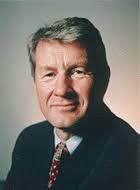
Chairman, Nobel Committee

Was the Nobel a Down Payment for More Pressure on Israel?


Jonathan Tobin
Contentions/Commentary
12 October 09

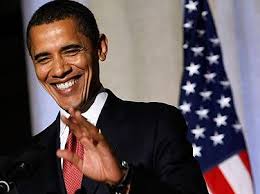
While the rest of the world still stumbles for an adequate reaction to Barack Obama’s Nobel Peace Prize, the president’s envoy to the Middle East met Sunday with Israeli Prime Minister Benjamin Netanyahu and the Palestinian Authority’s Mahmoud Abbas, following an equally fruitless stop in Cairo.

Obama’s peace prize has launched a thousand parodies as well as lickspittle tributes from his political allies on the left like J Street. But Israelis — who have rightly pegged the president as anything but a friend of the Jewish state — have good reason to fear the award will encourage him to devote even more effort to ginning up a peace process with no chance of success. They know that more peace processing means only thing: more pressure for Israeli concessions, on top of all those already made, to appease Palestinian leaders who actually have little or no interest in real negotiations.

Abbas and the P.A. are locked in a desperate duel for the allegiance of their people with the Islamists of Hamas. That means that even if Abbas were truly interested in accepting a two-state solution with Israel, which is doubtful, there is no deal he can sign that Hamas will not paint as a betrayal of Palestinian nationalism. That is why Abbas refused Ehud Olmert’s offer of a state including parts of Jerusalem and virtually all the West Bank and Gaza in 2008. His predecessor Yasir Arafat did the same eight years earlier.

Abbas continued his race to the bottom with Hamas by reversing his previous stand; he called for the United Nations to take up the bogus Goldstone Commission’s accusations of war crimes over Israel’s counterattack against Hamas terrorists in Gaza last December. Playing off the latest riot-sparking lies about Israeli threats to Muslim shrines in Jerusalem, Abbas also said in Ramallah on Sunday: “There will be no Israeli-Palestinian peace treaty until the occupation of Jerusalem ends. We are determined to safeguard the Aksa Mosque and Jerusalem.”

But the conceit of the peace processers is that a new round of Israeli generosity will always sweep away the realities of Palestinian politics. Such delusions have destroyed the Israeli political Left. But elsewhere, the realism informing Israeli voters is viewed as intransigence. The Nobel Committee believed that Obama was deserving of their prize specifically because of his Cairo speech, which espoused a moral equivalence between Israel and its enemies and which picked a fight with America’s only democratic ally in the Middle East. There is little doubt that Obama’s undeserved prize will motivate him to continue along the same path. Obama and Mitchell know there is little or nothing they can do to sway the Palestinians, so their only option will be more pressure on Israel. That was the logic of the pointless dispute between Washington and Jerusalem over settlements earlier this year. And with the president now endowed with the halo that the Nobel grants him and with a faithful cheering section of left-wing American Jews to encourage him, more such pressure is surely on the way.
.

Sunday, October 11, 2009

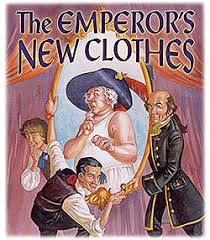
A Tale for Our Time: The Emperor's New Clothes, Adapted for The Barack Obama Era The Emperor's New Clothes


Barry Rubin
The Rubin Report
10 October 09

Adapted by Barry Rubin from Jean Hersholt's translation of Hans Christian Andersen's story, "Keiserens nye Klæder"

Many years ago there was a man who wanted to be Emperor, for according to the peculiar customs of that country of which I speak, the Emperor was elected. Fortunately for him, and unfortunately for many others, the man met a couple of political consultants who saw him as the ideal client. Together they would ride to the heights of power.

To become Emperor, they explained, required a good image, a fine manner of speaking, and a handsome appearance. But in those days before television, radio, the Internet, etc., a man’s image depended mainly on his clothes.

It was a lucky coincidence that the man was exceedingly fond of clothes. He cared nothing about the disposition of his soldiers, the prestige of his country, or the welfare of his citizens except to show off his own magnificence.

The two political consultants came up with a brilliant strategy. They let it be known that they were weavers, and said they could weave the most magnificent fabrics imaginable. Not only were their colors and patterns uncommonly fine, but also clothes made of this cloth had a wonderful way of becoming invisible to anyone who was dumb, unfashionable, or possessed of some type of bigotry.

Those who were unusually stupid—people from small towns, for example, who were exceedingly fond of guns and praying, as well as supporters of the previous king—would not be able to see the clothes either.

They set up two looms and pretended to weave, though there was nothing on the looms. All the finest silk and the purest old thread were delivered to them but then given away to groups that supported them, while they worked the empty looms far into the night.

"I'd like to know how those weavers are getting on with the cloth," the journalists thought, but they felt slightly uncomfortable when they remembered that those who were fools, incompetents, or, worse yet, unfashionable would be unable to see the fabric. Nevertheless, they all eagerly accepted the invitation to see the new clothes during the election campaign.

So they rushed into the room where the candidate stood wearing the clothes, that is to say wearing nothing since there were no such clothes.

"Heaven help me," the reporters thought, "I can't see anything at all". But they did not say so.

The political consultants begged them to come near to approve the excellent pattern, the beautiful colors. They pointed to the candidate and the reporters stared as hard as they dared. They couldn't see anything, because there was nothing to see. "Heaven have mercy," they thought. "Can it be that I'm a fool? I'd have never guessed it, and not a soul must know. Am I unfit to be a member of the elite? It would never do to let on that I can't see the cloth."

"Don't hesitate to tell us what you think of it," said one of the consultants.

"Oh, it's beautiful! It's enchanting!" The journalists raved, breaking into applause. Some felt chills running up their legs. "Such a pattern, what colors! I'll be sure to tell the readers and viewers how delighted I am with it."

"We're pleased to hear that," the consultants said. They proceeded to name all the colors and to explain the intricate pattern. The consultants described how these were the colors of Change and this was the cloth of Hope. The journalists took extensive notes so that they could be sure to inform the public of what a great man the candidate was and how he was doing them a favor offering to be their emperor. And so they did.

To make matters even more exciting, the candidate spoke, reading the words that the consultants had written for him from a cunning little mechanism they had made which allowed him to look at a mirror and see the words that had been written down. The journalists were awed by his great powers of speech, by his slogans, and by his ideas though later they could not quite succeed in remembering what he said or explaining precisely what specific practical ideas were uttered.

Soon all the kingdom was talking about the candidate, his splendid suit of clothes, his brilliant manner of speaking, and how he would solve all their problems.

The candidate then attended a huge rally of his frantic supporters. "Magnificent," said the crowd. After all, each one said: "Am I so stupid? Shall I let my colleagues and neighbors know that I cannot see the beauty of the design, the magnificence of the speech, the greatness of the ideas?" And they applauded wildly.

As the candidate paraded through the streets, the words, "Magnificent! Excellent! Unsurpassed!" were bandied from mouth to mouth, and everyone did his best to seem well pleased.

The consultants pointed to each item in turn during background briefings they gave with donators of large sums of money, too. They raised their arms as if they were holding something. They said, "These are the trousers, here's the coat, and this is the hat," naming each garment. "They are as light as a spider web. One would almost think he had nothing on, but that's what makes them so fine."

"Exactly," all the great men of the kingdom agreed, though they could see nothing, for there was nothing to see.

And so the Emperor was elected and everyone was pleased. The clothes and the special machine they had made served him well. He didn't actually do anything but so marvellous did everyone think his suit of splendor that no one demanded more.

Then he toured other countries and they too cheered him and admired the clothes. For he agreed with all that they said and told them that they had been right and all the previous emperors, about whom he apologized, had been wrong.

True, there was one parade where all did not go quite well. At first, everything was as usual. The king put on his special clothes. He turned for one last look in the mirror. "It is a remarkable fit, isn't it?"

The noblemen agreed. They didn't dare admit they saw nothing to praise.

So off went the Emperor in procession. Everyone in the streets and the windows said, "Oh, how fine are the Emperor's new clothes! Don't they fit him to perfection!" Nobody would confess that he couldn't see anything, for that would prove him either unfit for his position if he was an official; unfashionable if he was a member of the elite; or a fool if he was one of the common folk. No costume the Emperor had worn before, and no Emperor, was ever such a complete success.

"But he hasn't got anything on," a little child said.

"Did you ever hear such silliness?" said its father. And one person whispered to another what the child had said, "He hasn't anything on. A child says he hasn't anything on."

"But he hasn't got anything on!" said the child!

"That child is nothing more than a clothingist!" muttered one angry man. "Let's lynch him!" said another.

The Emperor shivered, for he knew they were right. But he also was certain that the nobles and officials and journalists and others would support him. The people cheered--albeit a few less than before--and the Emperor walked more proudly than ever, as his noblemen held high the long cape that wasn't there at all.

Finally, the great day came. The Noble's Committee met and presented him with their highest honor, The Nobel Prize for High Fashion. True, they admitted privately, he didn’t have any clothes on. But he might some day.
.

Analysis: Obama, Nobel Peace, and Israel


Herb Keinon
JPost/International
11 October 09

Former Polish president and 1983 Nobel Peace Prize laureate Lech Walesa probably summed up the reaction of many in Israel when he responded to the stunning announcement on Friday that US President Barack Obama won this year's Nobel Peace Prize prize by saying, "So soon? Too early. He has no contribution so far."

Indeed.

Granting the award at this point in time to Obama, 48 and - as one pundit pointed out - just five years out of the Illinois state senate, is like giving an adolescent a lifetime achievement award; inducting a star football player fresh out of college to the NFL Hall of Fame; or appointing a first year lawyer to the Supreme Court.

Maybe during his tenure Obama will indeed do something to merit the award, but to say that he already has done so badly stretches credulity.

There is, however, a school of thought that maintains the peace award is not only to reward people for achievements already accomplished, but rather to help them in the future, give them a strong tailwind pushing them forward toward their goals.

Obama himself acknowledged this when he said on Friday, upon accepting the award, "The Nobel Peace Prize has not just been used to honor specific achievement; it's also been used as a means to give momentum to a set of causes."

In this context, official words of praise coming from Jerusalem to Obama are probably not of the most genuine type.

It is hard to believe that Israeli government ministers jumped for joy when they heard the news, the words of congratulations from President Shimon Peres, Prime Minister Binyamin Netanyahu and Defense Minister Ehud Barak notwithstanding.

From Jerusalem's point of view the prize could be problematic on two counts: the first in relation to the diplomatic process with the Palestinians, and the second having to do with Iran.

Regarding the peace process, an Obama crowned with the peace prize will be even more difficult to say "no" to than an Obama without the peace prize.

More difficult, but, of course, not impossible.

For just as the Saudis are unlikely to heed Obama's calls to make normalization gestures to Israel, and the Palestinians are unlikely to do as Obama says and sit down immediately with Israel to negotiate just because the Nobel prize committee awarded him its prize, surely Israel need not bend now to his every will and dictate.

Jimmy Carter won the award in 2002, and government officials - with the exception of Peres - refuse to meet with him when he comes to the region.

Máiread Corrigan-Maguire of Northern Ireland, co-winner of the 1976 award, regularly rides one of the Free Gaza boats from Cyprus with an assemblage of other extreme leftists.

But still. Carter is not a sitting president, and Corrigan-Maguire - well, who really cares.

But in many corners of the world, and especially in Europe, the Nobel Peace Prize will grant Obama even more luster and moral authority than he already has, and when Israel says no to him - as it inevitably will to some of his demands - it will be portrayed as spitting in the face not only of an American president, but also of an internationally recognized champion of peace.

The Saudis and Palestinians, of course, will come under no such opprobrium for bucking Obama's will.

And then there is the question of Iran. By giving Obama the award, rather than - as The Washington Post suggested - to the Iranian democratic movement and posthumously to Neda Agha-Soltan, who was killed protesting the election there, the Nobel committee seemed to be trying to steer Obama away from any confrontation with Iran.

Imagine the headlines in Oslo if the 2009 Nobel Peace Prize winner approved the launch of a preemptive military strike against Iran's nuclear facilities.

Within the Iranian context, giving Obama the prize now is like parents giving their child who just got a driver's license $10,000 for not going over the speed limit.

This would be a preventative gift, with the parents hoping recollection of the cash would keep the kid from speeding in the future.

If Obama was unlikely to okay any military activity against Iran to keep it from getting nuclear weapons capabilities before the award, giving him the award now seems an attempt to handcuff him even further.

In Jerusalem, at least, that is cause for concern, not celebration.
.

Saturday, October 10, 2009

Some facts appear to be more sacred than others at the Guardian

Melanie Phillips
The Spectator
09 October 09


Here is a little quiz. The Guardian has posted up a list here of everyone who has won the Nobel Peace Prize since its inception.

Q: Which three names are omitted from the Guardian list ( even though they do appear on theNobelprize.org list which the Guardian has purportedly reproduced)?***

A: Menachem Begin, Shimon Peres and Yitzhak Rabin.

And what is the common link between these three names? Precisely.

It appears someone at the Guardian actually went to the effort of removing the names of the three Israeli statesmen who won the prize. Facts are sacred?

Here’s a further curiosity. If you look at the years 1978 and 1994, although the Guardian has air-brushed out the names of Begin,Peres and Rabin it has apparently added in the name of their country, Israel, which is given in a neighbouring column – thus managing to suggest that Sadat and Arafat represented Israel along with Egypt and ‘Palestine’ in winning the prize in those years. So what happend? Did the hand typing in the name of the country accidentally hit the keys three times so that the names that went with it were coincidentally all deleted?

Tsk – standards of censorship on Planet Bigotry are clearly slipping.

***Update, 1650: Lo and behold, the three Israeli names have now been added to the Guardian list.


Guardian uses Obama Nobel prize award to advance anti-Israel narrative


Robin Sheherd
Think Tank Blog
10 October 09

Even the Guardian had to admit that the award of the Nobel Peace Prize to President Obama was “ludicrously premature”. I prefer the version I offered to Forbes Magazine yesterday who quoted me as describing the move as “infantilism” and “soft-bellied adoration of an untested president”.

But after the weasel words of pseudo-criticism the Guardian, in an editorial today, was back to enforcing the kind of narrative which informs the thinking and prejudices of most of the world’s international institutions these days, the Nobel committee included.

Indeed in a we’ve-given-you-this-prize-now-we-own-you kind of way, the paper sought to remind the 44th president that he would still have to prove his worth as a figurehead for bien pensant pieties in a number of areas. First in the line of fire was, of course, Israel.

“Take the Middle East,” the Guardian noted in tones of fake admonishment, “where Mr Obama’s Cairo speech in June was stirring in explaining how Palestinians had “suffered in pursuit of a homeland”, but the desperate conditions in Israeli-blockaded Gaza have not since improved one jot. Indeed the president has failed to secure even a temporary pause in Israeli building in the occupied West Bank.”

So, in advancing the Guardian World View (GWV) we have a falsehood followed by a non-sequitur rounded off with a half-truth (putting it kindly) about the real obstacles to peace.

The falsehood, of course, is that Palestinians had “suffered in pursuit of a homeland”. They have not suffered in pursuit of a homeland. They have consistently rejected a homeland since 1947 and have suffered because they have given priority to destroying someone else’s.

The non-sequitur comes with the move from the falsehood to the notion that conditions in Gaza have not improved, to which the inference that this is Israel’s fault is attached. But conditions in Gaza could improve immediately if Hamas, the group that rules Gaza, were to renounce violence, anti-Semitism and Islamic extremism. Anyone serious about advancing peace would understand that. The Guardian, by contrast, is solely concerned with advancing the superficial and distorted world view that its readers and writers adhere to.

Finally, the half-truth is the BBC-approved narrative which argues that settlement building is the prime obstacle to peace. It is not, as anyone who is aware of the history and current realities of the conflict must know. But the truths about Palestinian rejectionism need to be air-brushed out of the picture if the GWV is to be sustained.

Obviously, this is all par for the course and would not be worth commenting on outside the extraordinary context of the award to Obama.

When we put the two together we just have one more illustration of how the world’s most prominent institutions have been infected with a very particular political-philosophical agenda. The people who despise Israel overlap with the people who adore Obama because the former hope that the latter shares their broader prejudices not just on Israel but on a whole panoply of issues domestic and international.

Let’s hope he disappoints them in style.

To read the Guardian editorial, click here:

http://www.guardian.co.uk/commentisfree/2009/oct/10/nobel-peace-prize-barack-obama

UPDATE: I would also recommend reading Cif Watch on this. They have a piece which puts this in some useful perspective and, as Jonathan Hoffman notes below, points out the extraordinary fact that the paper initially referred to “Israeli-occupied Gaza” and then changed it without acknowledging the error, presumably to avoid making themselves look ridiculous. Click here to read the Cif Watch account:

http://cifwatch.com
.

Obama’s Nobel Peace Prize


Daniel Pipes
National Review
09 October 09

“He won what?” is the first universal reaction.

And second, at least on the Right: “Why did they do that?”

Even the
Nobel committee’s citation does not pretend Barack Obama has actually achieved anything. Rather, it was given to him “for his extraordinary efforts to strengthen international diplomacy and cooperation between peoples.” That’s efforts, not achievements.

Reading carefully through the entire citation suggests that Obama is being celebrated for two reasons. Its chatter about “a new climate,” the United Nations, a “vision of a world free from nuclear arms,” andgreat climatic challenges” points to his being the anti-George W. Bush.

Second, the prize committee hopes to constrain Obama’s hands vis-à-vis Iran. It lauds him for not using force: “Dialogue and negotiations are preferred as instruments for resolving even the most difficult international conflicts.” This is obviously gibberish: Whereas Bush did not use force against North Korea, Obama does not rely on dialogue in Afghanistan. But the statement does pressure Obama not to use force in the theater that counts the most, namely the Iranian nuclear build-up.

So, from the Leftist Norwegian point of view, it’s a twofer — bash Bush and handcuff Obama.


My prediction: The absurdity of the prize decision will harm Obama politically in the United States, contrasting his role as international celebrity with his record devoid of accomplishments. Michael Steele, chairman of the Republican National Committee, notes that Obama “won’t be receiving any awards from Americans for job creation, fiscal responsibility, or backing up rhetoric with concrete action.” Expert to hear much more along those lines.

Daniel Pipes is director of the Middle East Forum and Taube distinguished visiting fellow at the Hoover Institution of Stanford University.
.

Obama Wins Nobel Peace Prize--What More Do You Need to Know to Understand Today's World?


Barry Rubin
The Rubin Report
09 October 09

The news that President Barack Obama has won the Nobel Peace Prize seems like a prize bit of satire, like Chicago getting the Olympics. “Are you laughing or crying,” wrote a reader to me. “Neither. I’m thinking about what this tells us about the world today,” I responded.

Then I checked over and over and over again on the Internet and called up several people just to make sure that this wasn’t a satire, that some new type of computer virus hadn’t infiltrated my software that would make fools of anyone credulous enough to believe this hoax.

And then I realized that it makes perfect sense.

It was considered a big joke when people quoted Woody Allen, the American comedian and film director, as saying, that showing up is eighty percent of success. (Allen says he doesn’t remember ever having said that.) With Obama the percentage is considerably higher.

But after all the mocking or cheering, what this shows is that we live in the world now not of realism but of imagination and wishful thinking. The Nobel Committee even said that it gave the prize not because Obama has done anything but that they support him. They want him to do something.

In the past, the ancestors of Westerners had to work hard, most lived in grinding poverty, faced wars and famines. Remember the proletariat? Remember the slums?

But now they—or at least not only the elites who govern but also the masses of the upper middle class that make and shape the news—are living off the fat of the land. In America, even slum-dwellers usually have hi-tech music devices, expensive sports’ shoes among the young, and other consumer goods far beyond Third World living standards.

Is it an accident that according to the UN Human Development Index, Norway, once the home of starving farmers and fishermen, is number one in the whole world in terms of living standards. While the Norwegians did some of it themselves, a lot comes from the exploitation of oilfields off their coasts, unearned wealth.

And the left, no longer is champion of the actual poor and downtrodden, they just talk about it a lot, then party with the dictators who keep their people in those conditions. In good Marxian fashion they pursue their own interests: bigger government and grant programs to give them high-paying jobs and to provide for their needs; the feeling of being a good and moral person even when those they are supporting are terrorists.

To a large extent, too, those who govern—as in the times of aristocratic rule—don’t actually produce anything, or at least not anything but words, concepts, proposals, programs, and statements. The old American slang for this is that they’ve never met a payroll. Some of them have, but the money came from either government or foundations. They know about selling an idea but not manufacturing or selling three-dimensional objects.

Meanwhile, the resource base is narrowing, at least in Europe, and societies are living beyond their means. Crime is rising; terrorism and mass violence is peeking out. Proportionately large sections of proportionately large immigrant populations may not want to integrate. But to adjust to these facts makes the voters unhappy and so everyone pretends otherwise. Don’t worry, be happy is a theme which wins a lot of backing.

In all of this context, feeling good is more important than doing good. Doing good may involve doing gritty things, like building factories to employ people at higher wages (uh, oh, environment, man-made global warming, nasty developers demonized in films) or to work real hard in school or start a small business and slave away at it (what are you, Asian?) or to fight in wars against totalitarian foes (and what if you hit a civilian by mistake when your enemies are shooting them on purpose or hiding behind them?)
.

Friday, October 9, 2009

The1937 Nobel Peace Prize


Posted by Stefan Sharkansky
Shark Blog
October 18, 2002

If you want to put Jimmy Carter's (Barack Obama's) Nobel Peace Prize in its proper perspective, and to see how little the Nobel committee has learned in the last seventy years, go back to the 1930s and see who was winning the Peace prizes while Hitler was preparing to conquer Europe. The 1937 Nobel Prize went to a British nobleman named Viscount Cecil of Chelwood (Lord Edgar Algernon Robert Gascoyne Cecil), who was president of the International Peace Campaign, and earlier helped found the League of Nations. Even then, The Nobel Committee was still singing the same refrains of disarmament, moral equivalence and aimless diplomacy.

The Committee explained the goals of the International Peace Campaign:

international disarmament and «establishment within the framework of the League of Nations of effective machinery for remedying international conditions which might lead to war»
The Peace Campaign apparently didn't do a lot to stop Hitler or Tojo, but not because the pacifists weren't optimistic enough.

Cecil gave his acceptance lecture on June 1, 1938, just a few months after the Anschluss, and showed us why he was the Jimmy Carter of his day, or maybe it's the other way around:

I am still convinced that with a little more courage and foresight, particularly among those who were directing the policy of the so-called Great Powers, we might have achieved a limitation of international armaments, with all the enormously beneficial consequences which that would have given us....And I am perfectly satisfied that the attempt to limit and reduce armaments by international action must be resumed and the sooner the better, if the world is to be saved from a fresh and bloody disaster.
But Hitler was happily on a roll, what conceivable incentive did he have to disarm?

Cecil had a momentary glimpse into the abyss of reality:

The Italian invasion of Abyssinia ... was, perhaps, even more indefensible internationally than the invasion of China by Japan, and unhappily it was equally successful. Here, there was no excuse for the peace-loving powers. They had unquestionably the strength and the opportunity to have stopped that defiance of the principles of the supremacy of law in international affairs, and they declined to use them.
But the realism quickly fades and he's back to wishful thinking and a call for unspecific diplomacy
Let us, rather, examine where we now stand and what steps we ought to take in order to strengthen the international system and thrust back again the forces of reaction.
And even after the Nuremburg Laws he sees no difference between life under the Union Jack and life under the Swastika, because they are morally equivalent, and investing in defense of one's homeland is a waste of money:
The civil life of every nation is deformed and weakened and obstructed by this threat of war. We are wasting gigantic sums, sums far greater than we have ever wasted before, on preparations for war, because war has again become a very present possibility and, at the same time, its horrors and dangers are enormously greater than they were before 1914. And so the world is spending some three or four thousand million pounds sterling every year on preparations for what we all know will be, if it comes to pass, a tremendous danger to the whole of our civilization, whoever wins and whoever loses.
And then Cecil's stirring finale, which you have probably never read, because it was long ago stuffed into a plastic bag and left on the doorstep of the Goodwill store of history
The acceptance of the principle of international cooperation is of immense importance for all states....May Heaven grant that the statesmen of the world may realize this before it is too late and, by the exertion of the needed courage and prudence, restore again to the position of authority which it had only a few years ago, that great institution for the maintenance of peace on which the future of civilization so largely depends. I mean, of course, the League of Nations.
The Nobel Peace Prize of 1938 was awarded to the Nansen International Office for Refugees, which was needed to assist the victims of both Hitler and the failed policies of hollow diplomacy and moral equivalence of the International Peace Campaign. In 1940 Norway fell to the Nazis. The Peace Prize was not awarded again until 1944, when it went to the International Committee of the Red Cross. Oslo was liberated in 1945 by Allied peacemakers, using guns.

The moral vacuum that is the Nobel Peace Prize inspired me to create the Sharkansky Peace Prize
.