Friday, March 23, 2012
Joscelyn - A Faulty Intelligence Report Lives On
The Weekly Standard..
20 March '12..
The 2007 National Intelligence Estimate on Iran’s nuclear weapons program lives on in the imagination of some government officials. At the end of a lengthy piece by James Risen in the New York Times this past weekend an anonymous official claims: “That assessment holds up really well.”
No, it does not.
The authors of the 2007 NIE famously argued that the Iranians halted their nuclear weapons program in 2003 and had not restarted it since. The U.S. intelligence community defined “nuclear weapons program” as “Iran’s nuclear weapon design and weaponization work and covert uranium conversion-related and uranium enrichment-related work.” For no good reason, the NIE’s definition excluded “Iran’s declared civil work related to uranium conversion and enrichment.”
The idea was that while Iran continued to install centrifuges and improve its long-range missile capability it did so as part of a declared and purportedly civilian program, so there was nothing to worry about. As was widely pointed out at the time, this was foolish because a “civilian” nuclear program today can quite easily become a military program tomorrow. This has happened time and again around the globe.
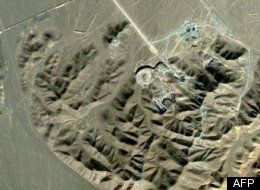
The 2007 NIE was also flat wrong about Iran’s covert work. In September 2009, President Obama announced that “Iran has been building a covert uranium enrichment facility near Qom for several years.” Obama noted that “the size and configuration of this facility is inconsistent with a peaceful program.” Incredibly, the intelligence community was aware of the facility at Qom before it even published the 2007 NIE.
Tuesday, January 26, 2010
Iran: The Time Has Come

Ephraim Asculai
INSS Insight No. 158
25 January '10
If its domestic situation were not so serious, Iran's government could be very happy indeed. Iran managed to gain another crucial year in its quest for a nuclear weapons capability, and every passing day brings it closer to its ultimate goal: having the potential to produce deliverable nuclear weapons in short order, if it so decides. It successfully delayed the West from pursuing a more severe sanctions regime, and the West is behaving as if it has all the time in the world. It does not.
How did this come about? Several factors combined to achieve the net result, most of them not of Iran's doing: the election of a new US president who believed in engagement as the sole way to resolve conflicts (and may still want to believe this); the unwillingness, for years, of the IAEA to acknowledge Iran's ultimate goal; the (unclassified) 2007 US National Intelligence Estimate (NIE) that raised the possibility that Iran abandoned its quest for nuclear weapons; the reluctance of the US to assume the lead role in confronting Iran, and letting the EU-3 deal, albeit ineffectively, with the situation; the contrary attitude of Russia and China, which are watching the West struggle to find a solution while throwing it a bone from time to time in supporting some sanctions resolutions that are not achieving their aim; and the exceptional spanner in the works embedded in the quite unproductive suggestion to transfer some of Iran's low enriched uranium (LEU) outside the country and return it as medium enriched uranium fuel for its Tehran Research Reactor. This last statement needs some explanation.
(Read full report)
.
Tuesday, November 17, 2009
IAEA Inspectors: We’re Shocked, Shocked at Iranian Duplicity
Jonathan Tobin
Contentions/Commentary
16 November 09
The findings of a report released today from the International Atomic Energy Agency’s inspectors about their survey of a previously secret underground nuclear-enrichment plant have apparently led the group to suspect that Iran may be concealing other nuclear factories. Surprise. Surprise. The unfinished facility near the holy city of Qom was built to accommodate enough centrifuges to produce a couple of nuclear weapons a year, but is, in fact, too small to be useful for civilian uses of nuclear power. That gives the lie to Iran’s protests that its nuclear program is for only peaceful intents, but it’s not as if anyone, either in Iran or elsewhere, actually believed that to begin with. But the point of the report is that this newly discovered plant only makes sense if it were part of a network of covert nuclear facilities that could feed it with “raw nuclear fuel.”
But anyone who is shocked about any of this hasn’t been paying attention to this issue for years. Only two years after the United States issued a ridiculous National Intelligence Estimate denying the reality of the Iranian program, even international bodies like the IAEA are no longer prepared to hedge their bets about Iranian intentions. The reality of the imminence of a nuclear Iran cannot be denied any longer, even by those who would prefer to ignore the peril this development poses to U.S. strategic interests as well as world peace. Experts differ as to the exact time line, but there’s little doubt that Mahmoud Ahmadinejad may be in a position to announce that an Iranian nuclear device will be ready sometime within the next few years at the latest.
This also brings into perspective President Obama’s diplomacy on Iran. Having both campaigned on negotiations with Tehran without preconditions and downplayed the human-rights disaster in that country in the wake of a stolen presidential election, Obama seemed to believe he could make a deal with the ayatollahs. But the Iranians rightly sensed weakness and have exploited Obama’s desire for talks at any price. They negotiated a pact to transport their enriched uranium to Russia for safekeeping and then renounced it within weeks without an explanation and have refused Obama’s desperate pleas for them to consider an even sweeter deal. With egg left on his face, Obama has been forced to go cap in hand to Russia and now China to beg them for support for sanctions on the recalcitrant Iranians. The Russians played along, to a certain extent, by expressing their unhappiness with Iran. But you have to forget everything we’ve learned about Vladimir Putin and his foreign-policy priorities in order to believe that the Russians will repudiate their Iranian trading partners to accommodate a prime U.S. strategic interest. Optimism about Chinese help is equally fantastic.
Obama’s amateur diplomacy of apologies and bows can take the U.S. just so far when it comes to manufacturing an international coalition behind the sorts of sanctions that could bring Iran to its knees. Having gambled on a losing diplomatic hand with Iran, the president is now scrambling to resurrect a policy that is clearly sinking under the weight of his naïveté. The latest UN report illustrates just how fast the clock is ticking toward a confrontation that the president seems ill equipped to handle.
.
Monday, October 5, 2009
Bad Options on Iran
An Israeli strike won't suffice
by Michael Rubin
Middle East Forum
National Review Online
October 5, 2009
On October 1, President Barack Obama ascended the podium in the Diplomatic Reception Room at the White House and declared negotiations with Iran a tentative success. "The P5-plus-1 is united, and we have an international community that has reaffirmed its commitment to non-proliferation and disarmament. That's why the Iranian government heard a clear and unified message from the international community in Geneva: Iran must demonstrate through concrete steps that it will live up to its responsibilities with regard to its nuclear program. In pursuit of that goal, today's meeting was a constructive beginning," Obama said, adding, "but it must be followed by constructive action by the Iranian government."
Where Obama sees tentative success, reality suggests failure. Faced with irrefutable evidence, Tehran acknowledged that it had built a second, covert nuclear-enrichment plant, squirreled away in an Islamic Revolutionary Guard Corps base near Qom. Neither Obama nor the director of national intelligence, Dennis C. Blair, acknowledged that Iranian confirmation of its second enrichment plant belied the veracity of the 2007 National Intelligence Estimate. Regardless, Tehran's decision to confess when confronted with proof of cheating should not be considered the same as Iranian transparency and goodwill. Many scientists within the International Atomic Energy Agency believe that the Iranian regime now has "sufficient information to be able to design and produce a workable" nuclear bomb.
Obama's supporters have rallied to put the best face on the P5+1 dialogue. "Obama . . . got more concessions from Iran in 7½ hours than the former administration got in 8 years of saber-rattling," Juan Cole, president of the one-man Global Americana Institute, wrote on his blog. Former Carter administration adviser (and October Surprise conspiracy theorist) Gary Sick was likewise effusive, calling the meeting a "historic moment after thirty years of mutual recriminations and hyperbole." The truth, however, is that any agreement was short of specifics. Iran pledged to allow inspections, but offered no specifics as to when and under what conditions. While Iranian authorities pledged to ship uranium to Russia for further enrichment, the West has no guarantee that Iranian scientists will not simply enrich the fuel further when it is repatriated to Iran.
Not surprisingly, the Iranian regime has been defiant in recent days. Ahmadinejad called Obama's criticism of Iran's second enrichment plant a "historic mistake," hardly a sign that the Iranian regime feels sincere about complying with international demands. Jomhouri-ye Eslami, a daily closely associated with the Islamic Republic's intelligence apparatus, editorialized, "The announcement of the enrichment facilities forced the West into a defensive position," and Kayhan, which voices the line of the "supreme leader," wrote, "The announcement of the enrichment facilities will be Iran's winning card in October negotiations."
The Obama administration may convince itself that it remains in control of the diplomatic process and has placed serious constraints upon any Iranian breakout capability, but countries with more at stake know better. Last month's Iranian test of ballistic missiles capable of hitting Saudi Arabia and Israel underscored both the danger and questions about Iranian sincerity.
Threat Perception
Different threat perceptions muddy the international approach to the Iranian nuclear challenge. For the European Union, the Iranian nuclear challenge revolves around the viability of the nuclear Non-Proliferation Treaty as well as the efficacy of European foreign policy on the international stage. After all, the Islamic Republic's proliferation activities marked the first international crisis in which the European Union consciously sought to lead. Should Iran go nuclear despite years of critical engagement, it would be a blow to the multilateralism-and-incentives approach favored by European foreign ministries.
For President Obama and most of the American foreign-policy apparatus, a nuclear-weapons-capable Islamic Republic would be strategically untenable. A nuclear Iran would embolden Tehran to act out conventionally and by proxy, hiding behind its own nuclear deterrence. Growing Iranian prestige and ability to project power would force other regional states to make accommodations with Tehran that might not be in the U.S. national-security interest. Any additional nuclear power in the Middle East would also unleash a cascade of proliferation: If Iran went nuclear, Saudi Arabia and Turkey would need to develop their own capabilities. If Saudi Arabia and Turkey went nuclear, Egypt and Greece would as well. A nuclear Egypt would lead Libya to reconsider its decision to abandon the bomb, which in turn might lead Algeria to reconsider its own position. In short, a nuclear Islamic Republic would be a game-changer that would complicate U.S. interests in the region for decades to come. That said, Washington need not fear that an Iranian leadership with a handful of nuclear weapons would cause the U.S.'s demise.
(Full Article)
.
Wednesday, September 30, 2009
Intelligence Gamesmanship
Jennifer Rubin
Rich Lowry observes that the discovery of the secret Iranian nuclear facility puts a stake through the 2007 National Intelligence Estimate, which was vilified at the time by conservatives. (Thomas Joscelyn: “As many noted at the time, the language and logic of the NIE were nonsensical. There were transparent flaws in its analysis, including the arbitrary decision to set aside concerns over Iran’s overt uranium enrichment and ballistic missile development efforts — both of which continued apace.”) That would be the same NIE report that was heralded by Obama and his fellow liberals.
Lowry writes:
In November 2007, US intelligence agencies wrote a National Intelligence Estimate concluding, “We judge with high confidence that in fall 2003, Tehran halted its nuclear weapons program.” . . .
The 2007 NIE had a very circumscribed definition of a weapons program, but it included “covert conversion-related and uranium enrichment-related work.” Exactly what Qom is for. What do the Iranians have to do to convince US intelligence they have a weapons program?
Iran has been very lucky in its watchdogs. The 2007 NIE, which stands exposed as about as worthless as then-CIA Director George Tenet’s prewar talk of a “slam-dunk” on Iraq’s WMD, crushed any thought of the politically weakened Bush administration moving against Iran. And the punch-pulling International Atomic Energy Agency has been suppressing damaging material, concerned more with forestalling a conflict over Iran’s nuclear program than forestalling the program itself.
But apparently at some point not even the Obama team bought the NIE’s conclusions. Obama after all was quick to admit that Iran’s Qom facility wasn’t configured for peaceful uses. And the ever changing and highly suspect conclusions about Iran’s nuclear intentions keep dribbling out. The Iranians aren’t much interested in long-range missile development, we were told—a conclusion that fit (magically!) with the Obama team’s fervent desire to give something away (missile defense) to butter up Putin.
We are left with only one conclusion: the incessant reassurances that we have little to fear from Iran are the product of wishful thinking and a high degree of “self-delusion,” as Lowry puts it. Unfortunately, the intelligence bureaucracy that churns out the feel-good estimates has a willing consumer for its defective product in the president. He is only too eager to believe what is being peddled — or ignore what’s unhelpful.
The public and our allies, however, are waking up to the gamesmanship here—and may begin to wonder why the president isn’t the least bit upset that the intelligence community got it exactly wrong in 2007. When that happened under Bush, we had a torrent of outrage and a mob of investigative committees. Yet hardly a peep here. Funny how that works.
.