Showing posts with label Jewish historic sites. Show all posts

Sunday, September 27, 2015

Once Again Refuting Jewish History Deniers

...The Israeli government, then as now run by the supposedly hard line right-winger Benjamin Netanyahu, was so interested in keeping the peace that it made no effort to stop what must be considered the greatest act of archeological vandalism in history. Indeed, the Wakf’s actions must rank with the efforts of the Taliban and ISIS to destroy the vestiges of pre-Islamic cultures in areas under their control. But while the Taliban and ISIS merely wish to erase evidence of pre-Muslim religions in the region, the Wakf, supported by the Palestinian Authority, had a more specific agenda: denying Jewish history.


Jonathan S. Tobin..
Commentary Magazine..
25 September '15..

In recent weeks, the conflict over the Temple Mount in Jerusalem has heated up.

Palestinians have grown increasingly violent in their effort to prevent Jews from entering the site of the two Biblical Temples that constitutes the holiest spot in Judaism. Though the state of Israel has left in place rules that prevent Jews from praying there, the Arab states and the United Nations regard the desire of Jews to visit the compound as an insult to Islam. Palestinian Authority leader Mahmoud Abbas has called upon his people to resist the efforts of Israelis to “desecrate” holy places with “their stinking Jewish feet.” This effort to whip up Arab hate against the Jews, is a cynical act that has several precedents in Palestinian history that inevitably led to the shedding of Jewish blood. But while Israeli efforts to stop the uptick in terror in Jerusalem are being met with unfair criticism, the truth about the struggle over the sacred plateau is best illustrated by the news of a startling archeological discovery.

Researchers sifting through rubble from the Temple Mount that was dumped outside the walls by Muslim authorities have found an ancient stone seal that dates to the 10th and 11th centuries before the Common Era. That is the period of the reigns of the biblical Kings David and Solomon when the first temple was built on the site. While the find will, as is inevitable, will provoke the usual fierce debate among scholars over any such discovery, it nonetheless provides an important context to the political struggle over the Temple Mount and Jerusalem.

The reason why some will question the significance of the seal is that it was found among the 40 tons of dirt excavated by heavy machinery from the ground of the Temple Mount in the 1990s. That excavation was ordered by the Muslim Wakf that Israel has allowed to administer the site and its mosques since Jerusalem’s reunification in 1967 and was the result of a mosque building project. Though this is one of the key historic sites in the world, the Wakf had no interest in preserving the vast treasure trove of artifacts that are contained in the 35-acre Temple Mount compound. Indeed, judging by the brutality of its methods and its decision to simply dump the contents of their excavation in the Kidron Valley outside the walled city, it appears the Wakf was as interested in trashing any possible evidence of the history of this place as they were in improving their facilities.

The Israeli government, then as now run by the supposedly hard line right-winger Benjamin Netanyahu, was so interested in keeping the peace that it made no effort to stop what must be considered the greatest act of archeological vandalism in history. Indeed, the Wakf’s actions must rank with the efforts of the Taliban and ISIS to destroy the vestiges of pre-Islamic cultures in areas under their control. But while the Taliban and ISIS merely wish to erase evidence of pre-Muslim religions in the region, the Wakf, supported by the Palestinian Authority, had a more specific agenda: denying Jewish history.

Friday, May 14, 2010

Hebron – Israel’s National Heritage, Model of Joint Access


Dr. Aaron Lerner
IMRA
Weekly Commentary
13 May '10

“How old are these steps? Well, let’s put it this way,” said Hebron Spokesperson Noam Arnon, as he pointed to steps running between two Bronze Age walls in Hebron, “when Abraham climbed these steps with Isaac, he might have noted what great shape they were in despite their ancient origin.”

Now that’s a unique perspective.

When I joined the five buses from Raanana and Kfar Sava this evening on their 200th visit to Hebron that coincides with the anniversary of the 1967 liberation of the city, I was reminded once again of just how unique this Jewish historical landmark is.

So there we were going into a building built at the same time as Herod’s spectacular Temple in Jerusalem.

That’s right.

Going into it.

Herod’s Temple was destroyed.

The building, that has the same architectural style and building methods as the Temple, stands to this very day.

And yes. It does indeed sit on top of a “double cave” – a “Machpela” - as described in the Bible as the final resting place of Abraham, Sarah, Isaac and Jacob and other ancestors in the first recorded price gouging in a real estate deal (“what’s four hundred shekels of silver between you and me?” Ephron asked Abraham rhetorically).

For centuries of Moslem occupation Jews were denied access to this holy site.

But in 1967, when the building finally returned to Jewish control, Israel decided not to follow the Moslem precedent and claim exclusive Jewish access. Instead Jews and Moslems share access, with each group assigned space in the building along with exclusive use of the entire structure for Jews and Moslems on the respective major holidays. [This gets a bit complicated some years since the Moslem calendar is a lunar calendar without a solar adjustment to the Moslem holidays are constantly shifting around the year and sometimes coincide with Jewish holidays].

The Hebron model is proof positive of two important principles:

Open access to religions with contending claims to a site is only viable if the site is under Jewish control.

That ongoing control can only be assured if it is supported by the presence of a living community adjacent to the site.

These are principles that are crucial for Israeli policy makers to keep in mind as they enter negotiations.

If you enjoy "Love of the Land", please be a subscriber. Just put your email address in the "Subscribe" box on the upper right-hand corner of the page.
.

Tuesday, March 9, 2010

The erasure of Jewish history and heritage

Bataween
Point of No Return
09 March '10

The Arab and Muslim outcry against Israel's proposed restoration of Jewish heritage sites in Hebron is symptomatic of a campaign to deny and erase Jewish history and heritage in the region as a whole. Read my guest post on CiFwatch.


The rebuilt Hurva synagogue in the old city of Jerusalem (With thanks: Eliyahu)

Rising from the ashes like a phoenix, the rebuilt Hurva synagogue is about to be inaugurated in Jerusalem’s Jewish quarter.


The synagogue, restored to 19th century magnificence with its finely carved wooden pillars, gilt ornamentation and frescoes of Jerusalem, is a rare symbol of the revival of Jewish life after Israel’s post-1967 reunification of the city. The synagogue was razed to the ground in 1948, dynamited by the Transjordanian Arab Legion, along with scores of other synagogues. The old city was depopulated of thousands of its Jewish inhabitants, their homes looted, the Jewish cemetery on the Mount of Olives desecrated and its tombstones used for latrines and as paving stones.

(Read full story)
.

Monday, January 18, 2010

Anything but Jewish


Petra Marquardt-Bigman
The Warped Mirror
17 January '10

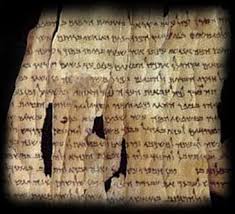
Examples of Arab disregard for historic Jewish sites and artifacts could easily fill a book, and it wouldn't be a problem to fill an additional volume with examples of Arab denials of the historic Jewish connection to Jerusalem and the region. In the most recent example, Jordanian authorities apparently felt no embarrassment at claiming the Dead Sea Scrolls are "our antiquities," and the Palestinians no qualms in asserting the scrolls are "part of Palestinian heritage."

In an apparent attempt to bolster these claims, Palestinian journalist Daoud Kuttab recently shared his memories of "Growing Up in Bethlehem With the Dead Sea Scrolls Story" with readers of The Huffington Post.

Kuttab professes to be particularly upset by Israeli claims that "the scrolls have no connection to Jordan or the Jordanian people" but are instead "an intrinsic part of Jewish heritage and religion." Kuttab seems to think that these Israeli claims are easily invalidated by his own childhood memories of being told the story about the discovery of the first Dead Sea Scrolls by a Beduin goat herder - who then asked an Arab cobbler to make sandals out of them. Fortunately, the cobbler realized that these scrolls could be valuable, and according to Kuttab, they eventually were passed on to a high-ranking official of the Syrian Orthodox Church, who managed to sell them for a fortune.

So much for the deeply-felt Arab attachment to this unique historic treasure.

(Read full article)
.