Showing posts with label Iran Nuclear Facilities. Show all posts

Sunday, October 3, 2010

The lessons of Stuxnet

Caroline Glick
carolineglick.com
01 October '10

There's a new cyber-weapon on the block. And it's a doozy. Stuxnet, a malicious software, or malware, program was apparently first discovered in June.

Although it has appeared in India, Pakistan and Indonesia, Iran's industrial complexes - including its nuclear installations - are its main victims.

Stuxnet operates as a computer worm. It is inserted into a computer system through a USB port rather than over the Internet, and is therefore capable of infiltrating networks that are not connected to the Internet.

Hamid Alipour, deputy head of Iran's Information Technology Company, told reporters Monday that the malware operated undetected in the country's computer systems for about a year.

After it enters a network, this super-intelligent program figures out what it has penetrated and then decides whether or not to attack. The sorts of computer systems it enters are those that control critical infrastructures like power plants, refineries and other industrial targets.

Ralph Langner, a German computer security researcher who was among the first people to study Stuxnet, told various media outlets that after Stuxnet recognizes its specific target, it does something no other malware program has ever done. It takes control of the facility's SCADA (supervisory control and data acquisition system) and through it, is able to destroy the facility.

(Read full story)

If you enjoy "Love of the Land", please be a subscriber. Just put your email address in the "Subscribe" box on the upper right-hand corner of the page.
.

Monday, March 8, 2010

Facing Iran: Lessons Learned Since Iraq's 1991 Missile Attack on Israel


Moshe Arens
Jerusalem Center for Public Affairs
Vol. 9, No. 21
08 March '10

Prof. Moshe Arens was Israel's defense minister during the 1991 war with Iraq. He served as Israel's Minister of Defense in three different governments, as Minister of Foreign Affairs, as Chairman of the Foreign Affairs and Defense Committee, and was Israel's Ambassador to the United States.

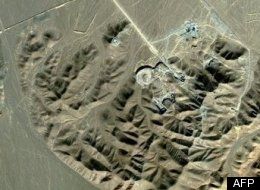
The Iranians learned a great deal from the destruction of Iraq's Osirak reactor by the Israel Air Force in 1981. The Osirak reactor was the key element in the Iraqi nuclear program: a single target which, when it was destroyed, set that program back very substantially. The Iranians saw this and they dispersed their nuclear program. Much of it is deep underground. There is no single target which, if destroyed, would substantially set back the Iranian nuclear program

When I came to Washington as Israel's ambassador in 1982, the atmosphere was one of hostility and there was talk of imposing sanctions against Israel as a reaction to its unilateral action against the Osirak reactor. Yet after a few years the view in Washington changed completely. It is difficult to envision the Americans undertaking Operation Desert Storm in the Gulf in 1991 if the Iraqi nuclear program had continued beyond 1981 and had not been so seriously set back by the Israeli action.

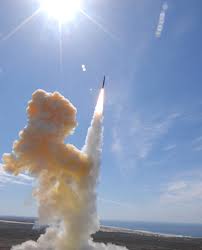
Some say that while the missiles Israel faces are relatively cheap weapons, we are launching a very expensive missile interceptor system against it, which does not seem very wise at first sight. However, the damage that might be caused by the incoming missile may far exceed the cost of the anti-missile system.

Israel's missile interceptor system poses a dilemma to anybody who decides to launch missiles against Israel, especially a missile that has a nuclear warhead. The dilemma is that the missile may very well be intercepted and thus expose the launching of a nuclear missile, even if it didn't reach its target, which could bring about the response that could be expected for committing this deed.

At the start of the Gulf War, the Americans said they expected that within 48 hours the U.S. Air Force would eliminate the missile launch capability of the Iraqis. If they did not succeed, Israel would be free to take whatever action it considered appropriate. Although there was intensive aerial activity directed at hitting the Scud launchers, not a single Scud launcher was hit or immobilized during the Gulf War. Furthermore, the U.S.-made Patriot missiles in Israel did not succeed in intercepting a single Scud missile.


Today, in 2010, in the United States and the Western world there is a very real and acute awareness of the danger that Iranian nuclear activity - which is clearly designed to achieve a nuclear military capability - poses to the world, not just to Israel.

Some people like to think that Israel has nothing to worry about because of the sizable Muslim population in the area and that the Iranians would not dare to cause massive destruction in an area where many Muslims might get injured or killed. However, as Prof. Bernard Lewis has said on a number of occasions, this kind of immunity is imaginary because radical Muslims are convinced that God knows how to tell the difference between Jews and Muslims.

(Read full article)
.

Iranian Clocks, Tick Tock, Tick Tock


Michael Ledeen
Pajamasmedia.com
07 March '10

The failed Israeli ex-PM, Ehud Barak, gives us the benefit of his deep thinking about Iran. It’s an Einsteinian metaphor about relative rates of the passage of time:

The clock for the Iranian regime’s downfall is ticking, Defense Minister Ehud Barak said in a lecture at the Washington Institute for Near East Policy on Friday. However, “it’s clear to me that the clock toward the collapse of this regime works much slower than the clock which ticks toward Iran becoming a nuclear military power,” Barak said.


How does he know that? — we (or at least some of us) wonder. I can imagine that the Israelis think they know the timetable for the Iranian atomic bomb, but I don’t think anyone has the schedule for the regime’s final days. And anyway, this is a case where static analysis is totally inappropriate. Any scenario has to include the likelihood of new variables being introduced. There’s probably a big sabotage operation going on against the atomic project, and some day somebody in the so-called Western world might decide to help the Iranian opposition speed up the “downfall clock.”

With regard to the atomic clock, I am told that the Iranian regime intends to announce two more hitherto-secret enrichment sites in early April. One is near Mashad, over by the Afghan border. The other is in the mountains east of Tehran. In keeping with the regime’s constant use of deception and misdirection, you can be pretty sure that there are other secret sites as well.

(Read full article)
.

Wednesday, February 24, 2010

Chance of Mideast war not as great as it may seem


Fresnozionism.org
23 February '10

Many commentators (including me) have been worried about the possibility of a new regional war in the Mideast, possibly triggered by a US or Israeli attack on Iranian nuclear facilities, or by Hizballah launching its massive rocket collection at Israel. But recently I’ve come to think that war is unlikely in the near future.

Everyone pretty much agrees that a preemptive US attack is not in the cards.

Anne Applebaum, in the Washington Post, writes:
[Barack Obama] will not bomb Iran’s nuclear installations for precisely the same reasons that George W. Bush did not bomb Iran’s nuclear installations: Because we don’t know exactly where they all are, because we don’t know whether such a raid could stop the Iranian nuclear program for more than a few months, and because Iran’s threatened response — against Israelis and U.S. troops, via Iranian allies in Iraq, Afghanistan, Palestine and Lebanon — isn’t one we want to cope with at this moment. Nor do we want the higher oil prices that would instantly follow. No American president doing a sober calculation would start a war of choice now, while U.S. troops are actively engaged on two other fronts, and no American president could expect public support for more than a nanosecond.

She left out one other important point: the US is relatively low on the list of those who are directly threatened by the Iranian bomb. Said list looks something like this:

(Read full article)
.

Tuesday, February 23, 2010

What the IAEA Knew: The U.N. agency charged with stopping nuclear proliferation enabled it.


Anne Bayefsky
Eye On the U.N.
22 February '10

This article, by Anne Bayefsky, originally appeared in Forbes.com.

The most important thing gleaned from the report by the U.N.'s International Atomic Energy Agency (IAEA) circulated on Feb. 18, which states that Iran may indeed be bent on developing a nuclear bomb, is not new information about Iran. It is that for years the United Nations apparatus lied about what they knew and actively stood in the way of efforts to prevent the world's most dangerous regime from acquiring the world's most dangerous weapon.

The "confidential" report leaked to every news agency on the planet, is quoted as stating that on the basis of "extensive" and "credible" information the IAEA now has "concerns about the possible existence in Iran of ... current undisclosed activities related to the development of a nuclear payload for a missile," and "concerns about possible military dimensions to Iran's nuclear program."

While Obama administration officials have attempted to spin the first report of IAEA chief Yukiya Amano, who took over last December, as a U.N. achievement, the implications of the evident U.N. deceit cannot be overstated. After all, the organization has a choke hold on global imaginations. In 2005 the Nobel Peace Prize was awarded to the IAEA and its then Director General Mohammed ElBaradei "for their efforts to prevent nuclear energy from being used for military purposes." It is now clear that this occurred at the very same time that ElBaradei was engaged in what may well prove to be the most lethal cover-up in human history.

For almost a decade, the IAEA and its director general stalled for time on behalf of Iran, with reports feigning ignorance of Iranian designs while leaving an escape hatch should the IAEA's disguise as a non-proliferation agency be blown. In February 2006 ElBaradei reported: "Although the Agency has not seen any diversion of nuclear material to nuclear weapons or other nuclear explosive devices, the Agency is not at this point in time in a position to conclude that there are no undeclared nuclear materials or activities in Iran. The process of drawing such a conclusion ... is a time consuming process."

(Read full article)
.

Wednesday, February 10, 2010

How Adam Lowther learned to stop worrying and love the (Iranian) bomb


Fresnozionism.org
09 February '10

The most frightening thing about this mind-numbingly wrongheaded op-ed in the NY Times (“Iran’s Two-Edged Bomb“) is the line at the end that describes the author:

Adam B. Lowther is a defense analyst at the Air Force Research Institute.

Let’s hope that he wrote this as a result of a bar-room bet on the gullibility of the Times, because we really don’t want anyone basing policy on this. In that spirit, let’s look at the five reasons that Dr. Lowther thinks the Iranian nuclear bomb has an upside:

Reason 1:

Iran’s development of nuclear weapons would give the United States an opportunity to finally defeat violent Sunni-Arab terrorist groups like Al Qaeda. Here’s why: a nuclear Iran is primarily a threat to its neighbors, not the United States. Thus Washington could offer regional security — primarily, a Middle East nuclear umbrella — in exchange for economic, political and social reforms in the autocratic Arab regimes responsible for breeding the discontent that led to the attacks of Sept. 11, 2001.

The US cannot provide ‘regional security’ when all it can offer is nuclear retaliation. So when Iran, which already controls Syria and Lebanon and will soon control Iraq, pushes to raise oil prices and threatens to unleash Hizballah, for example, what do we do? Nuke them? Iran knows that the US cannot afford to get bogged down in another conventional war.

Even if we could provide security, the ‘deal’ Lowther proposes will not help defeat Sunni terrorism, for the following reasons:

(Read full post)
.

Tuesday, January 26, 2010

Iran: The Time Has Come


Ephraim Asculai
INSS Insight No. 158
25 January '10

If its domestic situation were not so serious, Iran's government could be very happy indeed. Iran managed to gain another crucial year in its quest for a nuclear weapons capability, and every passing day brings it closer to its ultimate goal: having the potential to produce deliverable nuclear weapons in short order, if it so decides. It successfully delayed the West from pursuing a more severe sanctions regime, and the West is behaving as if it has all the time in the world. It does not.

How did this come about? Several factors combined to achieve the net result, most of them not of Iran's doing: the election of a new US president who believed in engagement as the sole way to resolve conflicts (and may still want to believe this); the unwillingness, for years, of the IAEA to acknowledge Iran's ultimate goal; the (unclassified) 2007 US National Intelligence Estimate (NIE) that raised the possibility that Iran abandoned its quest for nuclear weapons; the reluctance of the US to assume the lead role in confronting Iran, and letting the EU-3 deal, albeit ineffectively, with the situation; the contrary attitude of Russia and China, which are watching the West struggle to find a solution while throwing it a bone from time to time in supporting some sanctions resolutions that are not achieving their aim; and the exceptional spanner in the works embedded in the quite unproductive suggestion to transfer some of Iran's low enriched uranium (LEU) outside the country and return it as medium enriched uranium fuel for its Tehran Research Reactor. This last statement needs some explanation.

(Read full report)
.

Monday, December 14, 2009

Clinton Speaks About Iran: Shows How Slowly U.S. Policy is Changing Gears from Engagement to Sanctions


Barry Rubin
The Rubin Report
13 December 09

In a December 10 al-Jazira interview, Secretary of State Hillary Clinton explains U.S. policy toward Iran, showing the administration has still not really started turning from engaging Iran to slapping on high sanctions.

A lot of what she said revealed the administration’s almost pathological desire to avoid conflict:

“What we have tried to do is engage in diplomacy in a very vigorous way in order to reassure the international community, including all states, that Iran’s nuclear program was for peaceful purposes. Unfortunately, we haven’t had the kind of response we were hoping for from the Iranians.”

This is a rather shocking formulation and though I know it isn’t as bad as it sounds, after all Clinton is the one choosing her words. She basically is saying: We want to show the world that Iran has a peaceful intent so Tehran should help us do so.

It is a bit late in the game to take Tehran’s claim that it is only seeking the peaceful use of nuclear energy at face value. Of course, this isn’t what Clinton really thinks. She's just being too clever by half, hinting that if Iran wants to prove it isn’t seeking nuclear weapons it must agree to some kind of deal. She's giving Tehran a face-saving way out.

But really isn’t this coyness out of date? Al-Jazira’s audience, millions of Arabs, is likely to interpret this as meaning the United States isn’t insisting there’s a big threat or doesn’t have proof that Iran is developing nuclear weapons. They are more likely to ask what’s all the fuss about, making it seem that Iran is being framed by extremist Muslim-haters and is actually not building weapons of mass destruction? This is a dangerous miscalculation.

But Clinton goes further to make Iran seem sort of innocent:

“President Obama made it absolutely clear [despite] lots of political opposition that if he reached out his hand and if Iran reciprocated, we could talk about anything and everything. Then came the [Iranian] election, then came the crackdown on peaceful dissent, then came demonstrations, and the turmoil inside Iran is continuing until today.”

The implication here is that if not for all this disruption, Iran might have agreed. Now obviously if the United States is in the mode of persuading the Iranian regime to make a deal it can put the emphasis on not offending Tehran. But it isn’t March or April any more but mid-December 2009. Isn’t it time to lay the basis for getting tough and applying sanctions? If Clinton hasn’t switched gears yet when will she do so?

When it comes to covering for the Iranian regime, Clinton goes even further. After explaining that the United States supports the proposal for Iran shipping out enriched uranium to be turned into something relatively harmless she adds:

“They had first agreed in principle, and then I think because of internal disputes, they backed off from that, raising a lot of questions about what their true intentions are.”

This makes it sound like they came really close but then got sidetracked by internal bickering. Perhaps, an observer might think, they'll change their mind after a few more internal debates. This also gives credence to Iran’s latest efforts to confuse the situation and stall for time by pretending they might agree to a deal.

(Full article)
.

Thursday, December 3, 2009

ElBaradei's failure


JPost Editorial
01 December 09

As of yesterday, the International Atomic Energy Agency (IAEA), the UN's nuclear watchdog, has a new director-general, the understated Japanese diplomat Yukiya Amano. Mr. Amano has his work cut out for him. His predecessor, 67-year-old Mohamed ElBaradei, stepped down after 12 years with what, by his deplorable standards, amounted to a bang rather than a whimper.

In the last few days, ElBaradei declared bitterly that the IAEA's probe of allegations that Iran has been trying to make nuclear arms is at "a dead end" because Teheran is not cooperating. He warned that confidence in Teheran had shrunk in the wake of its belated revelation of a previously secret nuclear facility at Qom.

He slammed Teheran for rejecting a proposal meant to delay its ability to make nuclear weapons. Iran would have had to ship out most of its stockpile of 1,500 kilograms of low-enriched uranium. Its demand to "dilute" the proposal, ElBaradei stressed firmly, "was unacceptable because it could mean Teheran retaining enough enriched uranium for use in a nuclear weapon."

Reflecting its outgoing director's frustrated assessments, the IAEA's board on Friday overwhelmingly passed a resolution demanding that Iran stop construction at the Qom facility and stop uranium enrichment.

The US promptly warned that its "patience" on Iran might be exhausted by year's end. Britain, sounding increasingly irritated, urged Iran to "accept the hand that has been extended toward it." And the French Foreign Minister, Bernard Kouchner, spoke of "one last chance for dialogue" before "very harsh" sanctions.

"Why did Iran announce 10 new uranium enrichment sites when it has only one nuclear plant to burn this fuel?" Kouchner demanded, not unreasonably, referring to the defiant Iranian response to the IAEA's resolution.

THE ANSWER to Kouchner's question, and to the wider question of why Iran treats the IAEA with such contempt, is simple: because, under ElBaradei's blinkered watch, it has learned that it can.

(Read full article)
.

Sunday, November 29, 2009

Breaking News: Tehran OKs Ten Uranium Enrichment Facilities; U.S. Government Begs Iran to Negotiate


Barry Rubin
The Rubin Report
29 November 09

Iran's government announced a cabinet-level decision approving construction of ten new facilities to make enriched uranium, defying the United States and the UN. U.S. reaction so far? Please please talk with us . This is the moment for the president to make that "My fellow Americans..." getting tough and imposing high sanctions speech, showing leadership and urging Europe to follow him. Why is it one doubts that will happen?

This is not just another slap, it is a hitting over the head with a two by four. It’s getting pretty obvious that Iran doesn’t want to make nice no matter how hard the West and particularly President Barack Obama tries. There’s a broader lesson here: if you apologize, they take it as weakness. If you take too long to react, they use it as an opportunity to advance. If you make a concession they demand more. If you pass a resolution, they laugh in your face.

At some point in history, perhaps Western leaders, academics, and intellectuals will understand this. How about today?

After all, the Iranian regime has now approved a plan to build 10 new uranium enrichment facilities (start building five; start planning five more). Get it? You criticize us for building one, so our answer is to build 10. You criticize us for building one in secret, so we do it right before your eyes.

What are you going to do about it? Come and get me, copper! You don’t like it? Go drink the Nile. And a lot of other expressions which require words I don’t use but an example has two words, the first of which has four letters and the second of which is “you.”

It should be noted that this probably isn't going to happen. When the regime starts talking about 500,000 centrifuges that is a fantasy, so is the idea of building ten facilities. It's a largely--but not necessarily totally--demagogic response. Yet it also indicates the likelihood that Iran will build (is building? has already built?) more facilities.

(Read full article)

Saturday, November 28, 2009

The Trouble with Soft Diplomacy: Endless Resolutions on Iran, No Resolution of the Issues


Barry Rubin
The Rubin Report
27 November 09

In its own view, the Obama Administration has won a considerable foreign policy victory in the International Atomic Energy Agency vote to condemn Iran’s nuclear program. Winning such triumphs is the whole goal of a patient policy by the Obama Administration to cultivate wide support for criticizing Iran. The problem is that this is not the same thing as doing something about Iran.

The key development is that only three countries—Cuba, Venezuela, and Malaysia—supported Iran. China and Russia backed the U.S. position. It is being implied that this signals the possibility that they might support material sanctions against Tehran.

But that’s not true and thinking otherwise shows a real structural failure in how even supposed experts nowadays think about international affair. Voting for a resolution is a substitute for taking action, a fact that might prove to be the bane of the Obama Administration.

In addition, while the resolution is being touted as tough, it I based on an incontrovertible set of simple facts. Iran was criticized for two things: continuing to defy the previous UN resolutions by enriching uranium and building a secret nuclear facility.

It’s like passing a resolution to criticize, rather than arrest, someone you just saw pump a half-dozen bullets into a murder victim and then being pleased that it was nearly unanimous.

(Read full article)
.

Thursday, October 29, 2009

Containment of a Nuclear Iran: Sounds good but it's a risky and possibly losing strategy


Barry Rubin
The Rubin Report
28 October 09

It is truly disconcerting (a fancy word for scary) to see that those charged with the protection of the West, democracy, and the world are so resolutely barking up the wrong tree. In this case, this involves the U.S. strategy toward Iran nuclear weapons.

The short-term goal—whether it is being implemented well enough is another matter entirely—is to stop Iran from obtaining nuclear weapons. If this fails, however, the United States discards any military response and goes to containment.

Containment means that the United States would strengthen missile defenses in Europe, which is nice but will have no actual effect on any real-world situation. The second and more important policy would be to strengthen relations with Gulf states, notably Saudi Arabia, threatened by Iran’s possession of nuclear weapons.

A typical defense of containment comes from General John Abizaid who commanded U.S. forces in the Middle East between 2003 and 2007. Iran, he explained, would make rational judgments. "The historical evidence would suggest that Iran is not a suicide state. So it's my military belief that Iran can be deterred."

There are three problems with this overall strategy.

First, for containment of Iran to work, the United States must have credibility with both allies and enemies. That means the Iranian regime has to believe that any use of nuclear weapons or aggression will bring a full-scale American military response including even the use of nuclear weapons. Does a government led by President Mahmoud Ahmadinejad believe that about a government led by President Barack Obama given everything it has done or said? The answer seems closer to “no” than to “yes.”

Equally important, the Gulf Arab states must believe—and believe it very very firmly—that the United States is going to be reliable as a protector. Can the Saudis and the others hold that view of Obama’s administration? Remember that it doesn’t matter how many speeches Obama makes about how he loves Arabs, Islam is great, and he cares a lot about the Palestinians. They don’t want to know that he will apologize; they want to know he will fight.

Which is why one Arab from a Gulf state remarked privately: We don’t want Obama to act like an Arab. We want him to act like an American.

Faced with the choice between the devil and the deep blue sea, Gulf Arabs are going to hedge their bets and hedge them heavily with appeasement. They will reduce cooperation with America while simultaneously demanding it will protect them. They won’t do anything to offend Iran, including any real steps toward peace with Israel.

The second problem related directly to Abizaid’s statement. Yes, on balance it seems more likely than not that Iran is not a suicide state, but would you bet your life on it? The statement is equally true that the Iranian regime will be by far the closest thing to a non-rational state of any major power during the last 60 years. If any country in the world today is a suicide state it’s Iran—though Libya and North Korea are in contention.

What Abizaid expresses is at best a greater likelihood and most likely a hope rather than a firmly established proposition. And of course the Tehran regime may think it has found a way around the “suicide” problem, say by providing weapons of mass destruction to a terrorist group. In addition, given the highly factional nature of Iran’s regime, a specific group within the overall structure might be ready to take greater risks.

Remember that the nuclear weapons will be controlled by the Islamic Revolutionary Guard Corps, the most fanatical of the fanatical and those responsible for maintaining liaison with terrorist groups. And who is the top man? The Iranian minister of defense, that’s who, and he also happens to be a wanted terrorist in his own right.

So this arrangement is far less secure than U.S. policymakers are pretending. You can literally see the inner workings of their brains: Iran is rational; balance of terror will work; American credibility is great. Hey, no problem! Wrong.

Third, and perhaps ultimately most important, Iran’s increased power in having nuclear weapons will not consist merely of firing them off. The mere possession of such weapons will bring Arab and European appeasement to hitherto unprecedented heights.

Moreover, the picture of Iran as a great power before which the rest of the non-Muslim world trembles will be a massive recruiting incentive for Islamists, both pro- and anti-Iran ones throughout the Middle East and Europe. The level of internal instability in each Arab state will rise, while terrorism would probably go up in Europe as well. Iran would be seen as the wave of the future by hundreds of thousands of Muslims, a bandwagon onto which they would want to jump.

To pretend then that Iran’s possession of nuclear weapons will be neutralized by U.S. guarantees to Gulf Arab states is a fantasy.

After all, this line of reasoning would have you believe as follows: Iran never intends to use nuclear weapons any way but U.S. containment would prevent them from using these weapons. But the Iranian regime knows all of this already, so why is it spending huge amounts of money, stupendous political capital, and at the greatest costs. Why?

It’s true that part of the rationale is defensive, to ensure that the United States (which has no intention of doing so any way) doesn’t attack. Yet a large part of the reasoning to make such a risky choice is the idea that having nuclear weapons will make Iran a far more powerful player in the region, able to project its influence better. That’s the main aspect and will take effect even if there is an effort at containment.

In addition, perhaps extremist fanaticism, or pure miscalculation, or a small crazed faction would lead to nuclear war in the Middle East and massive deaths. If anyone is capable of getting into a nuclear war by such means, it’s Iran’s government.

That’s why it is so important to stop Iran from ever obtaining nuclear weapons. If this does happen, as appears likely, the entire regional picture will change and it will require a lot more than assurances to Gulf Arab states to keep the situation from eroding further.
.

Monday, October 26, 2009

Iran: Enriching Uranium or its Regime?


Tariq Alhomayed
Asharq Al-Awsat
25 October 09

The prevailing roundabout has returned i.e. [that of] saying yes and no, between the Iranian regime and the G5 + 1 countries in the Vienna negotiations that are discussing the Iranian nuclear file after Tehran surprised the West by asking for a new deadline next week in order to give its response to whether it will accept the proposal put forward with regards to uranium being enriched by a third party outside of Iran.

There are those who are saying that the Iranians have returned to playing the game of buying time – and this is a game that they excel at – in order to prolong these negotiations and avoid any obstacles until the end of the year. There are other reports that talk about the difficulties that the Ahmadinejad regime is currently facing in convincing Iran’s hard-liners to accept the proposal made by the West in its present form, and this is something that confirms the seriousness of the position that Ahmadinejad is in. And then there is International Atomic Energy Agency [IAEA] Directory-General Mohamed elBaradei saying in an interview to the [French] “L’Express” magazine that during his visit to Iran two weeks ago, the Iranian president informed him of his country’s desire to move forward with this issue. ElBaradei confirmed that Ahmadinejad “wants to normalize relations with the US and western countries, and also with the international community in general.” He added that Ahmadinejad “is not interested in a partial normalization [of relations] but a comprehensive normalization [of relations].”

The well-established issue here is the difficulty of believing in the Iranian regime’s intentions, and understanding whether they are procrastinating in order to buy more time, or whether there truly are internal difficulties facing Ahmadinejad with regards to convincing the hard-line trend of the benefits of this agreement with the West, and the wisdom of accepting what is being offered. This issue as a whole may perhaps be [connected to] the distribution of roles in Iran, and it is clear today that the Iranian president wishes to enrich his regime more than he wishes to enrich uranium.

Ahmadinejad’s regime is suffering from a lack of internal legitimacy following the recent presidential elections, which his opponents accused him of rigging. Ahmadeinjad’s regime is also suffering from an ongoing and severe internal resistance from the reformist trend. Therefore success in the Vienna negotiations is perhaps the best way out for the Ahmadinejad regime for if Ahmadinejad is able to reach a comprehensive agreement with the West, contributing to the lifting of sanctions from Iran and the normalization of relations with the US and the West, this will allow him to turn the tables on the reformists.

By doing this, Ahmadinejad will have stripped his reformist opponents of all of the issues that [they use to] influence the Iranian street with regards to economic and political openness, not to mention achieving a major breakthrough in the Iranian nuclear file which he will be able to present to the Iranian interior however he likes, whether as an Iranian victory with talk of the West backing down, or by saying that Iran has given the world a way out of the crisis which is proof of Iran’s role in the region and the world. There is no doubt that the Ahmadinejad regime will not fail to find an explanation to presents itself in a good light, for this is a game that Iran excels at.

From here we can understand the Iranian negotiators speaking about the necessity of the West taking steps to build trust with Iran by lifting sanctions and normalizing relations with Tehran. It seems that Iran is just as keen to enrich its regime as it is to enrich uranium, perhaps more so.

Tariq Alhomayed is the Editor-in-Chief of Asharq Al-Awsat, the youngest person to be appointed that position. Mr. Alhomayed has an acclaimed and distinguished career as a Journalist and has held many key positions in the field including; Assistant Editor-in-Chief of Asharq Al-Awsat, Managing Editor of Asharq Al-Awsat in Saudi Arabia, Head of Asharq Al-Awsat Newspaper's Bureau-Jeddah, Correspondent for Al - Madina Newspaper in Washington D.C. from 1998 to Aug 2000.

Friday, October 23, 2009

Iranian Negotiations: Ploy of the Week or Deal of the Century?


Barry Rubin
The Rubin Report
22 October 09

There are widespread reports about an imminent deal with Iran regarding its nuclear program. Here’s how the New York Times optimistically presents the proposal:

“Iranian negotiators have agreed to a draft deal that would delay the country's ability to build a nuclear weapon for about a year, buying more time for President Obama to search for a diplomatic solution to the Iranian nuclear standoff.”

(To be fair, even this somewhat cautious note may be much less ecstatic than what we'll be hearing if the deal goes through.)

What is the proposed bargain? It is based on an offer the Iranian government made in 2007 and reintroduced last June. In practice, the result would be that Iran enriches unlimited amounts of uranium to a level near that needed for weapons, a large amount of this would be shipped off to France and/or Russia where it would be converted into something useful for medical purposes alone. Thus, it could be said that Iran having nuclear weapons has been either stopped or delayed considerably, though in fact it would only be delayed (if at all) not very long.

If the deal is made—and don’t take for granted it will be as the Iranian regime can think of plenty of delaying tactics, demands for modifications, real or imaginary internal conflicts blocking acceptance, etc.—there will be general rejoicing and the idea of further sanctions will be put on a back shelf to gather dust.

Indeed, it could effectively be argued, that existing sanctions could be removed. This does not seem likely at present--it would require a UN resolution undoing existing sanctions--but such a thing could arise in the future. And of course various countries in Europe could interpret the restrictions more loosely to allow deals that would not have gone through otherwise.

In other words, Iran could go on sponsoring terrorism (in Afghanistan, Iraq, Lebanon, against Israel, and in other places) and calling for Israel’s destruction while being treated as a regular member of the international community. It would only be a matter of a week or two before media outlets start writing that this proves President Barack Obama did deserve the Nobel Peace Prize.

Iran is trumpeting the proposed deal as a victory. But that seems rather strange doesn’t it? If this deal is as it appears (and again assuming it happens), then Iran won’t get nuclear weapons, has wasted billions of dollars and years of effort for nothing. In fact, it will be running a huge nuclear program to produce a product which in strategic terms is totally useless.

Or to put it another way, it's like setting up a massive and expensive sword-making industry, then shipping off the completed swords to be turned into ploughshares and pruning hooks when you didn't have any agriculture.

And by the way, since Iran--and its apologists--have been insisting that its real goal was nuclear power plants (as if one of the world's largest oil producers which exports almost all of its production needs that) then why doesn't Iran just agree to some deal in which all the uranium went to fuel such reactors with foreign-enriched fuel and close supervision? Even that would make more sense than this deal.

Does this make sense? There will be many silly reasons for this put forward: Iran was scared by sanctions and a united front against it, or Obama is so popular that they like him or trust him and it proves his strategy works. These ideas are nonsense but one a lot of average people in the West will believe them).

One logical argument that will be advanced is that internal disorder is forcing the regime to take a step back and be more cautious. This is a partial argument but, again, doesn’t explain why there would be such a huge apparent concession from a regime unaccustomed to making them.

So what’s really going on?

First, the whole thing may turn out to be a maneuver for buying time and no agreement is actually made.

Second, the Franco-Russian reworked uranium could be turned back into something suitable for further enrichment into weapons’-grade material in several months.

Third, Iran may well have other secret facilities which are going to be pumping out military useful enriched uranium. We have just seen how well they can conceal these things by the public exposure of such a secret facility. These could easily replace the uranium shipped abroad in a brief period of time.

Fourth, Iranian leaders, knowing that they have some way to go before being technologically ready to build weapons, are happy to accept a seeming delay in providing the uranium which will allow them to catch up with the technological and engineering requirements of making a bomb that works and missiles that will carry it to the target. Indeed, with sanctions loosened, it might get the very techniques and tools it needs to complete this process under the guise of other uses.

Note that the Bushehr nuclear reactor, which was supposed to have begun operation some months ago, has not been started up yet. Is this due to some technical difficulties? The reason certainly doesn't seem to be Iran sending a signal of willngness to compromise since the regime has not used this factor as proof of its flexibility.

If this last argument is true--and it seems to be a reasonable one--then the idea that such a deal would even "slow" Iran's obtaining nuclear weapons wouldn't necessarily be true.

There could also be Iranian deals with other countries—perhaps North Korea or Venezuela, for example—to cooperate in supplying what’s needed. Such a possible arrangement with Syria was destroyed by an Israeli attack on a facility in that country last year.

And speaking of an Israeli attack, this agreement would buy Iran assurance that this couldn't happen no matter what Tehran did since the regime's program would be now under Western protection.

As an Arabic-language expression has it: How do you know it was a lie? Because it was so big.
For example, if Iran was truly going to change course in any real way, there would have been a heated debate within the government of which we would have heard something about.

Or there would have to be a factional dispute or domination by a less extremist group in the ruling circle that argued President Mahmoud Ahmadinejad’s adventurism was too dangerous to pursue. But all these people have been expelled.

Or it would seem apparent that Iran really was afraid of Western military action or tremendous pressure that would be so great as to force it into a big defeat.

Such cautions seem quite logical. Yet no matter how ridiculous the situation seems if Iran pulls off this ploy it could be a devastatingly successful one.
.

Wednesday, October 7, 2009

The Israeli Challenge


Will Bibi follow in footsteps of Begin or Peres in face of Iranian threat?

Yoram Ettinger
Ynet/Opinion
07 October 09

The options of deterrence and retaliation are not available in face of the Iranian terror regime, which sacrificed hundreds of thousands of its people during the 1980-88 war against Iraq. The only option available is that of prevention and preemption.

The Jewish state cannot rely on the US to prevent Iran's nuclearization, especially not on a US that opposes the military option and embraces the options of engagement and sanctions, which have played into the hands of Iran during the last seven years.

In 1981, the heads of Israel's Mossad and military intelligence, then Defense Minister Ezer Weizman and Opposition Head Shimon Peres lobbied Prime Minister Menachem Begin against the bombing of Iraq's nuclear reactor. They contended that the chance of success was negligible and that the prospect of watching the pilots dragged beheaded in the streets of Baghdad was higher than welcoming the pilots back in Israel. They warned that the operation would cause a deep rift between Israel and the US with devastating political, economic and social consequences. They projected the collapse of the Israel-Egypt peace treaty, an all out Muslim war on Israel – without US support – and a significant deterioration of the personal security of Jews around the globe. However, Prime Minister Begin demonstrated a pre-requisite to leadership, asserting that the cost of inaction (a nuclear Iraq) would dwarf the cost of action. He sacrificed short-term convenience on the altar of long-term national security.

In 1981, the US did not fully appreciate the severity of Iraq's nuclear threat. In 2009, the US is fully aware of Iran's nuclear threat. Would Prime Minister Netanyahu follow in the footsteps of Begin, or Peres, in face of a clear and present lethal, nuclear danger?

An Iranian nuclear cloud, hovering above Israel, would not require the launching a nuclear bomb, in order to wreck domestic and external confidence in the future of the Jewish state. Aliya (immigration of Jews) would come to a halt, emigration would surge dramatically, Israel's credit rating and growth projection would collapse, and oversea investors would stay away, causing economic, social and security devastation. Therefore, the Jewish state cannot await a smoking nuclear gun in the hand of Teheran; the Jewish state must prevent the nuclear gun from reaching Teheran's hand.

Ultimate leadership test
In 2009, Iran's nuclear infrastructure benefits from defensive means, which are superior to Iraq's 1981 defense capabilities: proliferation throughout Iran, deep and heavily fortified facilities and most-advanced Russian air defense systems. But, in 2009, Israel's offensive capabilities have improved geometrically, compared with 1981: destruction, precision, penetration and the capability to launch missiles away from the range of enemy radar. In 1981, Israel had only one-time offensive option, which was based on untested modifications of the F-15 and F-16. In 2009, Israel benefits from a number of offensive options, which are based on proved military systems and on superior human and satellite intelligence.

In 2009, the destruction of a few critical nuclear installations would paralyze, or substantially delay, Iran's nuclear effort.

In 1981, the American public and Congress shared the relative-indifference of the Free World toward Iraq's nuclear threat. In 2009, the American public and Congress are fully cognizant of Iran's nuclear threat to US soldiers in the Gulf and in the Indian Ocean, to the US mainland and to Israel. They push President Obama to adopt a more hawkish policy on Iran and they identify with Israel's right of self-defense. Would Israel leverage such attitude by the American public and its representatives in both chambers of Congress, their traditional solid support of the Jewish state and the power of Congress to initiate and stop the supply of sophisticated military systems, in order to enhance Israeli capabilities to prevent the nuclearization of Iran?

A unilateral military Israeli action in 1967 (Six-Day War) and in 1981 (bombing Iraq's nuclear reactor) triggered painful short-term condemnations and sanctions, but accorded the Jewish state with long-term strategic respect. The destruction of Egypt's pan-Arab clout and Iraq's nuclear capabilities reduced Middle East turbulence, dealt a blow to the USSR, bolstered the stability of Saudi Arabia and other pro-US vulnerable regimes, advanced US interests and upgraded Israel's posture of deterrence.

The elimination of Iran's nuclear threat would trigger similar results, in addition to a possible shower of Iranian, Hezbollah and Hamas missiles on Israeli population centers, accompanied by reinforced PLO terrorism. As severe as the cost of a military offensive would be, it would be dwarfed by the cost of avoiding military offensive: A nuclear attack on the Jewish state.

The Iranian nuclear challenge constitutes – for Israel's prime minister, cabinet and Knesset members - the ultimate test of leadership. Will they follow pragmatism, driven by tenacity and the long-term survival interest of the Jewish state, or will they demonstrate "pragmatism," driven by vacillation and short-term needs, which has characterized all Israeli governments since 1992, thus eroding the foundation of the Jewish state.

Ambassador (ret.) Yoram Ettinger, expert on Middle East and US affairs, Executive Director of "Second Thought"
.

Tuesday, October 6, 2009

Why this man is laughing fit to explode


Melanie Phillips
The Spectator
05 October 09


There are clearly no lengths to which the world will not go to facilitate Iran’s pursuit of nuclear weapons.

Consider. A couple of weeks ago, the world was stunned to discover that Iran had a second uranium processing plant at Qom, thus proving beyond doubt that its pursuit of nuclear technology was to make not nuclear energy but a bomb.


Actually it wasn’t stunned at all, since this information was known to Barack Obama before he was even elected President. But anyway. This coup de théâtre was revealed, it seemed, to strengthen the world’s hand in dealing with Iran. After all, this autumn is the deadline set by the Obama administration for Iran to halt its nuclear weapons programme, after which the US said it was finally going to get really tough with Iran and do ... oooh, really tough things like sanctions.


So what happened when the five permanent members of the UN Security Council plus Germany met Iran (its chief nuclear negotiator, Saeed Jali, pictured above)? A deal was reached which has been described as a ‘breakthrough’ and caused the IAEA head Mohammed al Baradei to pronounce himself ‘delighted with progress’. Unfortunately, it was Iran that made yet more progress in its path to the bomb.


Its agreement to allow the nuclear inspectors into Qom is worthless. As theWall Street Journal mordantly observed:


Inspectors from the International Atomic Energy Agency won't find anything incriminating at the Qom facility. Having lied about it for years, the Iranians now have plenty of time to clean the place out.


The real excitement was over Iran’s ‘agreement in principle’ to send approximately one nuclear-weapons worth of Iran's low enriched uranium to Russia for enrichment and then on to France for fabrication into fuel rods for Tehran’s research reactor. The point of this is that the uranium would be returned to Iran in the form of fuel pellets inside the rods, which could not be further enriched to weapons grade purity.


But in another WSJ article John Bolton points out what a farce this all is:


Iran’s Ambassador to Britain exclaimed after the talks in Geneva, ‘No, no!’ when asked if his country had agreed to ship LEU to Russia; it had ‘not been discussed yet.’ An unnamed Iranian official said that the Geneva deal ‘is just based on principles. We have not agreed on any amount or any numbers.’


... By endorsing Iran’s use of its illegitimately enriched uranium, Mr. Obama weakens his argument that Iran must comply with its ‘international obligations.’ Indeed, the Geneva deal undercuts Mr. Obama’s proposal to withhold more sanctions if Iran does not enhance its nuclear program by allowing Iran to argue that continued enrichment for all peaceful purposes should be permissible. Now Iran will oppose new sanctions and argue for repealing existing restrictions.


The president also said last week that international access to the Qom nuclear site must occur within two weeks, but an administration spokesman retreated the next day, saying there was no ‘hard and fast deadline,’ and ‘we don't have like a drop-dead date.’

Meanwhile, the Institute for Science and International Security has posted up on its website excerpts from the internal IAEA Document on Alleged Iranian Nuclear Weaponization, parts of which have already found their way into the media. This material was allegedly based on documents obtained by German intelligence, smuggled out of Iran by the wife of an Iranian nuclear scientist. Apparently there have been arguments inside the IAEA about how to interpret this document, but it states:


The Agency has information, known as the Alleged Studies, that the Ministry of Defence of Iran has conducted and may still be conducting a comprehensive programme aimed at the development of a nuclear payload to be delivered using the Shahab 3 missile system. The information, which originates from several Member States and the Agencys own investigations, points to a comprehensive project structure and hierarchy with clear responsibilities, timeline and deliverables. The information, which has been obtained from multiple sources, is detailed in content and appears to be generally consistent. The information refers to known Iranian persons and institutions under both the military and civil apparatuses, as well as to some degree to their confirmed procurement activities.”


Alleged Studies


“The Alleged Studies conducted by Iran refer, inter alia, to the development work performed to redesign the inner cone of the Shahab 3 missile re-entry vehicle to accommodate a nuclear warhead. The Studies further describe the development and testing of high voltage detonator firing equipment and multiple exploding bridge wire (EBW) detonators as well as an underground testing infrastructure and the probable testing of one full-scale hemispherical explosively driven shock system that could be applicable to an implosion-type nuclear device.


As Sky News’s Tim Marshall observed:


This new information, added to what was already known, suggests the Iranians now know how to make a nuclear bomb, have enough enriched uranium to make one, and have the capacity to deliver it. What is lacking is the finishing touches, and the testing.


The response of the world body to this terrifying and grim development has been to turn itself, in the eyes of the terror regime in Tehran, into a total laughing stock. It reached a transparently meaningless deal with the Iranian regime which it can flick aside with contempt – and in return for which the US, Britain and the rest have now accepted Iran back into the civilised world again, and all talk even of sanctions is now off the table. Thus America, Britain and the rest reward terror and ensure that it has the time to realise its terrible aim.


This is presumably what Obama meant when he said recently of Iran:

I'm not interested in victory. I’m interested in resolving the problem.

Well, if he doesn’t achieve victory over Iran, then Iran will achieve victory over America.

Business as usual in the genocide business!

.

Monday, October 5, 2009

IAEA Chief: Israel's Nukes "Number One Threat" to Mid-East


Peter Noonan
The Weekly Standard
05 October 09

Perhaps he meant "Israeli nukes number one threat to Arab plans to decimate Israel." This coming off Israel's 40 year track record of nuclear restraint, even after the near collapse of IDF lines during the Yom Kippur War.

Director General of the International Atomic Energy Agency (IAEA) Mohamed ElBaradei said Sunday that "Israel is number one threat to Middle East" with its nuclear arms, the official IRNA news agency reported.

At a joint press conference with Iran's Atomic Energy Organization chief Ali Akbar Salehi in Tehran, ElBaradei brought Israel under spotlight and said that the Tel Aviv regime has refused to allow inspections into its nuclear installations for 30years, the report said.

"Israel is the number one threat to the Middle East given the nuclear arms it possesses," ElBaradei was quoted as saying.

Maybe ElBaradei is worried about an Israeli nuclear strike on Iran's nuclear facilities, but even through such twisted logic, wouldn't that make Iran's weapons program the number one threat to Mid-East peace?

.

Bad Options on Iran


An Israeli strike won't suffice

by Michael Rubin
Middle East Forum
National Review Online
October 5, 2009

On October 1, President Barack Obama ascended the podium in the Diplomatic Reception Room at the White House and declared negotiations with Iran a tentative success. "The P5-plus-1 is united, and we have an international community that has reaffirmed its commitment to non-proliferation and disarmament. That's why the Iranian government heard a clear and unified message from the international community in Geneva: Iran must demonstrate through concrete steps that it will live up to its responsibilities with regard to its nuclear program. In pursuit of that goal, today's meeting was a constructive beginning," Obama said, adding, "but it must be followed by constructive action by the Iranian government."

Where Obama sees tentative success, reality suggests failure. Faced with irrefutable evidence, Tehran acknowledged that it had built a second, covert nuclear-enrichment plant, squirreled away in an Islamic Revolutionary Guard Corps base near Qom. Neither Obama nor the director of national intelligence, Dennis C. Blair, acknowledged that Iranian confirmation of its second enrichment plant belied the veracity of the 2007 National Intelligence Estimate. Regardless, Tehran's decision to confess when confronted with proof of cheating should not be considered the same as Iranian transparency and goodwill. Many scientists within the International Atomic Energy Agency believe that the Iranian regime now has "sufficient information to be able to design and produce a workable" nuclear bomb.

Obama's supporters have rallied to put the best face on the P5+1 dialogue. "Obama . . . got more concessions from Iran in 7½ hours than the former administration got in 8 years of saber-rattling," Juan Cole, president of the one-man Global Americana Institute, wrote on his blog. Former Carter administration adviser (and October Surprise conspiracy theorist) Gary Sick was likewise effusive, calling the meeting a "historic moment after thirty years of mutual recriminations and hyperbole." The truth, however, is that any agreement was short of specifics. Iran pledged to allow inspections, but offered no specifics as to when and under what conditions. While Iranian authorities pledged to ship uranium to Russia for further enrichment, the West has no guarantee that Iranian scientists will not simply enrich the fuel further when it is repatriated to Iran.

Not surprisingly, the Iranian regime has been defiant in recent days. Ahmadinejad called Obama's criticism of Iran's second enrichment plant a "historic mistake," hardly a sign that the Iranian regime feels sincere about complying with international demands. Jomhouri-ye Eslami, a daily closely associated with the Islamic Republic's intelligence apparatus, editorialized, "The announcement of the enrichment facilities forced the West into a defensive position," and Kayhan, which voices the line of the "supreme leader," wrote, "The announcement of the enrichment facilities will be Iran's winning card in October negotiations."

The Obama administration may convince itself that it remains in control of the diplomatic process and has placed serious constraints upon any Iranian breakout capability, but countries with more at stake know better. Last month's Iranian test of ballistic missiles capable of hitting Saudi Arabia and Israel underscored both the danger and questions about Iranian sincerity.

Threat Perception

Different threat perceptions muddy the international approach to the Iranian nuclear challenge. For the European Union, the Iranian nuclear challenge revolves around the viability of the nuclear Non-Proliferation Treaty as well as the efficacy of European foreign policy on the international stage. After all, the Islamic Republic's proliferation activities marked the first international crisis in which the European Union consciously sought to lead. Should Iran go nuclear despite years of critical engagement, it would be a blow to the multilateralism-and-incentives approach favored by European foreign ministries.

For President Obama and most of the American foreign-policy apparatus, a nuclear-weapons-capable Islamic Republic would be strategically untenable. A nuclear Iran would embolden Tehran to act out conventionally and by proxy, hiding behind its own nuclear deterrence. Growing Iranian prestige and ability to project power would force other regional states to make accommodations with Tehran that might not be in the U.S. national-security interest. Any additional nuclear power in the Middle East would also unleash a cascade of proliferation: If Iran went nuclear, Saudi Arabia and Turkey would need to develop their own capabilities. If Saudi Arabia and Turkey went nuclear, Egypt and Greece would as well. A nuclear Egypt would lead Libya to reconsider its decision to abandon the bomb, which in turn might lead Algeria to reconsider its own position. In short, a nuclear Islamic Republic would be a game-changer that would complicate U.S. interests in the region for decades to come. That said, Washington need not fear that an Iranian leadership with a handful of nuclear weapons would cause the U.S.'s demise.
(Full Article)
.

Sunday, October 4, 2009

Netanyahu’s List


David Satter
The Corner/NRO
04 October 09

The list of Russian nuclear scientists believed to be helping Iran develop a nuclear bomb presented to the Kremlin by Israeli prime minister Netanyahu shows why all Russian assistance to rogue regimes in the development of nuclear energy is dangerous.

The Russians have long insisted that their assistance for civilian nuclear-power projects in Iran is legitimate. Recently, it was announced that Russia would cooperate in developing a nuclear power plant in Venezuela. Russia claims that these projects are peaceful and it has the same right to seek commercial opportunities as anyone else.

This explanation, however, ignores the depth of Russian corruption. Netanyahu’s list will come as no surprise to the Kremlin because a big incentive in dealing with Iran is the opportunity for powerful individuals to enrich themselves with the help of kickbacks and illegal deals. Once contacts are established in “legitimate” nuclear energy and Russian and Iranian specialists begin traveling back and forth and officials establish contacts, myriad opportunities are created for the development and transfer of illegal weapons technology. The same situation will prevail in Russia’s dealings with Venezuela.

Russia treats the consequences of its actions with complete moral indifference. In 1992, members of Aum Shinri Kyo, the Japanese doomsday cult, held a “Russian Salvation Tour.” With the help of Oleg Lobov, the secretary of the Russian security council, the cult members, identified as “Japanese businessmen” trained at military bases near Moscow, shopped for advanced weapons and attended lectures on the circulation of gases. Sect members later carried out a sarin nerve gas attack on the Tokyo metro in which 12 persons died. At the trial of Shoko Asahara, the leader of the sect, Aum’s chief of intelligence testified that the production designs for the sarin had been delivered to Aum by Lobov in 1993 for $100,000 in cash. (Yeltsin’s response was to give Lobov a promotion.

In 2002, the U.S. tried to convince Russia to “reconsider” cooperation with Iran. It offered military and space cooperation and permission to store foreign nuclear waste in Iran. The visible economic benefits would have been the same or greater than the visible benefits derived by Russia from its trade with Iran. But the deal in question was rejected because no deal with the U.S. evaluated by Congress and scrutinized by the government accounting office can provide the payoffs for influential individuals that are possible in a totally non-transparent deal with Iran.

Israel is trying to embarrass the Russians into cracking down on illegal help for the Iranian nuclear weapons program. But the Russians are beyond embarrassment. The necessary conclusions need to be drawn by the West.

— David Satter is a senior fellow at the Hudson Institute and a visiting scholar at the Johns Hopkins University School of Advanced International Studies. His latest book is Darkness at Dawn: The Rise of the Russian Criminal State.
.

Saturday, October 3, 2009

A Universe Apart


Jennifer Rubin
Contentions/Commentary
02 October 09


Discussing Obama’s failed Mideast-peace strategy, Michael Gerson focuses on an increasingly critical ramification (aside from the soured U.S.-Israeli relations, the humiliating rebuff to the U.S., and the encouragement of Palestinian rejectionism) of the president’s decision to put “daylight” between America and Israel:

Obama has injected considerable suspicion into the American-Israeli relationship, picking public fights on issues such as settlements and adopting a tone of neutrality in other controversies. If Israel thinks America is an increasingly unreliable partner, Israel will be more likely to depend on itself alone — and let the bombers fly.

As Gerson points out, the Israelis (along with the French) have every reason to doubt U.S. resolve. Anyone who’s listened to Obama’s rhetoric from Cairo to Pittsburgh can discern that this is not a man who draws lines in the sand and not someone willing to take decisive action (unless it’s to capitulate unilaterally, as he did on missile defense). So we find ourselves in the not unexpected situation brought about by American weakness and procrastination: ”If the Israelis were confident that America would act decisively against the Iranian nuclear threat in the greatest extremity, they would be far less likely to act themselves.”

Indeed, one senses that Bibi Netanyahu and Barack Obama are on a rhetorical seesaw. The higher Obama’s rhetoric becomes and the less grounded in reality he appears (as was the case at the UN), the more blunt and steely-eyed Netanyahu becomes (as was the case with his UN speech). Obama ignores Iran’s genocidal threats, so Netanyahu must remind us of them. Obama loves to speak of a “process,” so Netanyahu warns we must have results. Obama clings to the security blanket of “multilateralism,” while Netanyahu emphasizes that the UN is no better than a low-rent circus. Obama obscures and conceals the Iranian nuclear operations, whereas Netanyahu highlights them. There is not simply “daylight” between the two leaders but a vast expanse that separates them.

Gerson is right: the Israelis will do what they must, in no small part because the American president does not view the world as they do. And they in turn are not about to put their fate in the hands of someone who lacks both the understanding and the will to keep nuclear arms out of the hands of butchers whose fondest hope is to eradicate the Jewish state.


.