Showing posts with label Arab. Show all posts

Sunday, June 20, 2010

The Return of the Ottomans

The sick man of Europe is back and causing ­trouble again.


Lee Smith
The Weekly Standard
Vol. 15, No. 39
20 June '10

Beirut

A few months back, I was dining with a friend at an Armenian restaurant in Beirut, and at the end of the meal he gracefully sidestepped the Turkish question by ordering a “Byzantine” coffee. The waiter laughed grimly. “Aside from coffee and waterpipes,” asked my friend, “what did the Turks leave us? They were here for 500 years, and they didn’t even leave us their language. We speak Arabic, French, and English. No one speaks Turkish. Their most important political institutions were baksheesh and the khazouk.”

Baksheesh is bribery, and the khazouk is a spike driven through its victim’s rectum, which the Ottomans used to terrify locals and deter potential insurgents. The Ottomans were hated here and throughout the Arabic-speaking Middle East, not only by the regional minorities (Christians, Jews, Shia, etc.) but also by their Sunni Arab coreligionists. All felt the heavy yoke of the Sublime Porte.

In the last few weeks, however, half a millennium’s worth of history has been conveniently forgotten, perhaps even forgiven, as Turkey has emerged as a regional power and the guarantor of Arab interests—against Israel, to be sure, but more importantly against Iran.

In truth, the wheels were in motion long before Prime Minister Recep Tayyip Erdogan’s government sponsored the Mavi Marmara’s cruise to Gaza, which left nine activists dead after they challenged an Israeli boarding party. Erdogan’s winter 2009 performance at Davos, when he confronted Israeli president Shimon Peres in the wake of the Gaza offensive, made the Turkish Islamist a regional celebrity. And while the Arab masses were thrilled to hear Israel denounced by a Muslim leader—and an ally of the Jewish state no less—the more important work was taking place behind the scenes. After Davos, high-level political sources in Beirut let on that there’d been a meeting in Cairo with President Hosni Mubarak. “The Egyptians are very happy with Erdogan,” said one. “The Turks are trying to take the Palestinian file out of the hands of the Iranians and give it back to the Arabs.”

(Read full article)

If you enjoy "Love of the Land", please be a subscriber. Just put your email address in the "Subscribe" box on the upper right-hand corner of the page.
.

Tuesday, September 8, 2009

Egyptian (and Arab) Hypocrisy


Khaled Abu Toameh
Hudson Institute
08 September 09

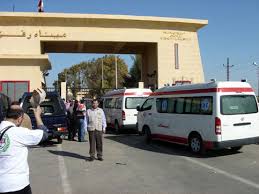
The Egyptian media in particular and the Arab media in general are full of stories about the “siege” that Israel has been imposing on the Gaza Strip since Hamas came to power. Hardly a day passes without an Egyptian or Arab government official condemning Israel for turning the Gaza Strip into a “big prison.” However, none of these officials or media representatives point out the fact that the Gaza Strip, home to some 1.3 million Palestinians, also has a joint border crossing with Egypt. This border crossing, known as the Rafah terminal, has been closed by the Egyptians for most of the time during the past two years. The closure denies Palestinians access not only to Egypt, but to the rest of the world. One can understand why Israel does not want Palestinians from the Gaza Strip to enter its territories. But it is hard to understand why the Egyptians are keeping the border crossing closed, thus sending Palestinians to knock on Israel’s door for help. If the Egyptians do not want Palestinians to enter their country, that is fine. But why not open the terminal so that Palestinians could at least travel to other countries? Why, for instance, are the Egyptians banning many patients from the Gaza Strip from crossing the border to seek medical treatment in Arab and Western hospitals? And why are the Egyptians banning students from ...
.

Tuesday, September 1, 2009

A Day in the Life of the Middle East


Barry Rubin
The Rubin Report
1 September 09

I’ve never been so discouraged, a courageous Arab intellectual writes to me. Understandably so. There are three fronts really in the battle of the Middle East, and none of them are going so well.

What are these three fronts? First and most important are the actions of the countries, leaders, and forces in the region themselves.

Second, is the understanding of these actions and developments as conveyed to the minds of participants and observers both in the region and internationally. Here, the role of the media, academia, and other conveyer belts of information are critical in shaping policymaker and public opinion.

Third, there is the response of governments outside the region, which means primarily in the West.

If we take one day in the region, we can see the interaction of these factors. Briefly, dangerous and outrageous developments happen in the region; they are misinterpreted—important things ignored, marginal ones obsessed about; enemies made to seem moderate and threats defused only in theory. Western responses are also misconceived and inadequate.

Eventually the pressure builds up to the point of crises. But what’s worse, an outbreak of crisis or a slow erosion of interests and a deepening of tyranny? Clearly, from the Western government standpoint, the latter is preferable. With no violent major crisis in play it is easy to do little or nothing, to avoid risks, to portray policies as successful.

In this framework, the region’s countries and societies have three main states of existence when it comes to degree of freedom and quality of life for the people: to advance (which only happens in rare places), to stand still (which is a prevalent condition), or actually to move backward.

I will leave it to you to categorize different places in this regard. Right now, I think Iran, Lebanon, the Gaza Strip, and Turkey are moving backward. Generally, I’ll leave the categorization to you.

Ironically, the one country that is clearly moving forward is Israel. It is stable within and relatively secure (whatever prospects for the future may seem worrisome). The economy is doing well despite the international slump, and feelings of well-being are remarkably high. This is a point that should always be kept in mind. And yes this does relate to having a democratic system and a largely free enterprise but regulated economy.

But enough background, let’s go to the headlines:

--Britain, China, France, Germany, Russia, and the United States are meeting in Germany to offer Iran even more trade if it stops nuclear fuel production and stronger sanctions if it doesn’t. Sounds good. But two of those six—China and Russia—are going to fight against making sanctions much higher and will help Iran violate whatever sanctions are set.

And even then the sanctions will be insufficient to alter the Iranian regime’s course.

By the time the Western states have got around to being tougher, it’s too late. The Iranian government has become so extreme it won’t listen. What might have been effective two years ago is something of a joke now.

After all, the regime just got unanimous approval in parliament for appointing a wanted terrorist as the minister of defense who will control the nuclear weapons. Guess everyone’s too busy to notice this might be a significant statement. It is carrying on trials of oppositionists which are targeting not just those running the demonstrations but even regime loyalists like the two former presidents Muhammad Khatami and Akbar Hashemi-Rafsanjani.

Oh, and President Mahmoud Ahmadinejad, whose instinct is for the offensive just as that of his Western counterparts is for the defensive, is reportedly going to come to New York and speak at the UN General Assembly, September 25. He and the Iranian regime have learned—under the tutelage of European and U.S. leaders--that being aggressive always pays.

They also know, as they have recently bragged, that there are plenty of people willing to do business with them no matter what sanctions are applied.

But there are growing hints that Iran is signaling a readiness to negotiate with the West on nuclear issues. Tehran thinks, and it might be right, that by just talking it can buy months during which sanctions are postponed and it continues to advance on its nuclear program. After all, since Obama said he’d engage Iran how can he refuse if Tehran offers to chat? Will Ahmadinejad outsmart Obama? It is certainly possible. Watch this closely.

--The Obama administration is running an “optimism offensive” on Israel-Palestinian peace to suggest that it’s doing a great job and making wonderful progress. The more immediate purpose is, in its mind, to give it an “excuse” to raise sanctions against Iran with hopes of gaining more Arab support. Of course, it won’t get any material Arab support and there won’t be any progress toward peace. But in a situation this bad, I guess one needs a bit of feel-good rhetoric.

Now, what can I write my colleague to make him feel better about the regional situation? I’ll try to get back to you on that one as soon as possible.
.

Saturday, August 8, 2009

Column One: Israel And The 'Realists'


Caroline Glick
JPost
07 August 09

Voices in America calling for downgrading US relations with Israel seem to multiply by the day. One of the new voices in the growing anti-Israel chorus is the Atlantic's well-respected military affairs commentator, Robert Kaplan. This week Kaplan authored a column for the magazine's online edition titled "Losing patience with Israel."

There he expressed his support for the US to downgrade its relations with Israel while pressuring Israel to allow Iran to acquire nuclear weapons and to facilitate the establishment of a Judenrein Palestinian state.

Although Kaplan's piece adds nothing new to the current pile-on against Israel, it is a relatively concise summary of the so-called "realist" view of Israel, and for that reason it is worth considering his arguments.

As Kaplan sees things, the US's experiences in Iraq and Afghanistan in the eight years since the September 11 attacks have transformed America's interests and goals in the Middle East. The frustrations in Afghanistan and the combat losses in Iraq have rendered "the search for stability, rather than democracy, paramount, and created a climate in which interests are to be valued far more than friends."

The notion that friends and interests may actually not be in conflict is roundly rejected by Kaplan, particularly in the case of Israel. He gives three reasons why the US's alliance with Israel no longer serves its interests. First, he repeats the familiar "realist" claim that the only way for America to build good relations with the Muslim world is by distancing itself from Israel.

Second, he argues that after September 11, the US was wrong to believe that it shares common interests with Israel. Whereas Israel's interests would be served by preventing Iran from acquiring nuclear weapons, in Kaplan's view, the US can afford to look on a nuclear-armed Iran with indifference. On the other hand, an Israeli attack on Iran's nuclear installations can place US forces in Iraq at risk. Hence, as far as Kaplan is concerned, American interests are best served by allowing Iran to become a nuclear power and preventing Israel from doing anything to stop Iran from becoming a nuclear power.

The third reason why Kaplan views Israel as a strategic liability to the US in this new era of "realism" is because it is no longer a strong military power. As he put it, Israel's failure to defeat Hizbullah and Hamas in its recent wars in Lebanon and Gaza "reduced its appeal."

LIKE HIS anti-Israel colleagues in Washington, Kaplan claims that his is a "realist" approach to the region. But this is untrue. The realist foreign policy doctrine assumes that all nations' foreign policies reflect their national interests rather than their sentiments. That is, in determining their foreign policies, states are not motivated by their passions, but by rational choice.

Beginning in the first Bush administration, Arabists like former US secretary of state James Baker began co-opting the realist label. In so doing, they sought to obfuscate their sentimental pro-Arab views of Israel behind the veneer of rational choice. Specifically, they popularized the anti-realist notion that due to their emotional rejection of Israel, Arab and Muslim states will not support America unless it puts the screws in Israel.

The realist foreign policy doctrine rejects this notion out of hand. Given its assertion that states base their foreign policies on unsentimental assessments of their national interests, true realists would argue that there is no rational bar to enemy states sharing the same allies if doing so advances their national interests. And they would be correct. Indeed, examples of such behavior abound.

India and Pakistan are enemies and yet they both ardently seek closer ties with the US. So too, China has massively expanded its ties to the US since 1971 despite US sponsorship of Taiwan.

The same is also the case with the Arabs and Israel. Contrary to the Arabists' impassioned claims, the waxing and waning of America's relations with Arab states over the years has borne little to no relation to the state of America's relations with Israel.

The US and the Saudis have been strategic allies for upwards of 70 years. These ties have been based on their mutual interest in the free flow of Saudi oil. US-Saudi ties have been consistently maintained regardless of the vicissitudes of Washington's views of Jerusalem, or even of Washington's views of Saudi Arabia.
(Full article)