Thursday, November 29, 2012
Why the Non-Member State Will Continue to be a Non-Existent State
Rubin Reports..
29 November '12..
Twenty-four years ago, almost to the day, in 1988, I stood in a large hall in Algeria and saw Yasir Arafat declare the independence of a Palestinian state. It was forty-one years, almost to the day in 1947, when the UN offered a Palestinian state. Twelve years ago Israel and the United States officially offered a Palestinian state as part of a compromise at deal in the Camp David summit of 2000.
Arguably, despite all their errors, the Palestinian movement has made progress since those events, though it is not very impressive progress. Yet in real terms there is no real Palestinian state; the movement is more deeply divided than at any time in its history; and the people aren't doing very well.
Now the UN will probably give Palestine the status of a non-member state. The only thing that will change is to convince people even more that they are following a clever and successful strategy. They aren't.
Perhaps in 24 or 41 years there will actually be a Palestinian state.
There are two ways to respond to the General Assembly’s likely vote to so designate a state of Palestine. One of them is outrage at the absurdity of how the international system behaves. The other would be to dismiss the gesture as meaningless, even more than that, as something that will even further delay the day that a real, functioning state comes into existence.
Certainly, there are threats and dangers, for example the use by Palestine of the International Court. Or one could look at this as another step on the road to a final, I mean comprehensive, solution to the issue. Yet over all, I’ll go for disgusted and cynical as the most accurate responses.
Let’s start with disgusted. In 1993, the PLO made an agreement whose very basis was that a Palestinian state would only come into existence as a result of a deal made with Israel. Instead, the Palestinian side refused to make such a compromise and broke its commitments repeatedly. The ultimate result was Yasir Arafat’s refusal to accept a Palestinian state with its capital in the eastern part of Jerusalem both at the 2000 Camp David meeting and a few months later when President Bill Clinton made a better, and final, offer.
Thursday, November 25, 2010
U.N. Ignores Haiti and Darfur But Points Fingers at U.S., Israel
Opinion/Foxnews.com
23 November '10
Over in Turtle Bay, the U.N. General Assembly is now wrapping up its key fall session. After taking a good hard look at human rights violations around the globe, it has come to the following conclusions about the world’s ills: In 2010, eighty percent of all its condemnations of alleged human rights abuses – twenty-one resolutions – will have been directed at Israel alone.
The Assembly will also finish the year having decided that only six more of the 192 U.N. member states raise human rights concerns. Warranting a single resolution each are Afghanistan, Burma, Georgia, Iran, North Korea, and the United States.
This astonishing result percolates up primarily from the General Assembly’s main committees, such as the third committee on humanitarian affairs and the fourth committee on decolonization which finish their business before Thanksgiving. All U.N. members sit in each of these committees, so that over the past two months a thousand diplomats have huddled in meetings and churned out documents, speeches, webcasts and press releases.
All these busy bees, however, could not manage to come up with a single resolution about the horrors in Sudan – where reports of government forces killing and raping civilians in Darfur continue to surface. Tens of thousands have fled in fear this year alone, while humanitarian relief is deliberately impeded by the government in Khartoum.
Nor did the General Assembly think Haiti warranted a resolution, though the U.N. is at the center of recent riots amid claims that its peacekeepers have fueled the cholera epidemic already affecting eighteen thousand residents.
(Read full story)
If you enjoy "Love of the Land", please be a subscriber. Just put your email address in the "Subscribe" box on the upper right-hand corner of the page.
.
Tuesday, August 17, 2010
Historical Fiction

Dore Gold
The New Republic
17 August '10
The argument that Israel is a colonialist entity is often marshaled to undermine the Jewish state’s legitimacy. The theme has certainly permeated Western academia, almost uncritically. For decades, it has been employed against Israel in one international forum after another. In 1973, the U.N. General Assembly gave initial momentum to this idea when it condemned the “unholy alliance between Portuguese colonialism, South African racism, Zionism, and Israeli imperialism.”
That association of Israel with colonialist regimes set the stage in 1975 for the most insidious resolution ever adopted in the General Assembly against Israel, which stated that Zionism was a form of racism. It helped cement the Afro-Asian bloc behind both the resolution and the movement to delegitimize Israel. Even when, in 1991, the General Assembly finally overturned the resolution, comparisons between Zionism and colonialism persisted, arguably becoming even more strident.
Speaking in Johannesburg in 2008, Azmi Bishara, a former member of the Knesset, explained another way that accusing Israel of being a colonialist entity has real political utility. Bishara, who today does not miss an opportunity to question Israel’s legitimacy before audiences abroad, explained that two points had to be established to show that Israel was an apartheid state: first, that Israel practiced racial separation; and second, that it was a product of colonialism.
Of course, anyone who visits the emergency rooms in Israeli hospitals, or the classrooms at any Israeli university, or the voting booths on election day, to say nothing of the Knesset itself, would see both Jewish and Arab doctors, patients, professors, students, voters, and parliamentarians mixing together in a way that utterly disproves the charge of apartheid. That leaves Bishara with mainly the claim of colonialism to make his case.
Unlike the charge of racial separation, the tag “colonialist” cannot be refuted simply by looking around modern Israel. It is a historical charge about how Israel came to exist: In effect, it amounts to the claim that Israel was established as an outpost of another distant power imposing itself on the territory and its native inhabitants. But the fact is that while modern Israel succeeded the 1922 British Mandate for Palestine, it was created by neither the British nor any other occupying power.
(Read full article)
If you enjoy "Love of the Land", please be a subscriber. Just put your email address in the "Subscribe" box on the upper right-hand corner of the page.
.
Thursday, February 4, 2010
Fighting the Goldstone Process at the UN

P. David Hornik
Pajamasmedia.com
02 February '10
A UN General Assembly vote in November gave Israel (and the Palestinians) three months to investigate “serious violations of international law committed during the conflict in Gaza that broke out in late December 2008.” Israel has now submitted to the UN a 46-page update on its investigations of possible wrongdoings in the war.
The update refutes some of the specific charges of the Goldstone Report, which accuses Israel in particular of war crimes in Gaza, and was the impetus behind the General Assembly vote in the first place. But the document is mainly concerned with establishing that Israel is a responsible democracy whose military is capable of credibly investigating itself, and does so in ways similar to the American, British, Canadian, and Australian militaries.
There is much irony in this, considering the nature of the General Assembly’s vote. Registering 114 in favor, 18 against, and 44 abstentions, in addition to giving Israel and the Palestinians their three-month assignment, it endorsed the Goldstone Report and “requested Secretary-General Ban Ki-moon to send [it] to the Security Council.”
It’s not only that Israel had already been investigating the war (as the 46-page update details) since two days after it ended, while the Palestinian side had not (and still has not) even begun to do so. It’s also that the 114 ayes were not a parade of accomplished democracies that one would count on to uphold international law or investigate violations of it themselves. Of the 114, the only two full-fledged Western democracies are Portugal and Switzerland. The 114 also include the likes of Cuba, Iran, Libya, North Korea, Saudi Arabia, Somalia, Sudan, Syria, and Zimbabwe.
As for the 18 nays — who opposed requiring Israel (and the Palestinians) to submit a report to the General Assembly, or endorsing the Goldstone Report — most are democracies such as Australia, Canada, Germany, Italy, the Netherlands, and the United States. Among the 44 abstainers are democracies like Belgium, Denmark, France, Japan, New Zealand, Sweden, and the UK.
In other words, the reason Israel had to submit a document to the UN maintaining that it is a democracy that does not intentionally kill civilians, takes alleged infractions seriously, and investigates them authentically is because dictatorships that make up the bulk of the General Assembly demanded that it do so.
Page 1 of 2 Next
.
Saturday, January 9, 2010
Israel's opening to China
Caroline Glick
carolineglick.com
09 January '10
The growing power of the UN-based international community is one of the gravest emerging threats to Israel's national security.
This threat stems from two sources. First, the UN-led system of global governance is working to redefine international law by on the one hand whitewashing war crimes by states associated with the majority, and on the other hand rendering it illegal for unpopular countries to take action to protect themselves against aggression. Second, and most important, Israel has become the scapegoat of the UN-led international community. The 57-member Islamic bloc has built an automatic majority for its unrelenting and ever-escalating assaults on Israel's right to exist.
The new - and false - interpretation of international law gives every General Assembly resolution the weight of binding Security Council resolutions and international treaties. Among this new "legal" regime's most dangerous features is its bid to overturn state sovereignty by subjecting leading citizens of weak states to politically-motivated criminal prosecutions under the rubric of universal jurisdiction.
With Israel's right to exist - let alone to defend itself - being denied in an avalanche of General Assembly and Human Rights Council resolutions, the acceptance of universal jurisdiction is a short step away from turning every Jewish citizen of Israel into an international outlaw.
THIS ESCALATING threat is already hurting Israel's ability to carry out routine relations with foreign countries. Just last week the IDF was compelled to cancel plans to send a delegation of its officers to England for a joint conference on asymmetric warfare after British authorities were unable to promise that their guests from the IDF wouldn't be arrested over spurious war crimes allegations during their stay.
Tuesday, December 1, 2009
Ban Ki-Moon vs. George W. Bush

FresnoZionism.org
30 November 09
Could he be more wrong?
Palestinian statehood is a “vital” component necessary for regional peace, UN Secretary-General Ban Ki-Moon said, in a message to mark Monday’s annual International Day of Solidarity with the Palestinian People.
I’ve only recently touched on the UN, so I won’t get off on that again. I do want to mention that the “International Day of Solidarity with the Palestinian People” is held on November 29 for a reason. In the words of Our United Nations,
In 1977, the General Assembly called for the annual observance of 29 November as the International Day of Solidarity with the Palestinian People (resolution 32/40 B). On that day, in 1947, the Assembly adopted the resolution on the partition of Palestine (resolution 181 (II)).
So I suppose this ’solidarity’ is their way of making up for what they must view as the terrible mistake of 1947!
Just two years before, on November 10, 1975, the UN had passed the notorious resolution 3379, which asserted that Zionism was a form of racism. The sponsors of that resolution also must have had a keen sense of the significance of dates, since November 10 was also the day, 37 years before, of Kristallnacht, the day that marked the beginning of the Nazi Final Solution.
Back to Ban Ki-Moon’s remarks. It’s obvious that Palestinian statehood, far from being vital to peace, would be a cause for war.
.
Saturday, November 21, 2009
Banished at Turtle Bay

A U.N. critic has her credentials stripped.
Wall Street Journal
20 November 09
As part of our public-service reports on the workings of your favorite world body, allow us to introduce you to Anne Bayefsky. The Toronto native is an expert on human-rights law and an accredited United Nations observer. She is also a friend of Israel, which makes her persona non grata as far as the folks at Turtle Bay are concerned.
Ms. Bayefsky's sin was a two-minute talk she delivered at the U.N. earlier this month after the General Assembly had issued a resolution endorsing the Goldstone Report, which levels war crimes charges at Israel for defending itself in the face of Hamas's rockets. "The resolution doesn't mention the word Hamas," she said. "This is a resolution that purports to be even-handed; it is anything but."
Ms. Bayefsky's comments were the only note of criticism on a day otherwise marked by much U.N. jubilation. Whereupon she was summarily stripped of her U.N. badge and evicted from the premises. "The Palestinian ambassador is very upset by your statement," Ms. Bayefsky says the U.N. security chief told her. Journalist Matthew Russell Lee tells us that he heard the ambassador asking whether U.N. security had "captured" Ms. Bayefsky.
For the record, the U.N. claims that Ms. Bayefsky violated procedures by bringing a colleague who lacked a proper badge, and that she was not entitled to speak where she did, though representatives of nongovernment organizations have used it in the past. And when we called the Palestinian Mission to get their side of the story, they told us the fracas was the last of their worries. Maybe so.
Yet the U.N. continues to bar Ms. Bayefsky from the premises, despite calls on her behalf by the U.S. mission and Nobel Laureate Elie Wiesel. Best-case scenario, one U.N. insider tells us, is that "they'll put her on probation." We hear the U.N.'s NGO accreditation committee, chaired by Sudan, will likely make the final decision.
Meanwhile, a committee of the General Assembly recently passed a resolution on the so-called defamation of religion. "Everyone has the right to hold opinions without interference, and has the right to freedom of expression, the exercise of which carries with it special duties and responsibilities and may therefore be subject to limitations," it says.
"Without interference" yet "subject to limitations." Orwell should be living now.
Related : Sudan?!
.
Tuesday, November 17, 2009
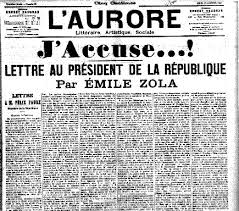
J’Accuse! The Frame-Up of Captain Israel by Major Dictatorships
Barry Rubin
The Rubin Report
17 November 09
The affair began in a most unusual way. A low level spy—in fact, the cleaning woman at the foreign embassy—uncovered an important document in a waste-basket. It showed that someone was violating human rights, acting aggressively, and murdering civilians indiscriminately.
The document ended up on the desk of the officer in charge of counter-intelligence. Who could be the culprit, the traitorous spy to all that was right in the world? The officer, Major Oppressive Dictatorships, of course, already had a bias. He hated Jews and wanted to destroy them. He barely had to look down the roll of countries to know that there was only one Jew on that list: Captain Israel. Yes, he must be the one.
But Major Dictatorships had a problem. True, Israel had access to having an army, force, and the instruments of war. Yet the document did not resemble Israel’s handwriting or general behavior. Of course, that was no problem for him. He knew Israel was at fault. It had no right being on the roll of nations any way. And so it did not bother his conscience at all to forge documents proving what he already believed: Israel was the spy.
The documents were taken to the armed forces commander, General Assembly. He, too, suspected that all was not in order but it didn’t matter to him either. Deciding that Israel was guilty suited his purposes as well. And so he endorsed the prosecution. Captain Israel was court-martialed and quickly convicted. No one listened to his protestations of innocence.
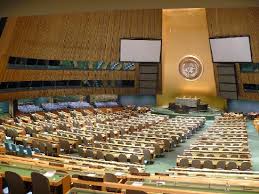
It was a dramatic ceremony. Before all the countries drawn up in the large hall, Israel was stripped of his sword. His buttons were cut off, the insignia identifying him as an officer and gentleman were torn away. The mob howled for blood. But instead Captain Israel was sent to Devil’s Island for life.
Naturally, Israel’s community protested, but few others joined it. Gradually, though, the idea grew among a minority that Captain Israel had been framed. A few wrote in protest: the army was covering up, the government was complicit.
But most responded: What? Can General Assembly and all the others have lied? Ridiculous! Of course you are only saying he's innocent because you are on his side. The documents were persuasive; the newspapers proclaimed his guilt in great detail. The hierarchy of an entire religion insisted on his guilt. A whole wing of the political spectrum condemned him as a monster. Everyone agreed. Only Captain Israel could have betrayed the secrets of human rights and proportional response to the enemy.
(Read full article)
.
Thursday, November 12, 2009
Wednesday, November 11, 2009
Thunder and Lightning
Marc Prowiser
Yesha Views
11 November 09
Thunder and Lightning, or in Hebrew – Rahm and Barak, can either bring rains of blessing or a damaging storm.
Rahm Emanuel spoke to the General Assembly of Jewish leaders regarding Israel and US involvement in achieving peace between Israel and the Arab occupants of Judea and Samaria. He spoke of his family’s connection to Israel, President Obama’s dedication to peace in the region and how what started in 1967, must end.
What exactly started in 1967? Israel was victorious over the Jordanian Army after we were attacked, and ended the JORDANIAN occupation of the region, this is what started back in 1967. Jewish communities were reborn from the ashes, once again Jews were allowed to live in places they were once evicted from, and places where they were massacred. What started? Mr. Emanuel? Jews returned to their biblical heartland, you know this as you were brought up with a religious education. The Chief of Staff spoke of how his Father took the name “Emanuel” in honor of his Uncle who died fighting for Israel, will he show the same courage when the Arabs once again deny the existence of a “Jewish” state?
I could not help but notice the lack of heart Mr. Emanuel had while speaking, his lack of conviction, his detachment from the truth and real situation on the ground in Israel. How easy it is to speak to an assembly full of “yes men”, whose lives are not endangered by the political duels going own. Mr. Emanuel mentioned how the “Two State Solution” enjoys bi-partisan support among US Jewry. I ask myself, whose sons and daughters are serving in the armed forces of Israel and putting themselves on the front lines, defending a people and country with their lives.
Rahm, mentioned not to let “settlements” stand in the way of peace, who is he to decide what is good for Israel, who will clean up the mess he makes, definitely not his sons. Yes, he is the President’s Chief of Staff, a very powerful politician and possibly the mastermind of the current US strategy to endear itself to the Arabs and Muslims of the world. If he believes that the dismantling of the Jewish Communities in Judea and Samaria will solve the Israeli-Arab problem, then he probably feels that Major Nidal Malik Hasan is a common criminal and not a terrorist.
It hurts to hear the cheers of the audience as Rahm mentions the issue of “ending” the communities of Judea and Samaria, most of those at this convention have never been out to any of these places and regard the populous as extremist lunatics, how unfortunate that they don’t even realize who these people really are and how their “Heroes” in the IDF are made up of these people, that these places are theirs also. Such is ignorance. I challenge them to come out here to visit and see what is really going on and meet the people of Judea and Samaria, but to come out with an open mind, sans the poison that they are being fed by the opponents of a strong Jewish nation.
I also extend this invitation to Mr. Emanuel to come out and meet us, not through the eyes of the government, but through your heart and mind. Maybe for your son’s Bar Mitzvah, after he reads the Torah at the Kotel (in the capital of Israel today), take him also to Hevron to see where his forefathers are buried, then to Shilo which served as the first capital of Israel, home to the Mishkan (Tabernacle and Ark of the Covenant) for 369 years (even older than the United States).
You spoke how important your history is to you, here is a chance to show your family and supporters that you mean what you say.
Mr. Emanuel, you are a source of pride to the American Jewish Community, your patriotism, your dedication and your loyalty. I would like to bless you that you also become a source of pride to all of your people, all over the world using the same characteristics.
Saturday, November 7, 2009
Goldstone, U.S. Policy and the Looming Veto: If the UN is so Irresponsible Why is Obama Its Biggest Cheerleader?
Barry Rubin
The Rubin Report
06 November 09
Now that the UN General Assembly has endorsed the Goldstone Report--a collection of Hamas propoaganda without any independent investigation--the ball is in the court of the Obama Administration. The non-courageous abstention of Britain and France highlights that fact. Despite all the current president's talk of partnership and multilateral cooperation, a great deal of European policy is based on the premise that the United States has to do most of the work, especially the dirty work.
President Barack Obama made a controversial decision in deciding to have the United States participate in the radical-run UN Human Rights Council, reversing Bush administration policy of boycotting the group. Moreover, the president has gone out of his way to talk about how useful the UN is as a force, sometimes it seems to be in his eyes the most important force, to keeping the world peaceful and making it more so.
The new administration argued that by participating it could moderate the course of a body that never defends human rights in a long list of dictatorships (many of which are members and even leaders of it) but just focuses on bashing Israel.
But now that the point about the Council’s function as a propaganda organ for extremist dictatorships is proven, what does the United States do? Its ambassador isn’t going to the discussion in the General Assembly that’s discussing using the ludicrous Goldstone report as a basis for punishing Israel.
If you need to know just one thing about the Goldstone report, here it is: the commission did not investigate anything. It heard a lot of Palestinian and some other anti-Israel witnesses; wrote down what they said; and put it into the report without verifying anything.
A couple of sidebars:
The U.S. Congress, over the opposition of the anti-Israel pretending to be pro-Israel J Street lobby, passed a resolution criticizing the report.
The EU position was presented by Sweden, a country whose government tried to destroy any Swedes who published the “Muhammad” cartoons but refused to condemn the publication of an article portraying Israel as murdering Palestinians to steal their organs. The Swedes, and hence the EU, said the report was serious and the accusations should be investigated further.
The last point sounds reasonable in the abstract but in context is helping the global anti-Israel haters get the report sent for action to the International Criminal Court in the Hague.
Will the United States veto the resolution in the Security Council? It will take some courage to do so because Obama’s popularity with everyone (including lots of countries generally considered anti-American and even more who want to wipe out Israel) is going to take a big hit as a result.
Or will the United States back down and settle for some easing of the resolution’s language which still makes it a disaster?
This is going to be a big test for Obama, and it is one he cannot avoid.It is also one more step in showing the unworkability of both his ideas and his strategy. Ultimately, his presidency's foreign policy will be judged on whether he and his colleagues can adjust to that factor, admit (at least to themselves) that they were wrong, and change course.
.
Wednesday, November 4, 2009
Britain and France continue dance of deception as Goldstone Report goes to UN General Assembly
Robin Shepherd
Robin Shepherd Online
04 November 09
If you want a comparison that illustrates the difference between the United States and Europe on attitudes to Israel in particular and basic standards of moral clarity in general, consider the following. Yesterday, the US House of Representatives passed a resolution deriding the Goldstone Report on Gaza as “biased and unworthy of further consideration” by 344 to 36, not much short of a 10-1 margin. That’s moral clarity.
Representing the European Union, Britain and France by contrast will be dancing through hoops at the United Nations General Assembly today with assorted dictatorships and tyrannies in a desperate attempt to massage and amend a motion based on the odious UN Human Rights Council’s (HRC) October 16 resolution endorsing the Goldstone Report and effectively throwing Israel’s right to self-defence out of the window. The French and the Brits could not even be bothered to turn up to vote at the HRC session in October, but under pressure from Israel and the United States now say they might possibly vote against the resolution in the General Assembly. Then again, they might vote in favour if they can get a couple of changes to the text. And then again (again) they might just abstain if they can’t make up their minds. That’s not moral clarity. It’s a moral dunghill.
But how quaint can I get? Moral clarity, Europe, and Israel all in the same sentence?
Tuesday, October 13, 2009
UNRWA at 60: Are There Better Alternatives?
Nitza Nachmias
Middle East Forum
12 October 2009
The United Nations Relief and Work Agency for the Palestinian Refugees (UNRWA) was established in 1948 as a temporary relief agency. In spite of its failure to solve the refugee problem, it has been renewed and expanded for 60 years, with support from the entire United Nations community, including the United States and Israel. UNRWA's annual budget now exceeds half a billion dollars, and it has come to be treated as a permanent protector and advocate of what are depicted as millions of Palestinian "refugees" who, UNRWA claims. lack a homeland, citizenship, and governments to serve their needs. Its mandate has been renewed repeatedly by the UN General Assembly albeit with restrained criticism demanding more transparency and additional budget controls.
The purpose of this paper is to explore three questions: (1) Are most of the Palestinians in the Middle East in fact "refugees", and does treating them as "refugees" contribute to solutions or prevent them? (2) Is UNRWA the agency best suited to address the issues facing these populations most effectively, or does it create more problems than it solves? (3) If UNRWA is a problem, is it the least bad of the alternatives, or are there, in the balance of costs and benefits, other solutions with a better probability to bring the issue to a just and rightful resolution?
The paper concludes that UNRWA is not merely an "imperfect" agency, but one that is profoundly inimical both to the higher interests of its own Palestinian clients, and to the search for a political settlement of the conflicts in the region. It describes alternative solutions that could more effectively deliver services to these Palestinian populations while strengthening rather than undermining moderate elements and governments in the various host countries, including the Palestinian Authority. Strengthening the PA would help to advance the peace process. The paper proposes more effective ways to channel the enormous sums misappropriated to UNRWA, to achieve vital objectives of the donors that perpetuation of UNRWA will continue to subvert.
Introduction
Sixty years ago UNRWA was created as a temporary emergency relief agency. Its main duties were constructing temporary shelters and providing essential food to the Palestinian families that left their homes during the 1948 Israeli-Arab war. Sixty years and billions of dollars later, UNRWA has become an entrenched permanent, overstaffed, affluent bureaucracy. Hardly any traces of the original mandate can be found in its current operations. In a surprising and unprecedented move for any emergency aid organization, UNRWA launched in September 2008 a two-year global celebration entitled: "UNRWA at 60". The celebrations are taking place at the UN headquarters (NY), Vienna, Geneva, Brussels, the Gulf States, and in the donor countries, among others. In the 60th celebration announcements UNRWA expresses the hope that its operations will grow and flourish for many more years to come.[1] The lavish events put an additional financial burden on the donors that astonishingly did not stop to ask: is UNRW's 60th anniversary a cause for celebration, or is it a testimony of failure? We will show that "UNRWA at 60" is indeed a testimony of failure.
While the United Nations Relief and Work Agency for the Palestinian Refugees (UNRWA) was established in 1948 as a temporary relief agency, it has for 60 years enjoyed broad support from the entire United Nations community, including even Israel and the United States. UNRWA is treated as the protector and advocate of what are known as millions of Palestinian refugees who claim that for four generations they have lacked a homeland, citizenship, and a government to serve their needs.[2] UNRWA's mandate has been renewed repeatedly by the UN General Assembly albeit with restrained criticism demanding more transparency and additional budget controls.[3] The purpose of this paper is to explore three questions: (1) Are most of the Palestinians in the Middle East in fact "refugees", and does treating them as "refugees" contribute to solutions or prevent them? (2) Is UNRWA, on balance, the agency that is the most able to address the issues facing these populations most effectively, or does it create more problems than it solves? (3) If UNRWA is a problem, is it the least bad of the alternatives, or are there, on the balance of costs and benefits, other solutions with a better probability to bring the issue to a just and rightful resolution?
UNRWA claims that about five million Palestinians are refugees. We will show that most are not. Most Palestinians living in the West Bank, Gaza and Jordan have been integrated in the local communities, and many in Jordan have acquired Jordanian citizenship. In the West Bank and Gaza the residents carry PA official documents. Others have immigrated to the US and Europe where they are either legal residents or citizens. For most Palestinians, the transition from refugee camps to urban dwellings occurred decades ago. As early as 1950, the majority of the original 1948 refugees and their families began to move out of the camps and resettle in neighboring states and regions. Simultaneously, non-refugees began to move into the camps for economic advantages, especially to receive UNRWA's free services.[4] UNRWA's bureaucracy soon adapted to the situation and moved away from its original relief mandate to providing non emergency, civil services. [5] Yet UNRWA has been perpetuating the myth of "millions of 1948 Palestinian refugees"; a myth that provides the raison d'etre for UNRWA's oversized bureaucracy[6]. Moreover, UNRWA has succumbed to major bureaucratic pathologies. It has become an ineffective self-serving, work-creating agency suffused with favoritism and patronage. UNRWA is definitely not a typical international humanitarian aid organization. The UN agency is the largest non government employer in the region, employing over 29,000 Palestinians with a superstructure of 120 international advisors. Because UNRWA's international staff is very small, the operations are planned, executed and controlled by tens of thousands of Palestinian employees. Consequently, UNRWA's operations follow its own institutional imperatives rather than its international mandate.
(Full Article)
.
Monday, October 5, 2009
My Word: From the UN podium to Succot booths
Liat Collins
JPost
04 October 09
Speeches to the UN rarely leave a lasting impression. The exception that proves the rule is the case of the late president Chaim Herzog who, as Israel's ambassador to the international body, shocked the General Assembly with an address followed by an action that spoke even louder than his words.
On November 10, 1975, the 37th anniversary of Kristallnacht, the UN General Assembly approved Resolution 3379, infamously declaring that Zionism is a form of racism. Following the decision, Herzog made the speech still considered one of the most important in Israeli diplomacy and definitely of his very full life.
Warning the other ambassadors that they would be accountable for the next holocaust, Herzog stated: "For us, the Jewish people, this resolution based on hatred, falsehood and arrogance is devoid of any moral or legal value. For us, the Jewish people, this is no more than a piece of paper and we shall treat it as such." He then proceeded to tear the document to shreds.
Herzog's address survived the test of time and a couple of years ago was included in a book edited by a team of British historians entitled Speeches that Changed the World. It obviously did not change the world enough, however.
Prime Minister Binyamin Netanyahu's address to the UN General Assembly on September 24 was not aimed at changing the world. When Libya is allowed to preside over the General Assembly despite its human rights record - and the welcome it gave Lockerbie bomber Abdel Basset al-Megrahi when he recently returned home - you might wonder if the world even can be changed. Netanyahu's speech, given in English to allow the largest number of people to understand it, was more of an attempt to change, or at least soften, world opinion.
NETANYAHU'S SPEECH was not as dramatic as the build-up to it: In today's world, the hype preceding a speech can be more important than what is actually said. It was not even the most memorable moment of last month's gathering. That honor probably belongs to Libyan leader Muammar Gaddafi's antics and ramblings, which went on so long that the noteworthy points were lost on the way.
And Netanyahu's appearance was certainly not the most significant in the annals of UN history. Among the contenders for that distinction is Yasser Arafat's idea of diplomacy when in November 1974 he became the first representative of a nongovernmental agency to address a plenary session of the General Assembly. The leader of the PLO, wearing a holster, proudly proclaimed: "I come bearing an olive branch and a freedom fighter's gun." The PLO soon became an official UN observer. It was a few months after 21 schoolchildren were killed in the Ma'alot massacre, two years after 11 Israeli athletes were murdered at the Munich Olympics, and at the height of the PLO's terror campaign and hijackings that cost the lives of hundreds.
It was one of those moments that casts considerable doubt over the UN's ability to carry out its mandate - to prevent wars, rather than wait to investigate how they are conducted. After all, we need peace or at least quiet from missile attacks far more than we need Richard Goldstone's lecturing us on how we should not have fought back.
Of Netanyahu's speech two phrases echoed with me. They sounded out across the uncomfortably small global village and resonated in my Jerusalem neighborhood, where many victims of Arafat's combination of war and peace process used to live until they were blown up on the No. 18 bus or in the city's streets and restaurants.
The first phrase was Netanyahu's resounding: "To those who gave this Holocaust-denier a hearing, I say on behalf of my people, the Jewish people, and decent people everywhere: Have you no shame? Have you no decency?" He was, of course, referring to Iranian President Mahmoud Ahmadinejad, who seems to be turning Holocaust denial into a political survival technique. If he makes sure the spotlight centers on his outrageous claims that the systematic destruction of the Jewish people did not take place, the world might pay less attention to the fact that he is busy trying to ensure he has the means of a nuclear apocalypse.
Clearly, just a few decades later, those who can deny that the murder of six million Jews took place have no shame. Can the same be said for future generations? They might be tempted to use ignorance as an excuse. Young adults growing up today on a diet of Hollywood movies in which mega-hit fictional versions like Inglourious Basterds are the staple might lose sight of the truth as the real survivors with their only-too-true stories die off. What will shape the thoughts of viewers of films like Valkyrie, The Reader, Good and The Boy in the Striped Pyjamas which Post movie critic Hannah Brown pointed out "can be grouped in a category I'll call "A Few Words from the Nazis"?
This is the danger in the larger-than-life world in which we live - a world in which "Survivors" are those fighting for attention in reality TV shows.
The other phrase that struck a chord in Netanyahu's speech was his "We are not strangers to this land. It is our homeland."
It is a message worth repeating. It could be heard echoing throughout the land, our land, as religious and secular alike erected succot, the booths that gave the Feast of Tabernacles its name and remind us of the temporary abodes erected by the Children of Israel as they wandered through the desert. True, today's booths might not resemble those desert dwellings of yore. Many in Israel are incongruously decorated with made-in-China Christmas-colored trappings. But nonetheless, Succot is one of those oh-so-Jewish festivals for which we have been reviled and admired over the millennia. Like Passover, marking the Exodus, or Tisha Be'av, commemorating the destruction of the First and Second Temples, it is a sign not only of our ongoing national identity - united in joy and in sorrow - but also of our unbroken link to this land.
Succot's essence as an agricultural festival has in the New Age turned it into a "green holiday," helping Jews of all types to find it relevant even after thousands of years.
There is only one place to truly celebrate Succot. In Israel. Like the other Jewish festivals, here it not only feels right, it feels natural. This year, however, I couldn't help wondering whether some human rights group wasn't monitoring all the booths going up and preparing to file criminal charges against Israelis who dared add dwelling places without international permission.
Only in Israel do the local municipalities put out palm fronds to use as roofing. Only here do the meteorologists on the TV and radio pronounce whether the weather conditions will be favorable. And only here do we count it as a blessing if it rains anyway.
Netanyahu's words should act as a reminder to the world that we live here by right - as writer Haim Gouri puts it: Not because of the Holocaust but in spite of the Holocaust.
It's about time our neighbors learn to live with it. Peacefully.
.
Sunday, September 27, 2009
EDITORIAL: Leader of the Free World no more
The torch has been passed
Israel is looking like the new leader of the Free World. The previous leader, the United States, resigned this role last week at the United Nations to take the position of global community organizer. This was made plain by President Obama in his speech, titled "Responsibility for Our Common Future," in which he heralded "a new chapter of international cooperation." By contrast, Israeli Prime Minister Benjamin Netanyahu delivered a blunt and forceful call to action in the central challenge facing free people today. This is the struggle of "civilization against barbarism" being fought by "those who sanctify life against those who glorify death."
Mr. Obama's address was the predictable mix of criticism of the past policies of the United States, self-praise for correcting said policies and vague calls to united action on matters of collective interest. It sought to ingratiate rather than offend. But Mr. Netanyahu chastised the United Nations for its "systematic assault on the truth." He spoke truths that Mr. Obama would never whisper regarding the regime in Iran, which is "fueled by an extreme fundamentalism" and an "unforgiving creed." Mr. Netanyahu rebuked those members who countenanced Iranian President Mahmoud Ahmadinejad's diatribe before the same world body, rightly calling it a "disgrace."
Mr. Netanyahu repeatedly paid tribute to the blessings of liberty and "the allure of freedom." He marveled at the technological advances freedom made possible. He asked if the international community would support the Iranian people "as they bravely stand up for freedom." He envisioned a future of Israel and Palestine, "two free peoples living in peace, living in prosperity, living in dignity." Mr. Obama, meanwhile, touted the imperative of responding to global climate change and mentioned as an afterthought that democracy should not be an afterthought.
Israel stands out because it understands the central challenge faced by the civilized world and by its willingness to take action. Israel is readying to stem the tide of barbarism and stand up to the threat of a nuclear Iran. In return, it asks only for moral support. "If Israel is again asked to take more risk for peace," Mr. Netanyahu said, "we must know today that you will stand with us tomorrow." He challenged the countries of the world with a clear-cut test: "Will you stand with Israel? Or will you stand with the terrorists?"
Mr. Obama said in closing that "we call on all nations to join us in building the future that our people deserve." But people only deserve what they have earned. Mr. Netanyahu called on the civilized world to "confront this peril, secure our future, and, God willing, forge an enduring peace for generations to come." Sometimes the future doesn't come without a fight.
.
Thursday, September 24, 2009
A Speech for the Ages
Jennifer Rubin
Benjamin Netanyahu United Nations Speech (Pt. 2)
Netanyahu then dramatically showed a facsimile copy of Final Solution documents drafted in Wannsee.
“Is this protocol a lie?” he asked. “Is the German government lying?” “The day before I was in Wannsee,” Netanyahu continued, “I was given in Berlin the original construction plans for the Auschwitz-Birkenau concentration camp. “These plans I now hold in my hand,” he said, as he was showing the worn-out blueprints to the assembly. “They contain a signature by Heinrich Himmler, Hitler’s deputy.
“Are these plans of the camp where one million Jews were murdered a lie too?” he asked.
Netanyahu then turned to attacking Iranian President Mahmoud Ahmadinejad, saying “Yesterday, the man who called the Holocaust a lie spoke from this podium. For those who refused to come, and those who left in protest—I commend you, you stood up for moral clarity.’
“But for those who stayed—I say on behalf of the Jewish people, my people and decent people everywhere—have you no shame? No decency? What a disgrace, what a mockery of the charter of the UN.”
Netanyahu then told the assembly “perhaps some of you think that this man and his regime threaten only the Jews—well, if you think that—you’re wrong, dead wrong.
“In the past 30 years, this fanaticism spread across the globe with a murderous violence that knows no bounds,” he said, noting that Islamic terrorism hurt Muslims, Christian and Hindus as well as Jews.
“Wherever they can,” the prime minister said of Islamic fanatics, “they enforce a backward system of government.” He called the struggle between the modern world and extremist Islamism a struggle between “the 21st Century and the 9th Century.”
But, he noted, “Ultimately, the past cannot triumph over the future. And our future promises magnificent bounties of hope.”
Naming some of the technological achievements of the last hundred years, Netanyahu finished “We will find an alternative to fossil fuel, and yes, we will clean up the planet. But if the most primitive fanaticism can acquire the most deadly weapons, the march of history can be reversed” for a lengthy period of time, he warned.
“This is why the greatest threat facing the world today is the marriage between religious fanaticism and weapons of mass destruction.”
“Is the UN up to that?” Netanyahu asked. “Will the international community stand up to the despotism of a government against its own people?” he asked, referring to the recent elections in Iran. “The jury is still out on the UN. Recent signs are not encouraging.”
A more important question is whether the Obama administration is up to that. And again, sadly, the signs are not encouraging.
Related: How Israel's Prime Minister Bibi Netanyahu Should Have Concluded His U.N. Speech
.
Obama Expresses His Basic Concept of International Affairs: Pollyanna, Yes; Machiavelli, No
Barry Rubin
The Rubin Report
24 September 09
The most important paragraph of President Barack Obama’s speech announces a repeal of all prior guidelines and principles for U.S. foreign policy and a rejection of the basic rules of diplomacy as they have been practiced for centuries. It reveals the fundamental philosophical outlook of the president of the United States.
Of everything Obama has ever said, these 82 words for me are the scariest. One has to go back to first principles to explain to the U.S. government (and to many in Europe) how the real world works.
This should be the lead to all coverage of the speech. First, let’s present the paragraph in question:
“In an era when our destiny is shared, power is no longer a zero-sum game. No one nation can or should try to dominate another nation. No world order that elevates one nation or group of people over another will succeed. No balance of power among nations will hold. The traditional division between nations of the south and north makes no sense in an interconnected world. Nor do alignments of nations rooted in the cleavages of a long gone Cold War.”
Let’s examine this paragraph:
It is true that all the people in the world face certain common problems like disease, poverty, environmental problems, the need to provide sufficient housing and jobs, crime, and the list goes on.
But this is not some twenty-first century revelation. It has always been true, even going back to the time of the Pharaohs and the Sumerians.
Philosophers and the creators of some—but not all—religions have argued that as a result all people should be kind to each other, help each other, work together, etc. Nation should not lift up sword against nation, neither should they war any more.
Yeah, but they still do.
Here’s where politics and international relations come in. Resources, development, wealth, and strength are not evenly spread. There are always people who have argued that power is a zero-sum game. I can take from you more easily than I can work and equal your success.
And if I believe that the only reason you “have” is that you stole from me, then power will certainly be a zero-sum game. This is why, for example, the Arab-Israeli conflict doesn’t come to an end. Russian Prime Minister Vladimir Putin makes clear that he thinks his country's rightful sphere of influence has been stolen by the United States. The rulers of Bolivia, Cuba, and Venezuela say that the United States has stolen their country's wealth.
A second element that makes power a zero-sum game is the fact that different people have conflicting ideas. If there’s a group—say radical Islamists—who believe they are following the instructions of the deity and must put their worldview into rule than power for them is a zero-sum game. Either a country is ruled by Islamic law or it isn't.
Any leader who doesn’t realize that power is at least in large part a zero-sum game is like a man who drives his luxury car into the toughest part of town and with a visible flourish leaves it unlocked.
Indeed, Obama's speech was made at the UN, an institution that’s living proof that these ideas don’t work. It is corrupt and increasingly ruled by radicals who attack democracy and trash truth. The high founding ideals for which the UN was founded have been trampled by the very realities that Obama says don’t—or no longer—exist.
No one nation can or should try to dominate another nation, says the president. Well there are a lot of nations who don’t think that way. So what are you going to do about it? Utopian visions can work only if almost everyone believes them. Or they're nice if you don’t take them too seriously. If a nation acts otherwise you have two choices: stand by and do nothing or defeat them in some way that makes them stop trying to do so.
Note, however, that Obama doesn’t say this is the way the world should be—which is understandable as an idealistic goal—he says that this is the way the world actually is—which is a prescription for disaster.
No world order that elevates one nation or group of people over another will succeed, says the president. Well, if he means that you shouldn’t try to dominate others that is one thing, but if he means that you shouldn’t try to exercise power which at times forces others to do your will than you are acting in a way that ensures that a group of people is elevated. The only thing you are accomplishing, however, is to make it certain that the group on top won’t include yourself.
And there is another implication here: a renunciation of American leadership in the world, the denial that the United States has a special role to play, has values or ideas or institutions that should be spread to countries that don’t possess them. If everyone is equal, there are no leaders.
But if you don’t lead, how do you achieve your goals: goals that others don’t necessarily share, despite Obama’s apparent failure to realize this. How do you enforce stopping others from dominating, taking, and conquering?
Now there is a positive side to this position. Obama says: you cannot expect the United States to solve all your problems and you cannot blame the United States for the failure to solve them. If this were coupled with a reasonable leadership stance this would make sense and Obama's credibility in this direction would help a bit.
Still, if countries don't believe the United States can do enough to help them they will seek friends elsewhere or appease America's enemies. And of course no matter what Obama does or says lots of groups, peoples, and countries will blame America for problems. Why? Because it is in their interests and many view the United States as an enemy.
He adds: No balance of power among nations will hold. This is absurd. What does it mean? That you cannot have a coalition of forces—say the West and its allies—that can stop another group from doing whatever it wants? Where is the alternative? That you must either reconcile your enemies or give them what they demand?
Of course, a balance of power can hold. And let’s remember the purpose of balances of power: to stop aggressors without going to war. No balance of power, the result has to be settled by surrender or fighting.
The traditional division between nations of the south and north makes no sense in an interconnected world. If by this Obama says that the poor should not be in conflict with the rich, it sounds like the usual fare from Western leaders. But in context is he saying that the developed world should give away its wealth to the Third World? And remember this statement comes from a man who favors environmental policies that if adopted would destroy Third World development efforts. No polluting power plants, mass ownership of automobiles, and smelly factories for them!
Nor do alignments of nations rooted in the cleavages of a long gone Cold War. If that means that the West should not look on Russia as an enemy (China was already part of the Western coalition in a sense by the late 1970s), that’s fine. But does this imply that democratic states should not see a kinship as against dictatorships? That liberty and freedom should not unite those against others whose ideas are those of tyranny and oppression?
Again, the point to remember is that Obama did not say that this is the way the world ought to be but that the world actually is like this. To say that one day the lion will lay down with the lamb is admirable. To say that it’s happening right now is a recipe for lamp chops.
What Obama has done in this paragraph is to reject reality and to put a gigantic “kick me” sign on the United States and its allies.
In a sense, it is the extension of multiculturalism to diplomacy. There's no good nor bad. Attila the Hun and Genghis Khan were just expressing their cultural norms. Who can say that the United States is better than Sudan, a country by the way which is chairing the largest bloc in the UN, or Libya, one of whose officials is charing the General Assembly.
Anyone would think he has absolutely no experience in international affairs!
.