Thursday, November 7, 2013
For Acting as Point-Man, A Simple “Thank You” Would Suffice For Israel
Ari Lieberman..
Frontpagemag.com..
06 November '13..
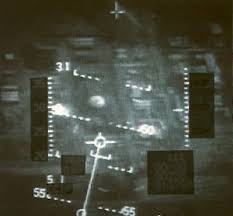
On June 7, 1981 Israel provided the world with a lesson on how to deal with international pariahs. Its fighter jets, F-15s and F-16s, swooped over Iraqi airspace and with extreme precision using conventional iron bombs, destroyed a heavily defended Iraqi nuclear facility near Baghdad. At the time, many commentators, media outlets and politicians condemned Israel for its “aggression.” Over time however, many of those very same commentators came to recognize precocity of Israel’s Osirak operation and it is now well accepted that Israel’s preventive use of force then, thwarted a greater conflagration.
In 2007, Israeli intelligence officials approached the United States with incontrovertible proof that Bashar Assad, with the assistance of North Korea and Iran, was in the final stages of completing an atom bomb facility modeled after a North Korea’s Yongbyon nuclear reactor. The United States, already embroiled in two unpopular Middle-Eastern wars vacillated, unsure on how to proceed.
Israel, a nation that sits within the belly of the beast, did not possess the luxury of waiting, contemplating or “assessing” and acted resolutely. On September 6, 2007, Israeli warplanes attacked and destroyed Syria’s Al Kibar nuclear complex turning the WMD plant into an expensive heap of scrap metal.
Twice, Israel was faced with the prospect of pariah nations acquiring nuclear weapons and twice Israel acted decisively. Had Israel acted with restraint, an overused phrase that has grown threadbare over the years, the Gulf wars would have undoubtedly taken different trajectories and half of Syria would have been rendered uninhabitable for one-thousand years.
Wednesday, February 29, 2012
Lapidot - Rewriting history
Israel Hayom..
28 February '12..
This week we commemorate 20 years since the passing of Menachem Begin. Channel 2’s senior commentator, Amnon Abramovich, took the opportunity this week in particular to poke holes in one of the late prime minister’s most accomplished military operations: the June 1981 bombing of the Iraqi nuclear reactor.
Abramovich said (and I paraphrase) that it wasn’t our air force that put an end to Iraq’s nuclear program, but rather the American invasion of Iraq 10 years later (Operation Desert Storm in 1991). He went so far as to say that the attack on Osirak backfired against Israel, leading to international condemnation and even achieving the opposite of Israel’s goal because Iraq actually accelerated its nuclear armament as a result.
First, the facts: After the attack, Iraq never successfully developed nuclear weapons. The reactor destroyed by the air force was never rebuilt. Iraq had aimed to do so. France hesitantly agreed to help, but political and funding problems shelved the plans. During the Persian Gulf War in 1991, the U.S. merely bombed the reactor’s dusty ruins, which had stood undisturbed for a decade.
Monday, March 8, 2010
Facing Iran: Lessons Learned Since Iraq's 1991 Missile Attack on Israel

Moshe Arens
Jerusalem Center for Public Affairs
Vol. 9, No. 21
08 March '10
Prof. Moshe Arens was Israel's defense minister during the 1991 war with Iraq. He served as Israel's Minister of Defense in three different governments, as Minister of Foreign Affairs, as Chairman of the Foreign Affairs and Defense Committee, and was Israel's Ambassador to the United States.
The Iranians learned a great deal from the destruction of Iraq's Osirak reactor by the Israel Air Force in 1981. The Osirak reactor was the key element in the Iraqi nuclear program: a single target which, when it was destroyed, set that program back very substantially. The Iranians saw this and they dispersed their nuclear program. Much of it is deep underground. There is no single target which, if destroyed, would substantially set back the Iranian nuclear program
When I came to Washington as Israel's ambassador in 1982, the atmosphere was one of hostility and there was talk of imposing sanctions against Israel as a reaction to its unilateral action against the Osirak reactor. Yet after a few years the view in Washington changed completely. It is difficult to envision the Americans undertaking Operation Desert Storm in the Gulf in 1991 if the Iraqi nuclear program had continued beyond 1981 and had not been so seriously set back by the Israeli action.
Some say that while the missiles Israel faces are relatively cheap weapons, we are launching a very expensive missile interceptor system against it, which does not seem very wise at first sight. However, the damage that might be caused by the incoming missile may far exceed the cost of the anti-missile system.
Israel's missile interceptor system poses a dilemma to anybody who decides to launch missiles against Israel, especially a missile that has a nuclear warhead. The dilemma is that the missile may very well be intercepted and thus expose the launching of a nuclear missile, even if it didn't reach its target, which could bring about the response that could be expected for committing this deed.
At the start of the Gulf War, the Americans said they expected that within 48 hours the U.S. Air Force would eliminate the missile launch capability of the Iraqis. If they did not succeed, Israel would be free to take whatever action it considered appropriate. Although there was intensive aerial activity directed at hitting the Scud launchers, not a single Scud launcher was hit or immobilized during the Gulf War. Furthermore, the U.S.-made Patriot missiles in Israel did not succeed in intercepting a single Scud missile.
Today, in 2010, in the United States and the Western world there is a very real and acute awareness of the danger that Iranian nuclear activity - which is clearly designed to achieve a nuclear military capability - poses to the world, not just to Israel.
Some people like to think that Israel has nothing to worry about because of the sizable Muslim population in the area and that the Iranians would not dare to cause massive destruction in an area where many Muslims might get injured or killed. However, as Prof. Bernard Lewis has said on a number of occasions, this kind of immunity is imaginary because radical Muslims are convinced that God knows how to tell the difference between Jews and Muslims.
(Read full article)
.
Thursday, January 7, 2010
Jews can counterclaim for Osirak reparations
Bataween
Point of No Return
06 January '10
The first contender for Chutzpa Award (cheek) of the Year goers to Mohammed Naji Mohammed, an MP with the Iraqi Alliance Coalition, who is leading a campaign seeking billions of dollars in reparations for Israel's destruction of the Osirak nuclear reactor in 1981.
"The Iraqi government continues to seek redress for an Israeli airstrike against a 1981 Israeli airstrike against an Iraqi nuclear reactor, the lawmaker said in remarks published Tuesday.
'Prime Minister Nuri al-Maliki and the Ministry of Foreign Affairs petitioned the United Nations and the UN Security Council to demand that Israel pay compensation ... for the 1981 bombing an (Iraqi) nuclear reactor,' he told the al-Sabah newspaper.
Mohammed said the cabinet had on November 25 approved a plan to seek redress through diplomatic channels, and to form a 'neutral' committee to assess the value of the reparations it would seek.
(Read full article)
Wednesday, January 6, 2010
Short takes for a busy week
FresnoZionism
04 January '10
Mideastern surrealism
Iraq will demand that Israel pay compensation for bombing the unfinished nuclear reactor at Osirak in 1981, an Iraqi member of parliament told the Iraqi al-Sabah newspaper in an article published on Tuesday…
The Iraqi demand is based on UN Security Council Resolution 487, which was drafted following the bombing of the reactor in June 1981. The resolution harshly condemned Israel’s aerial attack and determined that Iraq had a right to demand compensation over the damages.
This is reminiscent of the time the Egyptians demanded that Israel compensate them for the gold and valuables taken by the bnei yisrael at the time of the exodus (in response to which someone said that Israel would gladly pay as long as they received back wages for 400 years of slave labor).
.