Showing posts with label Ian Kelly. Show all posts

Friday, November 20, 2009

Note to Media: Gilo Is in Jerusalem


CAMERA
18 November 09


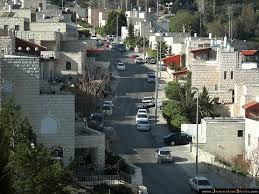
Yesterday, Israel approved the building of 900 homes in Jerusalem, a move opposed by the United States, and incorrectly reported by some media outlets which misreported Gilo's location. For instance, the International Herald Tribune ran the following brief today on Page 4:

Whether you call it a settlement or a neighborhood of Jerusalem, Gilo is not in the West Bank. As Isabel Kershner correctly reports today in the New York Times (which publishes the Tribune):

Israel said Tuesday that it had advanced plans to expand a Jewish district of Jerusalem in territory that was captured in the 1967 war and that the Palestinians claim as part of their future state. . . .

The Israeli move to push forward the building plans in Jerusalem comes as the Palestinians have begun seeking support for a plan to win the United Nations Security Council's recognition of a Palestinian state, without Israel's agreement, in the lands Israel won in 1967. . .

[The 900 housing units] are in Gilo, an area in southern Jerusalem considered by Israel to be a neighborhood of the city and by the Palestinians and much of the world to be a settlement that violates international law

In addition, it is clear from reading the transcript of yesterday's State Department press briefing that the Obama administration also understands that Gilo is situated in Jerusalem and not the West Bank. For instance, spokesman Ian Kelly states:

Well, I think, Michel, you've heard us say many times that we believe that neither party should engage in any kind of actions that could unilaterally preempt or appear to preempt negotiations. And I think that we find the Jerusalem Planning Committee's decision to move forward on the approval of the - approval process for the expansion of Gilo in Jerusalem as dismaying.

Gilo lies within Jerusalem's municipal boundaries, though it is outside the Green Line delineating the pre-1967 boundaries, as shown in this U.N. map. Another part of the city that falls within this category -- within municipal boundaries but outside the Green Line -- is Jabel Mukater, the home of the Arab attacker who shot dead eight yeshiva students in April 2008. As Steven Erlanger and Kershner reported March 8, 2008 in the NYT:

(Continue reading...)

.

Thursday, November 19, 2009

Gilo and Diplomatic Dismay


Rick Richman
Contentions/Commentary
19 November 09

Noah, as you note, White House Press Secretary Robert Gibbs’s statement that the administration is “dismayed” at the construction of more housing in the Gilo neighborhood of Jerusalem — because “neither party should unilaterally preempt negotiations” – is a non-sequitur. Last May, Benjamin Netanyahu arrived at the White House for his first meeting as prime minister with President Obama and announced he wanted to commence negotiations “immediately,” without preconditions, which has been his position ever since.

What unilaterally preempted negotiations was the Obama/Abbas precondition of a settlement “freeze” that (1) was not previously demanded in any prior negotiations, (2) contradicted a six-year understanding about the meaning of a “freeze” (no new settlements, no expansion of existing settlement borders, and no financial incentives for new settlers), (3) could not be defined in practical terms even by George Mitchell, and (4) was not a condition that any Israeli government, Left or Right, could accept.

There was a little comedy silver at the State Department press conference yesterday, as spokesman Ian Kelly repeated the notion that the expansion of housing in Gilo was “dismaying” because it could “unilaterally” preempt negotiations. One of the reporters asked Kelly if he could “give us just a brief synopsis of the progress that Senator Mitchell has made in his months on the job” — to which Kelly responded that the administration had gotten both sides to agree on a goal:

(Continue article)

.

Thursday, September 3, 2009

Neutrality on Iraq-Syria: Obama Administration Betrays Ally and Doesn't Even Defend Its Own Soldiers


Barry Rubin
The Rubin Report
03 September 09


(So much of what is heard from the remnants of Israel's Left, as well as Kadima, is based on their fear concerning a breakdown in the strategic relationship with the U.S. Past experience, i.e. Straits of Tiran, as well as this article would suggest they place their hopes for salvation elsewhere.)

On August 26, State Department spokesman, Ian Kelly, was asked what the United States thought about the Iraq-Syria dispute. His answer shockingly recalls the last time a U.S. government made the mistake of being neutral between an enemy radical dictatorship and a friendly moderate government.

First, some background. Iraqi leader Nuri al-Maliki visited Syria on August 18 to discuss the two countries' relationship. He offered Syrian dictator-President Bashar al-Assad a lot of economic goodies in exchange for expelling 271 Iraqi exiles involved in organizing terrorism against their country. Assad refused. Maliki left.

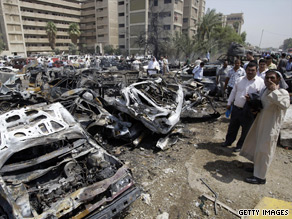
The next day, huge bombings struck Baghdad, directly targeting the government’s foreign and finance ministries. More than 100 Iraqis were killed and over 600 were wounded. The Iraqi government blamed the very same exiles living in Syria who Maliki was trying to get kicked out and implicated the Syrian government directly in the attacks. The two countries recalled their ambassadors; the Iraqis are calling for an international tribunal to investigate.

Enter the United States. Since the Iraqi government was created by elections made possible by the U.S. invasion, since the same terrorists murdering Iraqis have killed American soldiers, and since Iraq is a U.S. ally while Syria is a terrorist sponsor allied with Iran, what U.S. reaction would you expect?

Why, support for Iraq, of course. For decades under several U.S. presidents, Syria has been unsuccessfully pressed to kick out terrorists targeting Israel, and later Lebanon. This is an old issue and a very clear one for about a half-dozen reasons.

And what did the Obama administration do instead? Declare its neutrality!

Here’s what Kelly said, reading from his State Department instructions:

“We understand that there has been sort of mutual recall of the ambassadors. We consider that an internal matter. We believe that, as a general principle, that diplomatic dialogue is the best means to address the concerns of both parties. We are working with the Iraqis to determine who perpetrated these horrible acts of violence.…We hope this doesn’t hinder dialogue between the two countries.”

Before analyzing this response, let me tell you of what it reminds me. Back in 1990, Saddam Hussein’s Iraq was threatening Kuwait, demanding that the weaker neighbor surrender to an ultimatum. Iraq was no friend of America; Kuwait, though not an ally, was a state that had good relations with the United States. A decade earlier, America had gone to the verge of war with Iran to protect Kuwait.

What did the U.S. government say? This was a matter between Iraq and Kuwait in which the United States wouldn’t take sides.

A few days later, Saddam invaded and annexed Kuwait. At the time and afterward, everyone said: What a terrible mistake! The announcement of neutrality, the refusal to support a small threatened country against a bullying neighbor ruled by a blood dictatorship, gave a green light to Saddam and set off a war.

And now the Obama administration has done precisely the same thing. Of course, Syria won’t invade Iraq, it will just keep welcoming, training, arming, financing, transporting, and helping the terrorists who do so.

The Obama administration has declared the war on terrorism to be over. But it also said that the United States viewed as an enemy al-Qaida and those working with it. The Syria-based Iraqi terrorists fall into that category. America sacrificed hundreds of lives for Iraq’s stability. Most of those soldiers and civilian contractors were murdered by the very terrorists harbored by Syria.

How can the administration distance itself from this conflict instead of supporting its ally and trying to act against the very terrorists who have murdered Americans?

Nominally, of course, the cheap way out was to say: We don’t know who did these particular bombings. Well, who do you think did it, men from Mars? Even this is not relevant since the Iraqi demand for the expulsion of the terrorists—who have committed hundreds of other acts—came before the latest attack even happened.

Moreover, the administration not only invoked its obsession with dialogue at any price but did so in an incorrect and dangerous manner. The Iraqi government had sought dialogue, had used diplomatic means, and was turned down flat. To make your main point is that diplomatic dialogue should continue is to side with Syria against Iraq. The message is: don't take any sanctions against Syria, keep talking, and if the Syrians do nothing and continue sending terrorists across the border, well, you can...keep on talking forever.

So is this administration incapable of criticizing Syria? Even if it wants to engage in talks with Syria it doesn’t understand that diplomacy is not inconsistent with pressure and criticism, tools to push the other side into concessions or compromises.

Looking at this latest development, how can any ally have confidence that the U.S. government will support it if menaced by terrorism or aggression? It can’t. The problem with treating enemies better than friends is that the friends start wondering whether their interests are better served by appeasing mutual enemies and by reducing cooperaiton with an unfaithful ally which ignores their needs.

Here's an excellent backgrounder on the Iraq-Syria issue. And on the al-Qaida connection with Syria, go here.